Many English learners feel confused about hale vs hail. The two words sound exactly the same, but their meanings are very different.
Because of this, students often search for the difference between hale and hail or ask for a simple explanation with examples.
This guide explains hale vs hail in very clear English. You will learn the meanings, pronunciation, examples, common mistakes, and easy tricks to remember the difference.
The goal is simple: by the end, you will know how to use hale and hail correctly in real life.
Quick Answer: Hale vs Hail
Here is the simple hale vs hail definition.
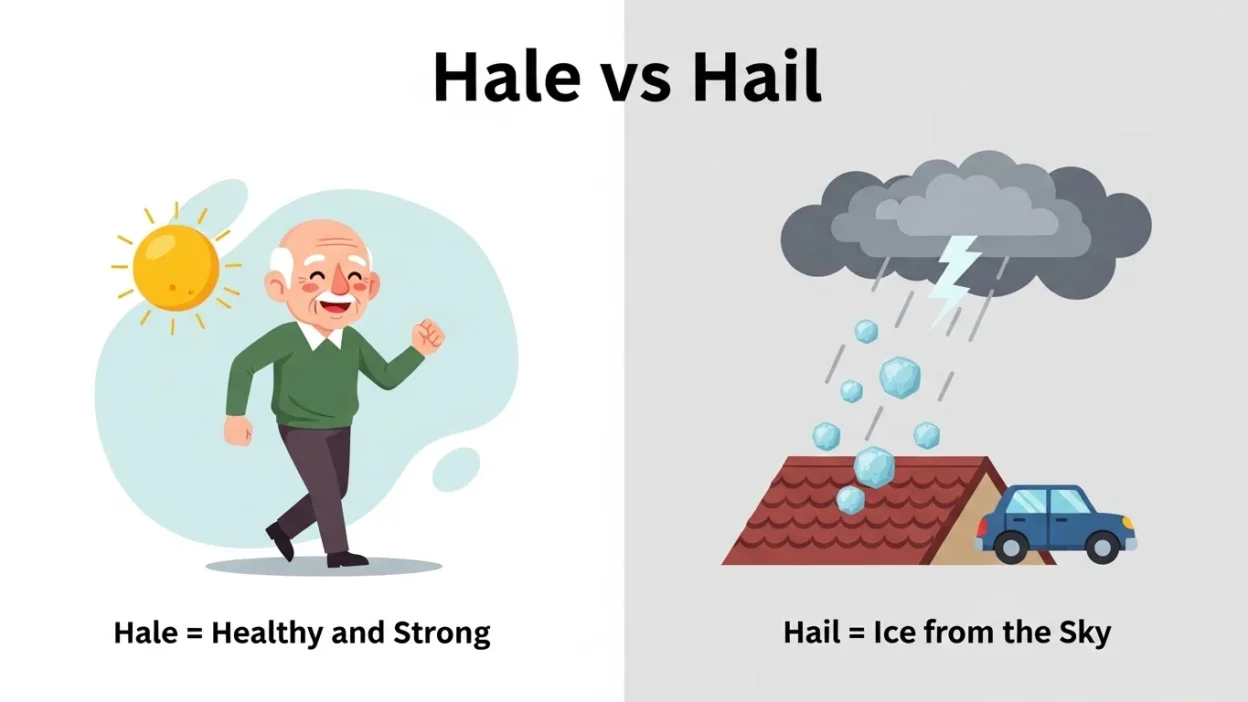
- Hale → healthy, strong, and in good physical condition
- Hail → small balls of ice from the sky or a verb meaning to greet, praise, or call someone
Quick reminders:
- Hale meaning in English: healthy and strong
- Hail meaning in English: ice from storms or greeting someone
- Context helps you decide which word is correct.
Pronunciation: Do Hale and Hail Sound the Same?
Yes. The hale vs hail pronunciation is exactly the same.
- Hale /heɪl/
- Hail /heɪl/
Both words sound like “hayl.”
Because they sound identical, they are called homophones. This is the main reason people mix them up in writing.
Why People Confuse Hale and Hail
There are three main reasons learners confuse these words.
- Same pronunciation
Both words sound identical. - Similar spelling
Only one letter is different. - Different meanings in different contexts
One relates to health, while the other relates to weather or greeting.
Understanding the hale and hail grammar difference solves this confusion quickly.
Hale Meaning in English
The word hale is an adjective. It describes someone who is healthy, strong, and full of energy.
You may often hear the phrase “hale and hearty.”
Hale Meaning Healthy Example
- “My grandfather is ninety years old but still hale and active.”
- “After resting for a few days, she became hale and energetic again.”
- “The farmer remained hale despite long working hours.”
- “The old sailor stayed hale after many years at sea.”
- “Even in winter, the mountain guide looked hale and strong.”
In each example, hale describes good health.
Hail Meaning in English
The word hail has two main meanings.
1. Hail as Weather
In weather, hail means small balls of ice that fall from the sky during storms.
This is the most common hail meaning weather example.
Examples:
- “Heavy hail fell during the storm.”
- “The road was covered with hailstones.”
- “The storm brought rain, wind, and hail.”
- “Farmers worried because the hail damaged crops.”
- “The loud sound outside was caused by hail hitting the roof.”
2. Hail as a Verb
Hail as a verb meaning includes greeting, praising, or calling someone.
Examples:
- “The crowd hailed the hero.”
- “She quickly hailed a taxi.”
- “The new movie was hailed as a success.”
- “Fans hailed the singer with loud cheers.”
- “The explorers were hailed for their bravery.”
In these sentences, hail means greeting or praising.
Hale vs Hail Comparison Table
| Feature | Hale | Hail |
| Meaning | Healthy and strong | Ice balls from storms or greeting/praising |
| Part of Speech | Adjective | Noun or verb |
| Used For | People or animals | Weather or greeting |
| Example | “She is hale and active.” | “Hail fell during the storm.” |
| Pronunciation | /heɪl/ | /heɪl/ |
This table clearly shows the difference between hale and hail.
When to Use Hale
Use hale when describing someone’s health or physical strength.
Common situations:
- describing older people who remain healthy
- explaining someone’s recovery from illness
- describing someone strong and energetic
Examples:
- “My grandmother is still hale and lively.”
- “After months of rest, he felt hale again.”
- “The athlete looked hale before the race.”
- “Despite the cold weather, the workers remained hale.”
These examples help learners understand how to use hale and hail correctly.
When to Use Hail
Use hail in two situations.
Weather Situations
Examples:
- “Large hailstones hit the car.”
- “The storm suddenly started to hail.”
- “Farmers fear hailstorms during summer.”
- “The field was covered in white hail.”
Greeting or Calling
Examples:
- “The audience hailed the performer.”
- “She hailed a taxi outside the airport.”
- “The leader was hailed as a national hero.”
- “The crowd loudly hailed the winners.”
These examples show practical hale vs hail sentences.
Common Mistakes with Hale and Hail
Many learners make similar mistakes when writing these words.
Mistake 1: Using Hail Instead of Hale
❌ He is hail and healthy.
✅ He is hale and healthy.
Mistake 2: Using Hale for Weather
❌ Strong hale fell during the storm.
✅ Strong hail fell during the storm.
Mistake 3: Confusing Greeting Meaning
❌ The crowd haled the singer.
✅ The crowd hailed the singer.
Learning the hale vs hail examples helps avoid these mistakes.
Memory Tricks to Remember Hale vs Hail
Simple tricks make learning easier.
Trick 1: Health Trick
Hale → Health
Both words start with H.
Trick 2: Ice Trick
Hail → Ice
The letter I in hail reminds you of Ice.
Trick 3: Greeting Trick
Hail → Hello
In old greetings people said “Hail!”
These tricks help beginners remember the hale vs hail explained for beginners idea.
Real Life Examples
Email Example
“I hope you are hale and doing well.”
“Our team hailed the success of the project.”
Social Media Example
“Morning workout done. Feeling hale and strong today!”
“Fans hailed the team after their big victory.”
Daily Conversation Example
“My uncle is still hale despite his age.”
“We ran inside because it suddenly began to hail.”
These examples show how the words appear in everyday communication.
Quick Practice for Learners
Try these small exercises.
Fill in the blanks.
- The storm brought heavy ______.
- My grandfather is still ______ and active.
- The crowd ______ the hero for his bravery.
- Farmers worry when large ______ damage crops.
- Even at eighty years old, she remains ______.
Answers:
- hail
- hale
- hailed
- hail
- hale
Practicing helps reinforce the hale and hail grammar difference.
Frequently Asked Questions
1. What is the difference between hale and hail?
The difference between hale and hail is simple. Hale means healthy and strong, while hail refers to icy rain or greeting someone.
2. What is the hale meaning in English?
The hale meaning in English is healthy, strong, and free from illness.
3. What is the hail meaning in English?
The hail meaning in English refers to frozen rain from storms or greeting and praising someone.
4. Are hale and hail pronounced the same?
Yes. The hale vs hail pronunciation is the same, which is why many learners confuse them.
5. Can hail be used as a verb?
Yes. Hail as a verb meaning includes greeting, praising, or signaling someone.
6. Is hail related to weather?
Yes. The hail meaning weather example describes small balls of ice that fall during storms.
7. Is hale commonly used today?
Yes. It is still used to describe people who are healthy, especially in the phrase “hale and hearty.”
8. How can beginners remember hale vs hail?
Remember this simple rule:
Hale = Healthy
Hail = Ice or Greeting
Conclusion
Although hale and hail sound exactly the same, their meanings are very different. Hale describes someone who is healthy and strong, while hail refers to frozen rain from storms or greeting and praising someone.
Once you understand the hale vs hail definition, see clear examples, and practice using the words, the confusion disappears.
By remembering the simple rule hale for health and hail for ice or greeting you can confidently use both words in everyday English.

Kaliyan Martan is a passionate dreamer and creative thinker who believes in turning ideas into meaningful action. With vision and dedication, he strives to make a lasting impact through innovation and authenticity.