English can be tricky. Some words look almost the same but have very different meanings. Hung vs hanged is one of them.
Many learners wonder: “Should I say ‘He was hung for stealing’ or ‘He was hanged for stealing’?”
Don’t worry! This guide will explain everything in simple English, with examples, practice, and tips you can remember forever.
Quick Answer: Hung vs Hanged Meaning
Here’s the simplest way to remember:
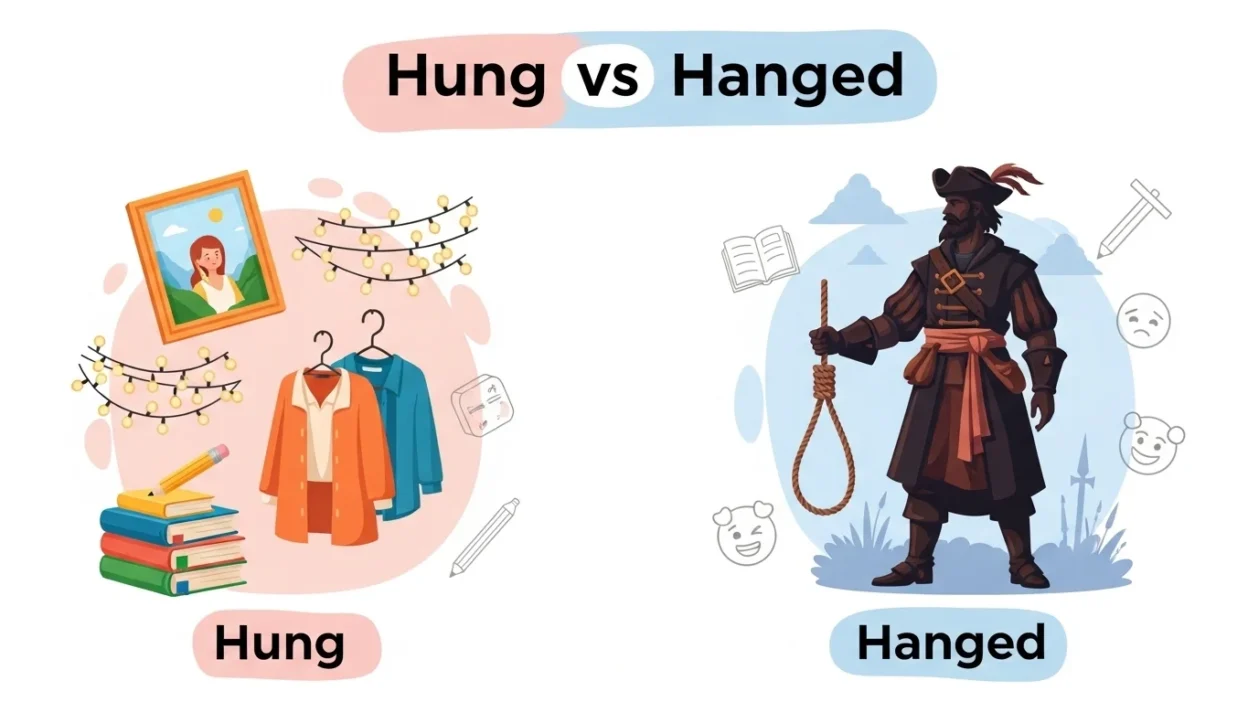
- Hung – used for objects or things that are hanging.
🖼 Example: The picture was hung on the wall. - Hanged – used only for people who were executed by hanging.
⚖ Example: The criminal was hanged for his crimes.
Tip: Object = hung, person = hanged.
Why People Get Confused
Long ago, people used hung for both objects and people. Over time, English changed. Now, hanged is only correct for executed people.
Since you hear hung all the time in daily life (“I hung my coat”), it’s easy to accidentally use it for people. The trick is to check your context: object or person?
Hung vs Hanged: Clear English Grammar Rules
1. Hung – For Objects and Things
- Use it for clothes, pictures, decorations, or anything you hang.
- Examples:
- She hung her bag on the chair.
- The stars hung in the night sky.
- Balloons were hung from the ceiling.
- His head hung in shame.
2. Hanged – Only for People
- Use it for people executed by hanging.
- Examples:
- The pirate was hanged for his crimes.
- In history, traitors were hanged centuries ago.
✅ Remember: Hung = objects, Hanged = executed people.
Comparison Table: Hung vs Hanged
| Word | Use | Example Sentence | Tip |
| Hung | Objects, decorations, things | I hung my coat on the hook. | Never use for people |
| Hanged | People (execution only) | The thief was hanged in history. | Only for people who were executed |
When to Use Hung or Hanged
Hung Examples:
- Clothes on a hook: She hung her jacket.
- Pictures: The painting was hung on the wall.
- Decorations: Fairy lights were hung from the ceiling.
Hanged Examples:
- Legal/historical: The criminal was hanged for murder.
- Stories/history: Many traitors were hanged long ago.
Quick Tip: Ask yourself: “Am I talking about a person or a thing?”
Common Mistakes
- ❌ He was hung for stealing.
✅ Correct: He was hanged for stealing. - ❌ I hanged the picture on the wall.
✅ Correct: I hung the picture on the wall. - ❌ The lamp was hanged from the ceiling.
✅ Correct: The lamp was hung from the ceiling.
Real Life Examples
Emails:
- Hung: “I hung the chart on the notice board.”
- Hanged: “We learned about people who were hanged in history class.”
Social Media:
- Hung: “Just hung some fairy lights in my room 😍”
- Hanged: “Reading about pirates who were hanged for robbery 🏴☠️”
Daily Life:
- Hung: “My clothes are hung outside to dry.”
- Hanged: “The storybook mentioned people who were hanged long ago.”
Practice Section: Hung or Hanged?
Fill in the blanks:
- She ___ her scarf on the hook. (hung/hanged)
- The thief was ___ for stealing. (hung/hanged)
- Balloons were ___ from the ceiling. (hung/hanged)
- His head ___ in shame. (hung/hanged)
- Many traitors were ___ centuries ago. (hung/hanged)
Answers: 1. hung, 2. hanged, 3. hung, 4. hung, 5. hanged
FAQs: Hung vs Hanged Explained
1. Can “hung” be used for people?
No. Use “hanged” only for people who were executed.
2. Can “hanged” be used for modern stories?
Yes, mainly in historical or legal contexts.
3. Can “hung” be used figuratively?
Yes. For example: “His head hung low in shame.”
4. Are both words past tense?
Yes. “Hung” is past tense for objects, “hanged” is past tense for executed people.
5. Can I say “hung by the neck”?
Only if referring to execution: “He was hanged by the neck.”
6. Is it okay to say “pictures were hanged”?
No, always use “hung” for objects like pictures or decorations.
7. Are there regional differences?
No. This rule is standard in English worldwide.
8. Can animals be “hung”?
Yes, if referring to objects, like “The meat was hung to dry.” Execution context uses hanged.
Conclusion
The difference between hung vs hanged is simple once you remember:
- Hung = objects (clothes, pictures, decorations)
- Hanged = people executed
Always check: is it a person or an object? Use hung vs hanged examples in real life to remember.
With this knowledge, your English will be clear, correct, and confident. Practice with emails, social media posts, and daily sentences. Soon, you’ll never confuse hung or hanged again!