Many English learners ask the same question: “informations or information which one is correct?” The confusion happens because many languages allow the word “information” to become plural. Because of this, learners sometimes write sentences like “many informations” or “these informations.”
However, English grammar follows a different rule. The word information belongs to a special group of nouns that usually do not have plural forms. This small rule causes confusion for students, learners and beginners.
Once you understand how this word works, it becomes very easy to use correctly in writing and conversation. This guide explains the difference between information and informations, when to use the word, common mistakes, and clear examples you can follow in daily English.
Quick Answer: Informations or Information?
If you want a fast answer, here it is.
- Information is correct in English.
- Informations is usually incorrect in modern English.
- Information is an uncountable noun.
- Instead of saying “many informations,” use phrases like:
- a lot of information
- some information
- important information
- a piece of information
In simple terms, when asking “is informations correct?”, the answer is no in normal English usage.
Informations or Information: Which One Is Correct?
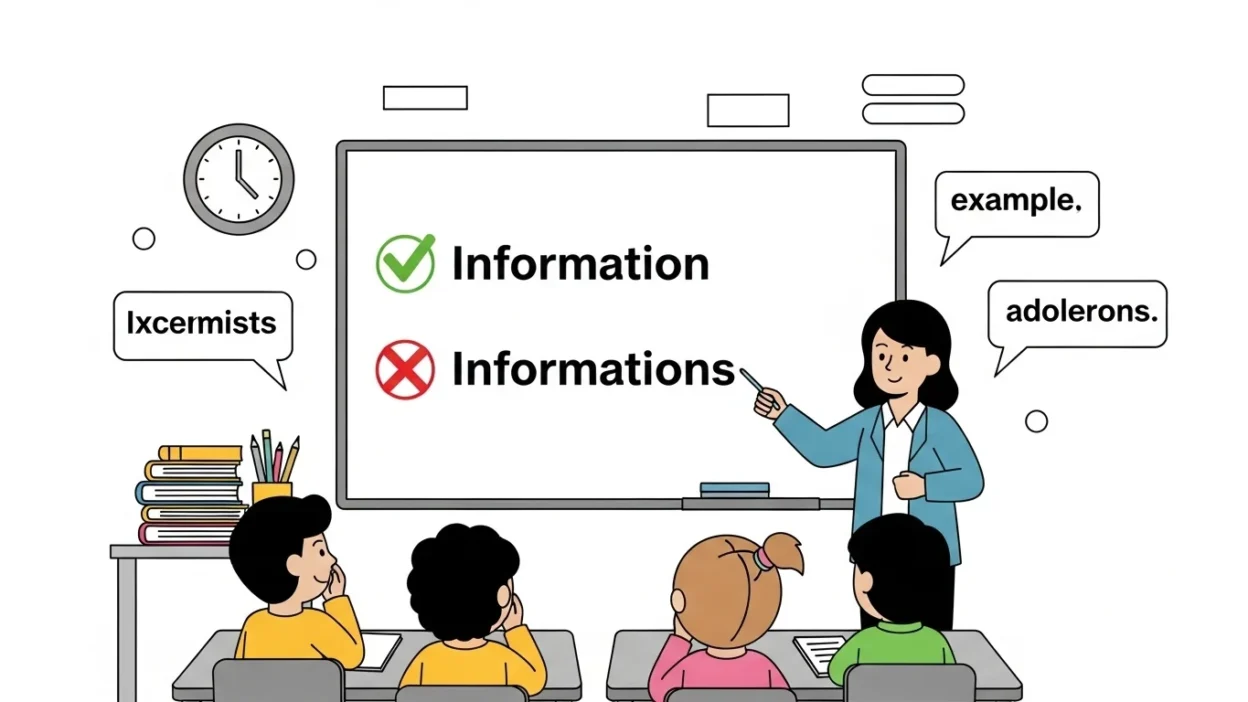
The correct word is information.
English grammar treats information as something that cannot be counted individually. Instead of counting each item, the language describes it as a general collection of knowledge.
Because of this rule:
Correct sentences:
- I need more information about the course.
- She gave me useful information.
- The teacher shared important information.
Incorrect sentences:
- I need more informations.
- She gave me useful informations.
To describe a single detail, English speakers say “a piece of information.”
Example:
- That is an important piece of information.
What Does Information Mean in English?
Understanding the information meaning in English helps explain why the plural form is not used.
Information refers to:
- facts
- knowledge
- details
- explanations
- messages that help someone understand something
Examples:
- The book provides helpful information about science.
- The internet contains a lot of information.
- The teacher gave new information about the exam.
In all these cases, the word describes knowledge as a whole rather than individual items.
Why “Information” Is an Uncountable Noun
The information grammar rule is based on the idea of uncountable nouns.
An uncountable noun describes things that are not usually counted one by one.
Other examples include:
- advice
- furniture
- equipment
- water
You normally do not say:
- advices
- furnitures
- equipments
In the same way, English speakers do not say informations.
Because of this rule, information plural or singular questions often appear in grammar discussions. The answer is that information is grammatically singular but uncountable.
Comparison Table: Information vs Informations
| Word | Correct Usage | Meaning | Example |
| Information | Correct | Knowledge or facts | I found useful information online. |
| Informations | Usually incorrect | Incorrect plural form | Rare in modern English |
| Piece of information | Correct | One specific detail | That is helpful information. |
| Details | Correct | Specific facts | She shared several details. |
This table clearly shows the difference between information and informations.
When to Use “Information”
Knowing how to use information in a sentence helps learners feel confident when speaking or writing.
1. When Talking About Knowledge
Use information when discussing facts or knowledge.
Examples:
- The website provides useful information.
- The teacher shared important information with students.
2. When Asking for Details
Examples:
- Can you give me information about the program?
- I need more information before making a decision.
3. When Sharing Updates
Examples:
- The company released new information about the product.
- Students received updated information about the exam schedule.
4. When Learning Something New
Examples:
- I learned interesting information in class today.
- This article contains helpful information for learners.
These are clear information examples in sentences that appear in everyday English.
Common Grammar Mistakes With Information
Many learners make similar errors when using the word information.
Mistake 1: Adding “S”
Incorrect:
- I received many informations.
Correct:
- I received a lot of information.
Mistake 2: Using “An Information”
Incorrect:
- He gave me an information.
Correct:
- He gave me a piece of information.
Understanding the piece of information meaning helps avoid this mistake.
Mistake 3: Confusing Information With Details
Sometimes learners want to talk about multiple facts.
Incorrect:
- She shared many informations.
Correct:
- She shared many details.
This is a common confusion when comparing information vs details.
Real Life Examples in Daily English
Learning grammar becomes easier when you see examples from real situations.
Example in an Email
Hello Maria,
Thank you for the information about the meeting. It helped me understand the plan clearly.
Incorrect version:
Thank you for the informations about the meeting.
Example on Social Media
Correct:
I found useful information about studying abroad.
Incorrect:
I found useful informations online.
Example in School
The teacher gave important information about the project deadline.
Example in Customer Support
Correct:
Please provide your contact information.
Incorrect:
Please provide your contact informations.
These examples show how to use information in a sentence naturally.
Helpful Alternatives Instead of “Informations”
If you want to describe multiple facts, English provides better options.
Instead of saying “informations,” you can use:
- details
- facts
- pieces of information
- points
- data
Examples:
- She shared several important details.
- I learned many interesting facts.
- The report includes several pieces of information.
Understanding these alternatives helps improve clarity.
Simple Learning Section for Beginners
For beginners, remembering one easy rule can solve the confusion.
Easy Grammar Rule
Information = uncountable noun
Do not say:
- informations
- an information
- two informations
Instead say:
- some information
- useful information
- a piece of information
- a lot of information
Practicing this rule helps learners avoid common grammar mistakes.
Practice Sentences
Read these examples:
- I need more information about the program.
- She gave helpful information during the meeting.
- That is an interesting piece of information.
These are simple information examples in sentences for practice.
Frequently Asked Questions
1. Is “informations” correct in English?
No. In modern English, “informations” is usually incorrect. The correct word is information.
2. What is the plural of information?
The word information normally has no plural form because it is an uncountable noun.
3. Why is information uncountable?
English treats information as knowledge in general, not individual items that can be counted.
4. Can information be counted?
Yes, but indirectly. You can say:
- a piece of information
- two pieces of information
5. Is information singular or plural?
Grammatically, information behaves like a singular uncountable noun.
Example:
Correct:
The information is helpful.
Incorrect:
The information are helpful.
6. What is a synonym for information?
Common alternatives include:
- details
- facts
- knowledge
- data
7. Why do learners say “informations”?
Learners often say informations because their native language allows the word to become plural.
8. Where is the word information commonly used?
You can see the word in:
- emails
- school assignments
- news articles
- conversations
- official forms
Conclusion
The confusion between informations or information is very common among English learners. Fortunately, the rule is simple once you understand it.
In English, information is an uncountable noun, which means it normally does not have a plural form. Because of this, the word “informations” is usually incorrect in modern usage.
Instead of adding “s,” English speakers use expressions such as:
- a lot of information
- some information
- useful information
- a piece of information
By remembering this basic information grammar rule, students and learners can avoid a very common mistake.
Once you understand that information stays the same whether there is little or a lot, your English writing and speaking will sound more natural and correct.

Mitcheel Satrac is a passionate visionary dedicated to creativity, innovation, and meaningful success. His work reflects authenticity, purpose, and a drive to make a real impact.