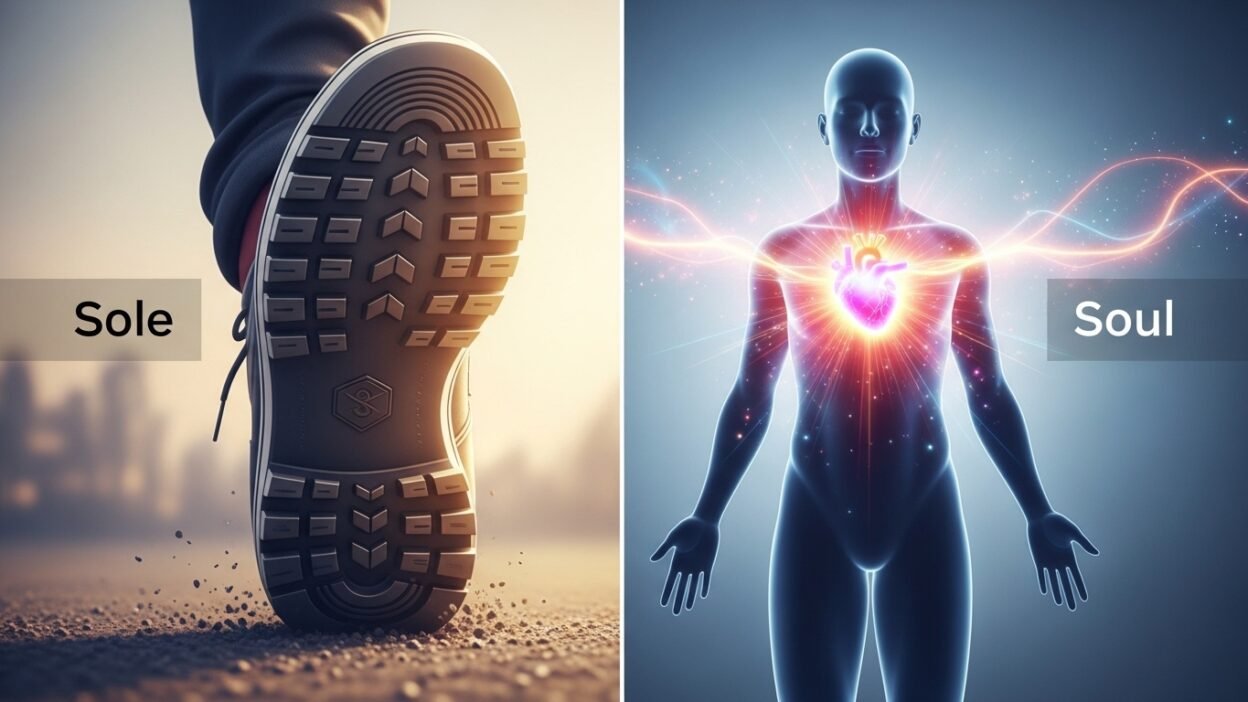
Many English learners, students, and beginners often get confused between “sole” and “soul.”
They sound exactly the same but mean very different things. Using the wrong word can make your sentence confusing or even funny.
This guide explains the difference between sole and soul clearly, with easy examples, exercises, and tips that beginners and learners can use immediately.
Quick Answer: Sole vs Soul
- Sole – Refers to the bottom of a shoe or foot, or means “only” or “single.”
- Soul – Refers to a person’s spirit, inner self, or emotions.
Tip to remember:
- Sole touches the ground.
- Soul touches the heart.
- “Difference between sole and soul in sentences”
- “How to remember sole vs soul for beginners”
- “Sole or soul meaning with examples”
Why Sole and Soul Are Confusing
These words are homophones in English, which means they sound the same but have different spellings and meanings. learners and students often mix them up in writing, speaking, and even reading.
By learning clear rules, examples, and mini exercises, you can avoid mistakes and use these words confidently.
Clear Explanation
Sole
- Bottom of a shoe or foot
- “Be careful! The sole of your shoe is slippery.”
- “My foot hurts because the sole of my shoe is thin.”
- Only or single (adjective)
- “She is the sole owner of the shop.”
- “It was his sole decision, not mine.”
- Legal or formal use
- “He is the sole proprietor of the business.”
Soul
- Spirit or inner self
- “Music touches the soul.”
- “He is a kind soul who always helps others.”
- Emotions or personality
- “She has a beautiful soul.”
- “The painting shows the artist’s soul.”
- Cultural use
- “Soul music is very popular in the U.S.”
- “He is an old soul, wise beyond his years.”
Comparison Table: Sole vs Soul
| Feature | Sole | Soul |
| Meaning | Bottom of a shoe/foot; only/one | Spirit; inner self; emotions |
| Pronunciation | /soʊl/ | /soʊl/ |
| Example Sentences | “The sole of my shoe is broken.”“He is the sole winner of the prize.” | “Her soul is full of kindness.”“This song feeds my soul.” |
| Type of Word | Noun/Adjective | Noun |
| Usage Tip | Think “ground” or “single” | Think “heart” or “spirit” |
When to Use Each Word
Use “Sole” When:
- Talking about shoes, feet, or the bottom of objects.
- Talking about only one thing or person.
- Writing formal or legal phrases, like “sole proprietorship.”
Use “Soul” When:
- Talking about emotions, spirit, or inner self.
- Referring to personality or character.
- Talking about music, art, or spiritual matters.
Common Mistakes and How to Fix Them
- ❌ “Music touches my sole.”
✅ “Music touches my soul.” - ❌ “The soul of my shoe is worn out.”
✅ “The sole of my shoe is worn out.” - ❌ “He is the soul winner.”
✅ “He is the sole winner.”
Quick Tip: If it is about feelings, spirit, or music → use soul. If it is about shoes, feet, or “only one” → use sole.
Real Life Examples
Emails
- Sole: “I am the sole contact for this project.”
- Soul: “Your support has touched my soul.”
Social Media
- Sole: “Check out my new shoes! The sole is amazing.”
- Soul: “Listening to this playlist feeds my soul.”
Daily Life
- Sole: “The sole of my foot is sore after walking.”
- Soul: “Volunteering made me feel happy in my soul.”
Mini Exercises for Beginners
Fill in the blanks with “sole” or “soul”:
- The ______ of my shoe is worn out.
- She has a kind ______ who always helps.
- He is the ______ owner of the company.
- Music touches the ______ deeply.
- The ______ purpose of this meeting is to decide the budget.
Answers: 1) sole 2) soul 3) sole 4) soul 5) sole
Practice these exercises daily to avoid confusion.
FAQs
1. Can “sole” and “soul” be used in the same sentence?
Yes: “The sole of my shoe slipped, but it didn’t hurt my soul.”
2. Is “sole” always a noun?
No, it can also be an adjective meaning “only” or “single.”
3. Does “soul” always mean religion?
No. It can also mean spirit, emotions, or personality.
4. How can I remember the difference?
Think: sole = shoe/only, soul = heart/inner self.
5. Can “sole” be used in food?
Yes, “sole” is also a type of fish. Example: “We had grilled sole for dinner.”
6. Are there common phrases with “soul”?
Yes, like “old soul” (wise beyond age), “soulmate,” and “soul-searching.”
7. Can “soul” describe music or art?
Yes. “Soul music” or “a soulful painting” shows deep feeling.
8. How can beginners practice?
Write simple sentences, use mini exercises, and read examples in emails, social media, or daily life.
Conclusion
Sole and soul sound the same but mean very different things.
- Sole → shoes, feet, “only one,” or legal use.
- Soul → spirit, heart, emotions, or personality.
By practicing examples, exercises, and remembering simple tips, you can stop mixing up sole and soul forever.
This guide is perfect for beginners, learners, and students. Start using these words today, and your English will become clearer and more confident.

Robert Kalian is a passionate visionary dedicated to creativity, leadership, and meaningful innovation. He believes in turning ideas into action and inspiring others to achieve their highest potential.