Have you ever felt a tingling, itchy spot on your lip and wondered, “Is this a cold sore?” It can be confusing especially when it starts as a tiny bump.
Cold sores are common, caused by herpes simplex virus 1 (HSV-1), and can appear on or around the lips.
Knowing what a cold sore looks like helps you identify it early, prevent spreading, and take care of it properly.
Quick Answer:
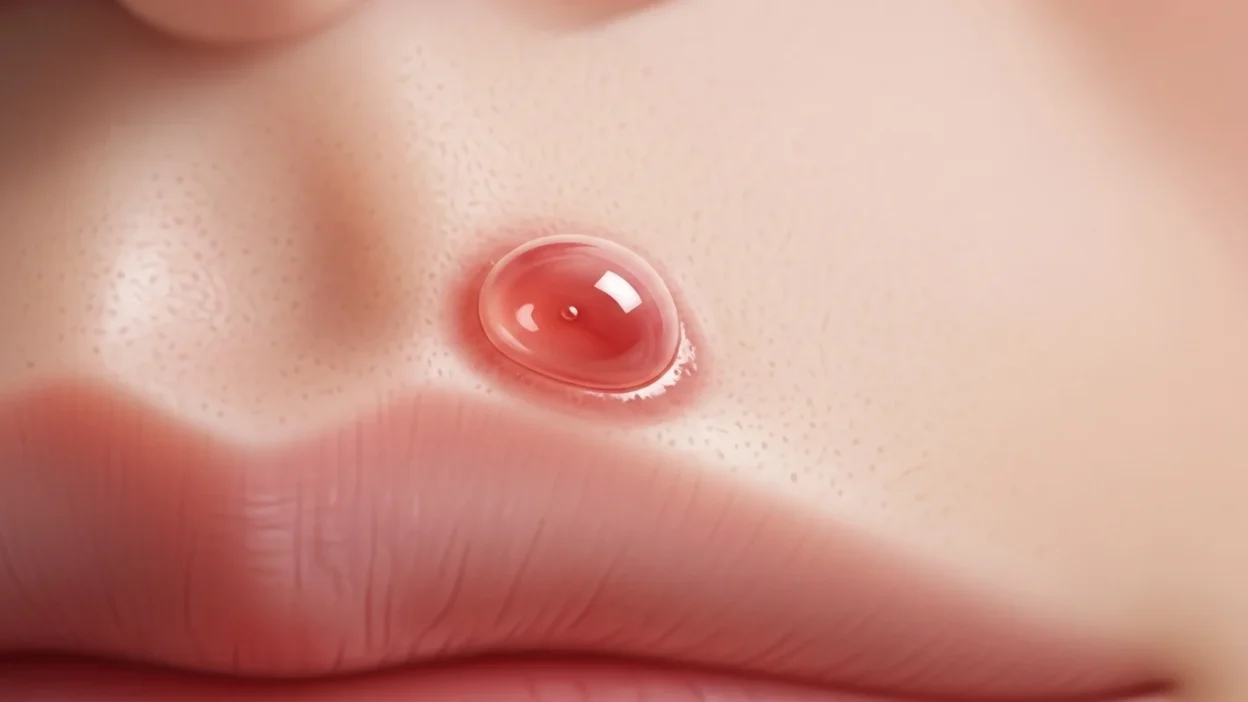
A cold sore is a small, fluid-filled blister on or near the lips. It’s usually red, painful, and may crust over as it heals.
What Is a Cold Sore?
A cold sore, also called a fever blister, is a blister caused by the HSV-1 virus. They are contagious and usually last 7–10 days. While anyone can get them, outbreaks often appear during stress, illness, or sun exposure.
Key Features:
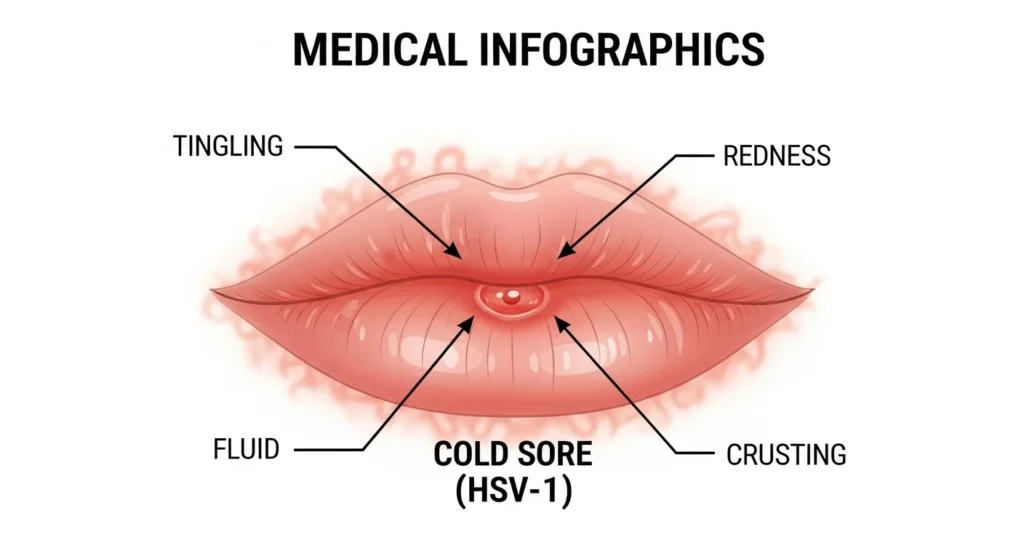
- Small, raised, fluid-filled blisters on the lips or around the mouth
- Red, inflamed area surrounding the blister
- Tingling or burning before the blister forms
- Crusts and heals after several days
In short: Cold Sore = HSV-1 Blister = Painful bump near the mouth
Stages of a Cold Sore
Understanding the stages makes it easier to recognize a cold sore:
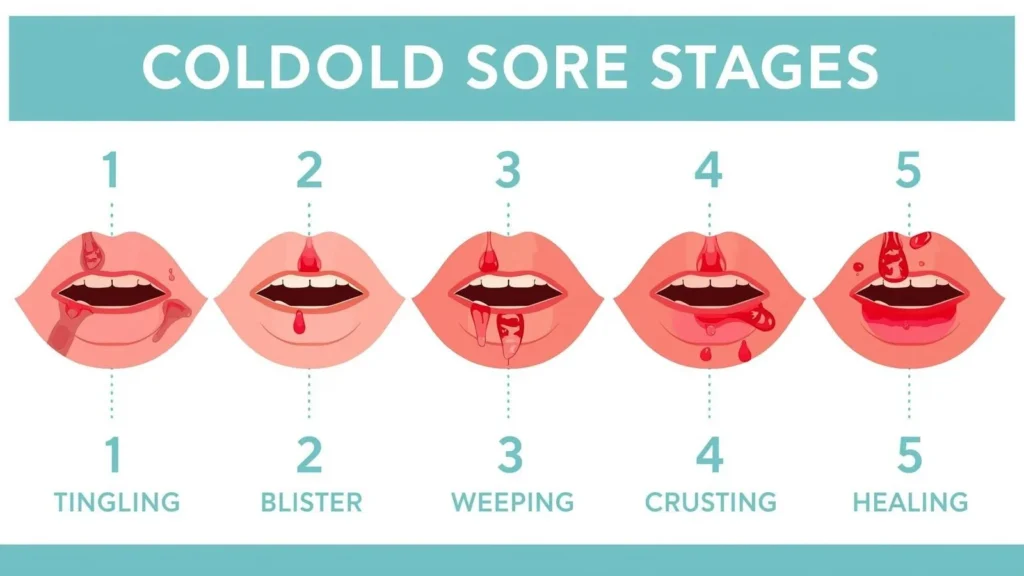
- Tingling/Itching Stage:
- Slight burning or itching on the lip before a bump appears
- Slight burning or itching on the lip before a bump appears
- Blister Stage:
- Small, clear or yellowish lip blister filled with fluid
- Small, clear or yellowish lip blister filled with fluid
- Weeping Stage:
- Blister may break, releasing fluid; area is highly contagious
- Blister may break, releasing fluid; area is highly contagious
- Crusting Stage:
- Scab forms over the sore; healing begins
- Scab forms over the sore; healing begins
- Healing Stage:
- Crust falls off; skin returns to normal
- Crust falls off; skin returns to normal
Tip: Take photos if needed to compare, but avoid touching the sore.
How to Identify a Cold Sore vs. a Pimple
| Feature | Cold Sore | Pimple |
| Location | Lip border, around mouth | Cheeks, chin, sometimes lip |
| Appearance | Fluid-filled blister, red base | Solid white/yellow center |
| Pain/Itch | Tingling or burning, painful | Mild tenderness, not itchy |
| Duration | 7–10 days | 3–7 days |
Where Do People Talk About Cold Sores?
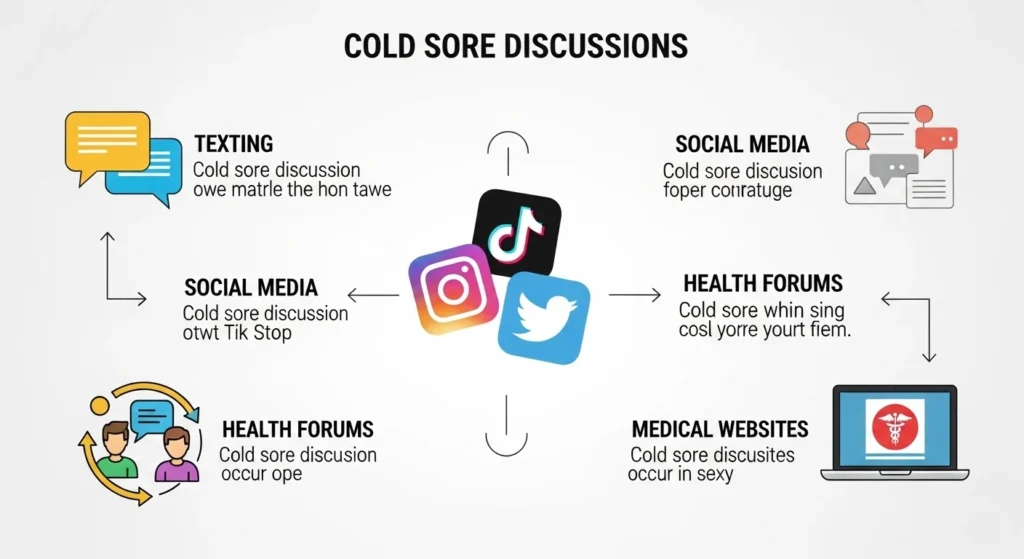
- 💬 Texting friends/family when explaining why they can’t kiss
- 📱 Social media posts (Instagram, TikTok, Twitter) about self-care
- 👩⚕️ Health forums discussing cold sore symptoms, treatment, and causes
- 🏥 Medical websites for official guidance
Tone: Casual for friends; informative for online or medical discussions
When to Use and When Not to Use the Term “Cold Sore”
✅ When to Use:
- Casual chats with friends or family
- Online forums or support groups
- Social media posts about wellness
- Explaining minor lip infections

❌ When Not to Use:
- Formal work emails
- Urgent medical discussions without proper context
- Situations needing professional terminology only
Comparison Table:
| Context | Example Phrase | Why It Works |
| Friend Chat | “Can’t hang out, got a cold sore 😬” | Casual & relatable |
| Work Chat | “Experiencing a minor lip infection” | Polite & professional |
| “I have a cold sore and may need time off” | Clear & formal |
Treatment and Care for Cold Sores
- Apply over-the-counter antiviral creams (e.g., docosanol)
- Use cold compresses to reduce swelling
- Avoid touching the sore to prevent spreading
- Stay hydrated and use lip balms to prevent cracking
- In severe cases, consult a doctor for prescription antivirals
Similar Terms and Alternatives
| Term/Slang | Meaning | When to Use |
| Fever blister | Another term for cold sore | Casual, medical posts |
| Lip blister | Descriptive, informal | Texting friends |
| HSV-1 outbreak | Medical term | Health discussions, forums |
| Lip bump | Casual, joking | Social media, memes |
| Mouth blister | General term | Casual conversation |
FAQs About Cold Sores
1. How do I know if I have a cold sore?
Look for tingling, burning, or small fluid-filled blisters on or around the lips.
2. Are cold sores contagious?
Yes, especially when the blister is open or weeping. Avoid kissing and sharing utensils.
3. How long does a cold sore last?
Typically 7–10 days, healing in stages from tingling → blister → crust → healed skin.
4. Can cold sores be prevented?
Yes. Avoid triggers, apply sunscreen on lips, manage stress, and use antiviral creams if needed.
5. How can I treat a cold sore at home?
Use antiviral creams, cold compresses, and lip balm. Stay hydrated and avoid picking at the sore.
Conclusion
Knowing what a cold sore looks like helps you identify and treat it quickly. Recognizing the stages, understanding the symptoms, and knowing how to differentiate it from a pimple are key.
Cold sores are common, temporary, and manageable, and with proper care, they usually heal without complications.

Robert Kalian is a passionate visionary dedicated to creativity, leadership, and meaningful innovation. He believes in turning ideas into action and inspiring others to achieve their highest potential.