
If you’ve ever wondered what a paralegal does, you’re not alone. Maybe you’ve seen the job title in a law firm, corporate office, or online job listing and thought, “Is this the same as a lawyer?”
While paralegals don’t represent clients in court, they play a critical role in the legal system. They handle essential tasks that allow lawyers to focus on practicing law effectively.
Quick Answer:
A paralegal is a trained professional who assists lawyers with legal work.
They handle paralegal tasks, such as researching laws, preparing documents, and supporting legal cases.
🧠 What Does a Paralegal Mean?
A paralegal is a legal professional who performs a wide range of support duties for lawyers. They are not licensed to give legal advice but are trained to:
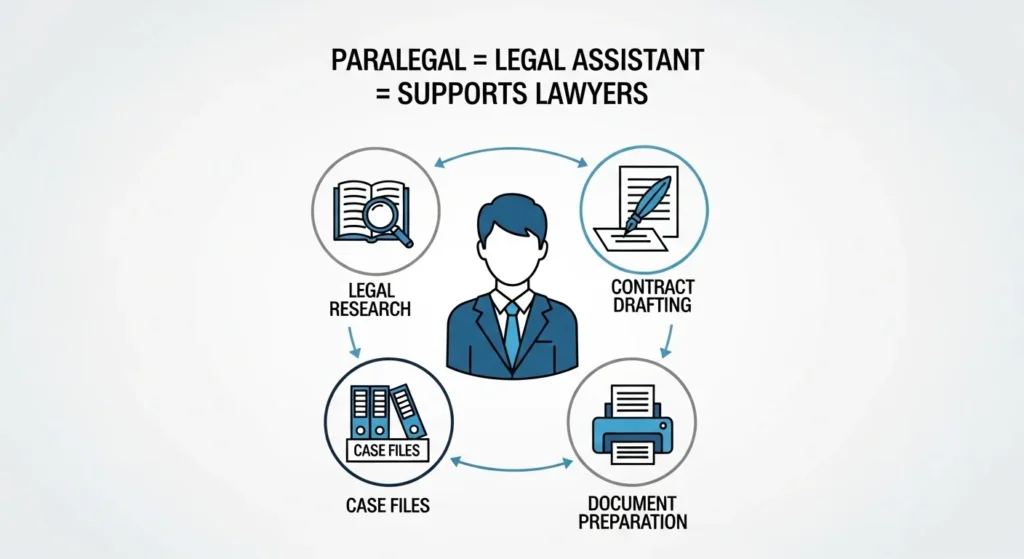
- Conduct legal research
- Draft contracts and legal documents
- Prepare case summaries
- Organize evidence and manage case files
Example:
“I reviewed the client’s documents and summarized the key points for the attorney.”
In short:
Paralegal = Legal Assistant = Handles research, documents, and case preparation for lawyers.
📄 Paralegal Job Description
A paralegal job description varies by workplace, but most paralegals are responsible for:
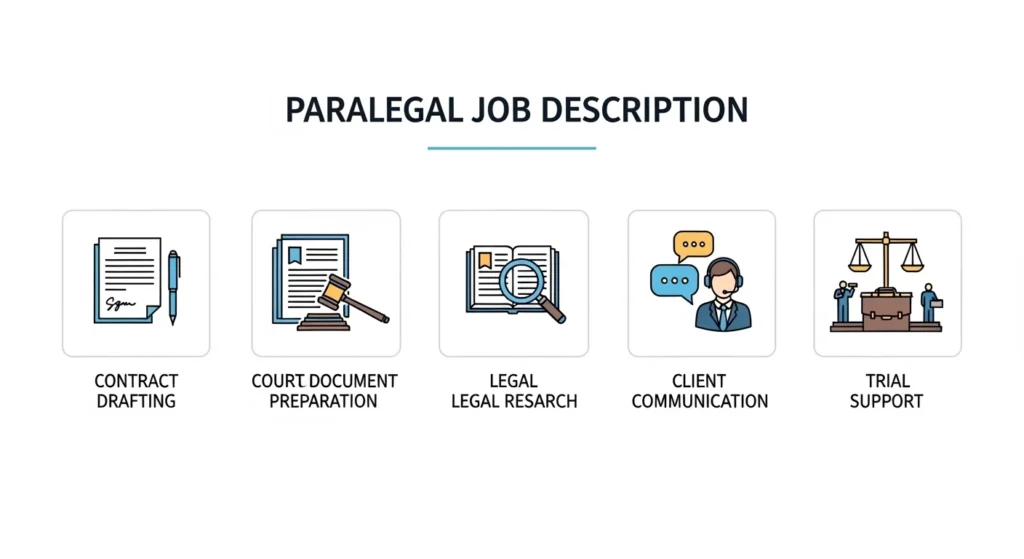
- Drafting legal documents like contracts, wills, or pleadings
- Filing documents with courts or government agencies
- Researching case law and legal precedents
- Assisting lawyers in trial preparation
- Communicating with clients and managing records
Paralegals can specialize in fields like litigation, corporate law, or real estate, depending on the firm or organization.
📱 Where Paralegals Work
Paralegals can be found in a variety of professional settings:
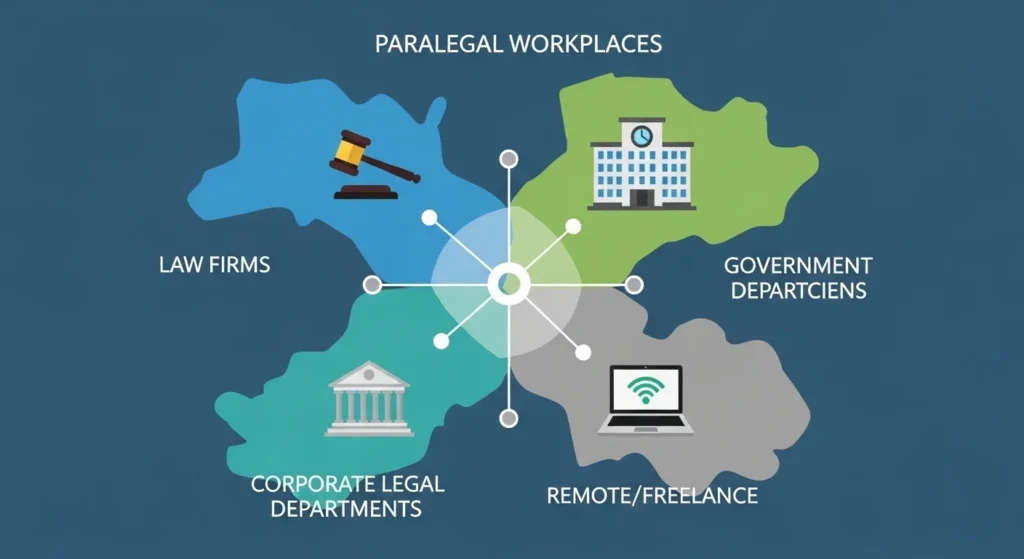
- ⚖️ Law Firms — Support lawyers in case management, legal research, and document preparation.
- 🏢 Corporate Legal Departments — Manage contracts, compliance, and company policies.
- 🏛️ Government Agencies — Draft legal forms and assist with public cases.
- 🌐 Remote / Freelance Work — Conduct legal research and document review online.
Tone: Formal, professional, and structured. Paralegal work is never casual like slang it’s highly responsible.
💬 Paralegal Duties: Real World Examples
Here are examples of common paralegal responsibilities:
- Case Research
Attorney: “We need information on the new labor law.”
Paralegal: “I’ll prepare a summary with the key points for review.”
- Document Preparation
Attorney: “Is the contract ready for client review?”
Paralegal: “Yes, I’ve highlighted all important clauses.”
- Court Filing
Attorney: “Did you submit the motion?”
Paralegal: “Filed and confirmed by the court clerk.”
- Client Communication
Attorney: “Update the client on their case progress.”
Paralegal: “Email sent with all relevant documents attached.”
- Trial Support
Attorney: “Are all exhibits organized?”
Paralegal: “Yes, they are indexed and ready for trial.”
🕓 When to Use and Not Use a Paralegal
✅ When to Use a Paralegal:
- Drafting legal documents
- Researching laws and regulations
- Summarizing case files
- Organizing evidence for trials
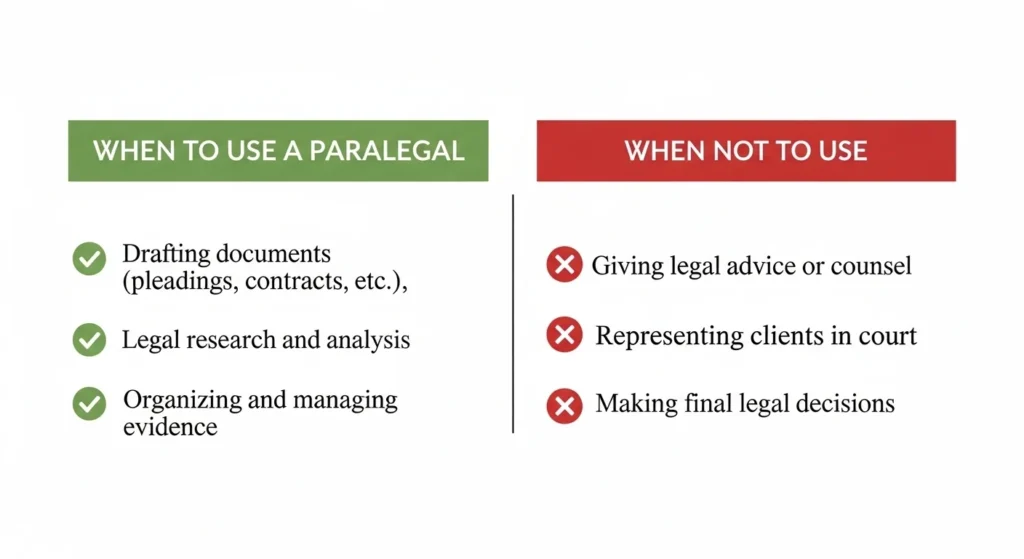
❌ When Not to Use a Paralegal:
- Giving legal advice
- Representing clients in court
- Making final legal decisions
Comparison Table:
| Context | Example Task | Why It Works |
| Law Firm | Drafting a contract | Supports lawyer, ensures accuracy |
| Corporate | Reviewing compliance documents | Efficient and detailed |
| Court Filing | Submitting legal documents | Saves lawyer’s time |
| Client Call | Preparing a client summary | Keeps clients informed |
🔄 Similar Roles or Alternatives
| Role | Meaning | When to Use |
| Legal Assistant | Administrative support in legal offices | Small firms or clerical-heavy tasks |
| Legal Secretary | Manages schedules, correspondence, and filings | Law firms, administrative-heavy work |
| Litigation Paralegal | Focused on trial preparation and court cases | Firms handling lawsuits |
| Corporate Paralegal | Handles contracts, compliance, and corporate policies | Large corporations |
| Virtual Paralegal | Provides legal support remotely | Freelance or remote legal services |
💼 How to Become a Paralegal
Becoming a paralegal typically involves:
- Education – Certificate, Associate, or Bachelor’s in Legal Studies or Paralegal Studies.
- Training – Internships or on-the-job training at law firms or corporate legal departments.
- Certification (Optional) – Organizations like NALA or NFPA offer paralegal certifications that improve credibility and job prospects.
- Skills – Strong research, writing, communication, and organizational skills.
💰 Paralegal Salary and Career Growth

- Average Salary (US): $50,000–$70,000/year, depending on experience and location.
- Growth Potential: Paralegals can advance to senior paralegal roles, legal managers, or transition to become lawyers after law school.
- Tools Used: Legal research software (LexisNexis, Westlaw), Microsoft Office, case management systems.
❓ FAQs About What a Paralegal Does
Q1: Can a paralegal give legal advice?
No. Paralegals assist lawyers but cannot provide legal advice.
Q2: Do paralegals need a law degree?
Not usually. Certificates or associate/bachelor’s degrees in paralegal studies are sufficient.
Q3: What is the difference between a paralegal and a lawyer?
Lawyers represent clients and give legal advice; paralegals perform paralegal tasks and support lawyers.
Q4: Can paralegals work remotely?
Yes, many handle research, document preparation, and virtual legal tasks.
Q5: Is being a paralegal well-paid?
It depends on experience, specialization, and location, but it’s a stable and respected legal career.
✅ Conclusion
A paralegal is an essential part of the legal system. They manage paralegal responsibilities, conduct research, prepare legal documents, and support lawyers, making law offices efficient and effective.
Whether you’re considering a career in law or just curious, understanding what a paralegal does provides a clear picture of this vital profession.

Kaliyan Martan is a passionate dreamer and creative thinker who believes in turning ideas into meaningful action. With vision and dedication, he strives to make a lasting impact through innovation and authenticity.