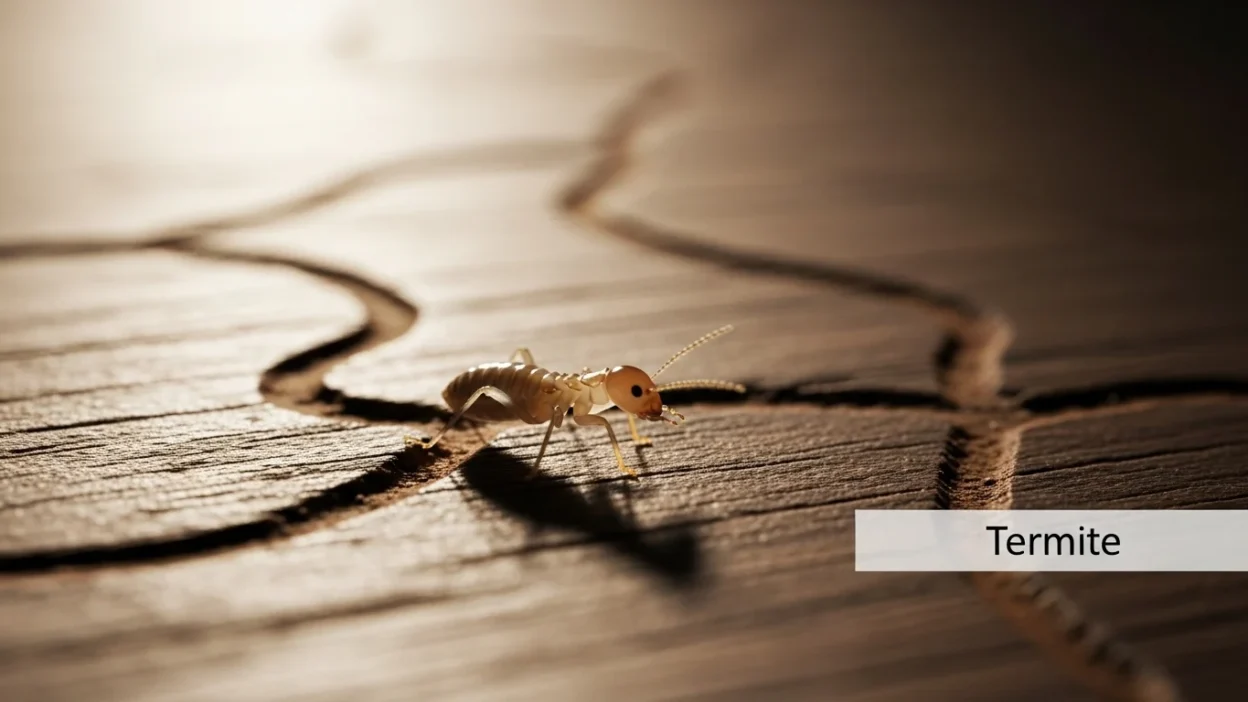
Have you ever spotted tiny, pale insects crawling on your wooden furniture or near the backyard and wondered, “Are these termites?” I remember the first time I noticed one it was almost invisible, yet its damage was undeniable! Knowing what a termite looks like and how to identify it can save your home from serious wood damage.
This guide will help you spot termites quickly, compare them to ants, and take action before it’s too late.
Quick Answer:
A termite is a small, soft-bodied insect, usually pale or light brown, with six legs and straight antennae.
They are harmless to humans directly but are wood-damaging insects that need attention if found.
🧠 What Does a Termite Look Like?
Termites are tiny insects, usually 0.2–0.5 inches long, with soft, straight bodies and straight antennae. Unlike ants, their waists are not pinched, and their color ranges from creamy white to light brown. Some termites grow wings during their reproductive stage, known as termite swarmers, which are slightly darker and often confused with flying ants.
Example: You might see a pale, translucent insect slowly crawling on your wooden floor, sometimes leaving tiny tunnels in the wood.
In short: Termite = soft-bodied, pale, six-legged insect = wood-damaging insect = key species to identify in your home.
📱 Where Do You Usually See Termites?
Here’s where termites are commonly spotted:
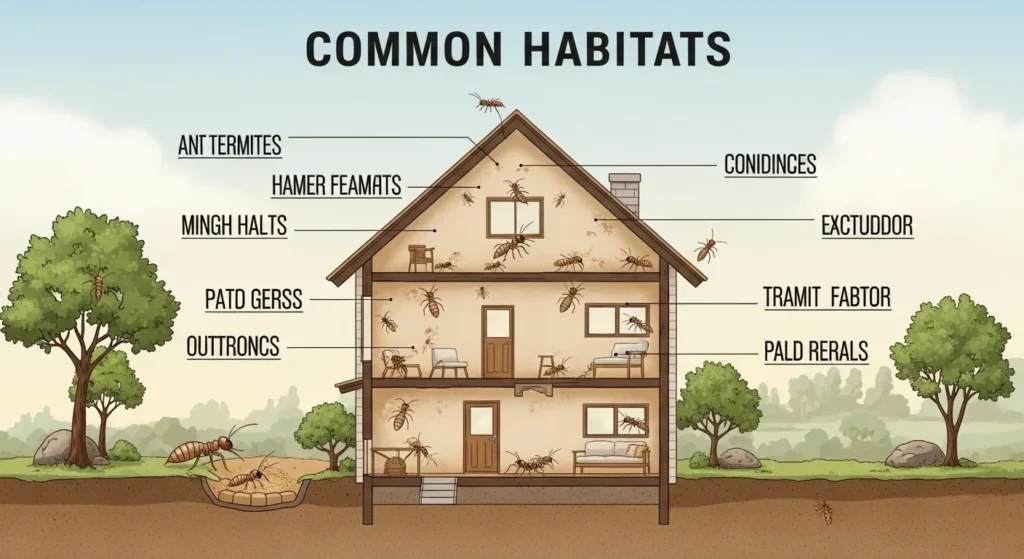
- 🏠 Inside homes – baseboards, wooden furniture, floorboards
- 🌳 Outdoors – dead trees, wooden fences, stumps, mulch
- 🐜 Near moisture – damp basements, crawl spaces, or roof leaks
- 🛠️ Construction sites – especially untreated wood
Tip: Termites are casual pests that live unnoticed. Spotting them early prevents costly wood damage.
🔍 How to Identify Termites vs Ants
Many people confuse termites with ants. Here’s a detailed comparison:
| Feature | Termite | Ant |
| Waist | Straight, thick | Pinched |
| Body Color | Pale white to light brown | Dark brown or black |
| Antennae | Straight | Bent / elbowed |
| Wings | Equal length, may shed | Front wings larger than back |
| Behavior | Slow-moving, burrows wood | Fast, foraging behavior |
| Signs | Mud tubes, hollow wood | Trails, crumbs near food |
Pro Tip: Use a flashlight to inspect crevices, furniture legs, or baseboards for tunnels or tiny white insects.
💬 Real Life Termite Sightings
Here are some realistic scenarios of spotting termites:
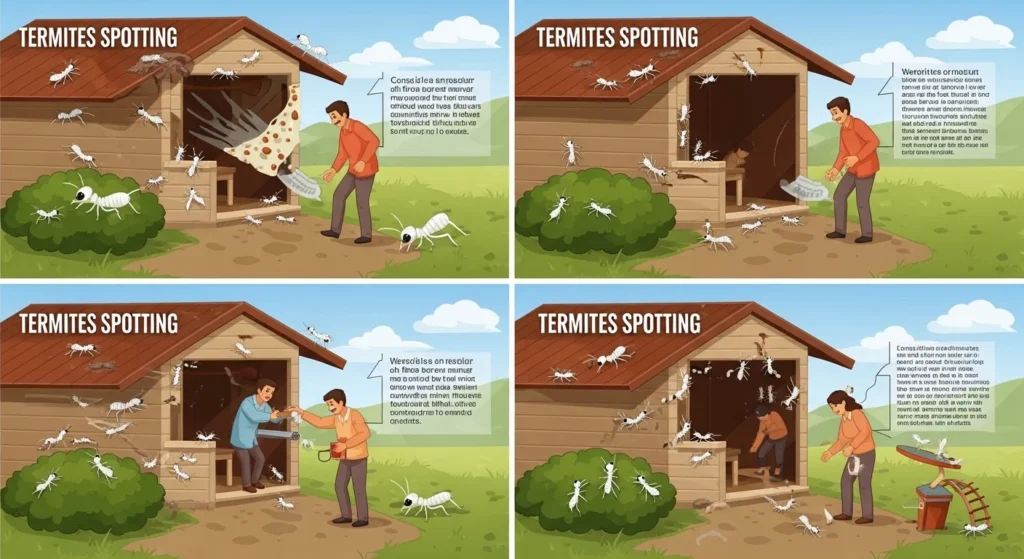
- A: “I found tiny bugs near the kitchen cabinet 😳”
B: “Check if they’re pale with straight antennae could be termites 🐜” - A: “My wooden chair feels hollow.”
B: “Sounds like termite damage. Time for an inspection!” - A: “I see wings on the floor near the window 🤔”
B: “Those are likely termite swarmers—inspect your wooden furniture.” - A: “Small tunnels in my floorboards.”
B: “Termites! They eat through wood silently.” - A: “Are these ants?”
B: “No, see the straight waist and pale body? Termites 🐜”
🕓 When to Inspect for Termites
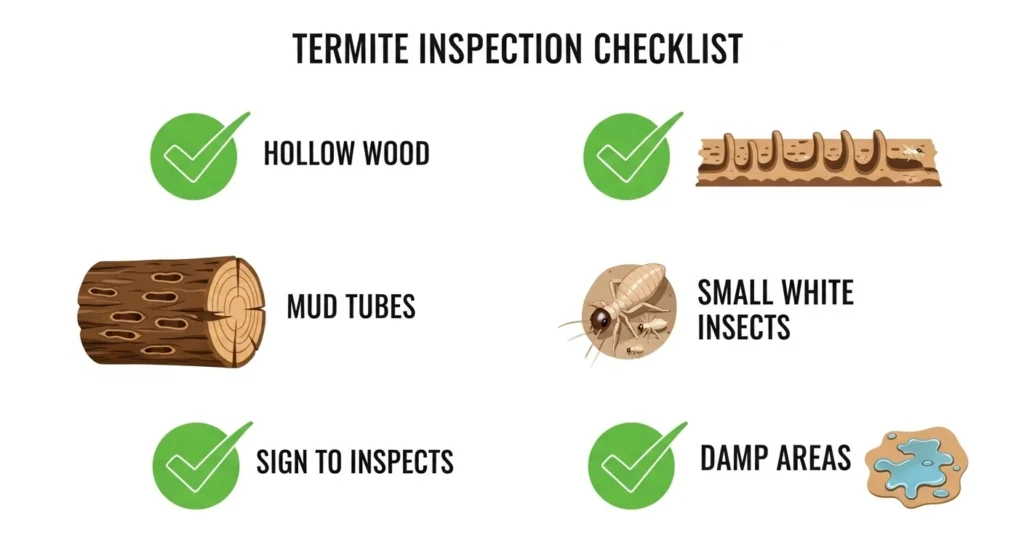
✅ Signs to Inspect:
- Wood looks hollow or crumbles when tapped
- Tiny tunnels or mud tubes appear along wood
- Small white insects or termite swarmers appear
- Damp or poorly ventilated areas
❌ When Not to Worry:
- Normal ants (dark, pinched waist)
- Small harmless flying insects
- Wood that is solid and undamaged
| Context | Observation / Example | Why It Matters |
| Furniture | Pale bugs crawling on wood | Early termite detection |
| Backyard | Mud tubes on fence posts | Termites travel underground |
| Damp areas | Crumbling baseboards | High-risk for infestation |
| Outdoors woodpile | Winged insects on floor | Swarmers indicate reproductive colony |
Quick Tip: Tap wood gently. If it sounds hollow, inspect further for termite signs in wood.
🔄 Similar Insects and Common Confusions
| Insect | Lookalike Features | When to Notice |
| Ants | Pinched waist, darker color | Can be confused with termites |
| Carpenter Bees | Round, make holes in wood | Don’t eat wood, just burrow |
| Termite Swarmers | Winged, pale, soft body | Early sign of termite activity |
| Powderpost Beetle | Tiny holes, powdery dust | Can mimic termite damage |
❓ FAQs About Termites
Q1: How can I tell a termite from an ant?
A: Termites have straight bodies, straight antennae, and no pinched waist. Ants have a dark, pinched waist and bent antennae.
Q2: Do termites bite humans?
A: No, termites primarily eat wood and cellulose—they don’t bite humans.
Q3: What color are termites?
A: Pale white, creamy, or light brown. Winged termites may appear slightly darker (termite swarmers).
Q4: Can termites fly?
A: Only during swarming season, usually spring or after rain.
Q5: How fast can termites damage wood?
A: Slowly over months to years—early termite identification is crucial.
Q6: How do I prevent termites at home?
A: Keep wood dry, seal cracks, inspect furniture regularly, and consider professional treatments.
Q7: Can I spot termites with a DIY method?
A: Tap wood, look for mud tubes, or check for shed wings—these are signs of wood-damaging insects.
🏁 Conclusion
Recognizing what a termite looks like is essential for every homeowner.
With pale, soft bodies, six legs, straight antennae, and occasional wings, termites may be tiny but can silently destroy wooden structures.
Use this guide for termite appearance, DIY inspection tips, and early detection strategies to protect your home.