
Have you ever wondered what an accountant actually does? Maybe you’ve seen the term in a job post, a conversation, or even on social media, and felt unsure. 🤔 Accountants are more than just people who “play with numbers.”
They are financial professionals who ensure that businesses and individuals manage their money accurately, comply with laws, and plan for the future.
Quick Answer:
An accountant is a professional responsible for recording, analyzing, and reporting financial transactions, helping with taxes, budgets, and financial planning. Accountants are essential for both personal finances and business success.
What Does an Accountant Mean? 🧠
An accountant is a trained professional who manages and analyzes financial data. They ensure that records are accurate, help minimize tax liability, and provide insights for financial decisions.

Example:
A: “I need help preparing my company’s annual report 😅”
B: “Call our accountant, they’ll handle it 💼”
In short: Accountant = financial record keeper = the expert who keeps money matters accurate and organized.
Accountant Responsibilities and Tasks 📌
Accountants have a wide range of responsibilities, depending on their role and the organization they work for. Key tasks include:
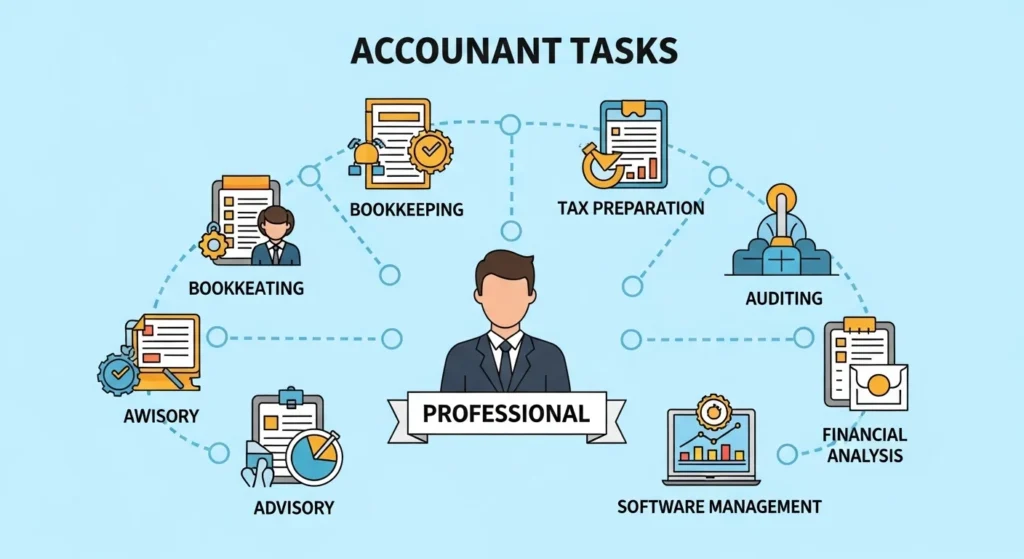
- Financial Reporting – Preparing income statements, balance sheets, and cash flow statements.
- Bookkeeping – Recording day-to-day financial transactions accurately.
- Tax Preparation & Compliance – Filing taxes and ensuring compliance with government regulations.
- Auditing – Examining financial statements to ensure accuracy and legality.
- Budgeting & Forecasting – Helping businesses or individuals plan finances effectively.
- Advisory Services – Recommending strategies to reduce costs and increase profits.
- Payroll Management – Ensuring employees are paid correctly and on time.
- Financial Analysis – Evaluating financial performance to guide decision-making.
- Software & Technology Management – Using accounting software like QuickBooks, Xero, or SAP.
In short: Accountant tasks = recording, analyzing, reporting, and advising on finances for individuals or organizations.
Types of Accountants 💼
Different accountants specialize in different areas:
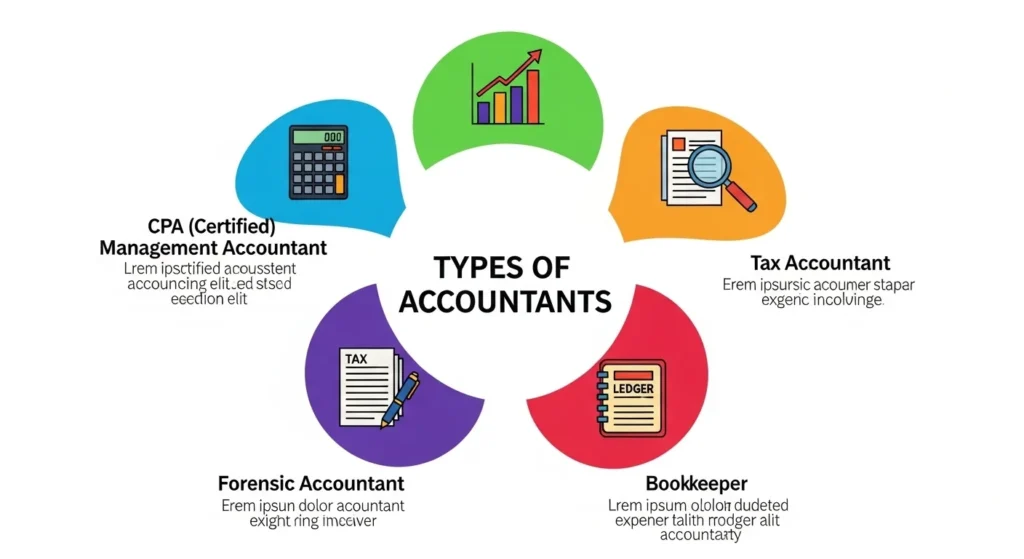
- CPA (Certified Public Accountant) – Licensed accountant qualified to handle audits, taxes, and advisory services.
- Management Accountant – Focuses on internal business planning and decision-making.
- Tax Accountant – Specializes in preparing and filing taxes efficiently.
- Forensic Accountant – Investigates fraud and financial crimes.
- Bookkeeper – Manages day-to-day transaction records (entry-level accounting).
Where Is “Accountant” Commonly Used? 📱
While accountants are mostly discussed in professional contexts, the term appears in several places:
- 💬 Job posts and career pages – People searching for accountant jobs or career guidance.
- 🧑💻 Business emails and company reports – Professional context.
- 🎥 Social media and memes – Casual or humorous references about money and taxes.
- 🕹️ Casual chats – Friends joking about budgeting or taxes.
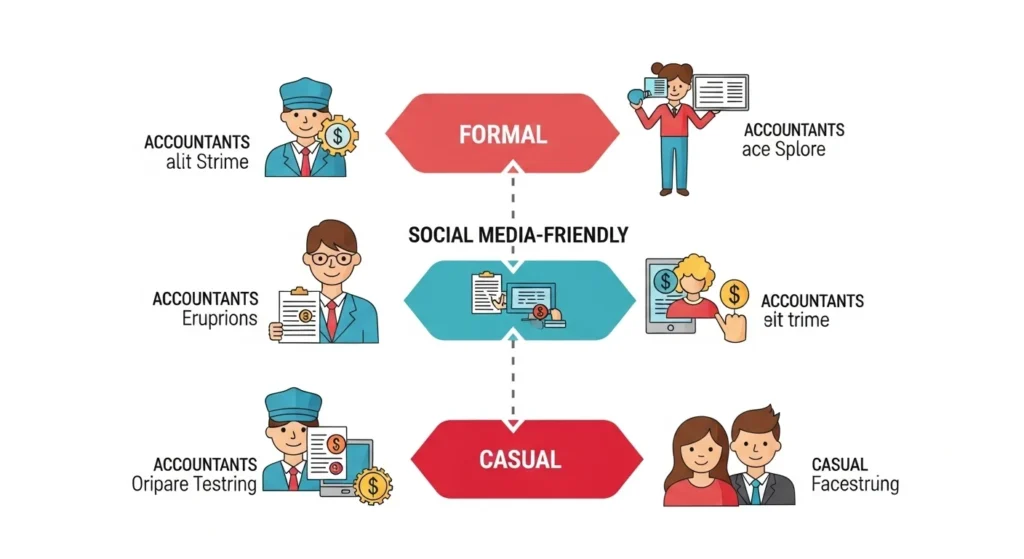
Tone: Formal in professional contexts; casual and friendly in social or meme content.
Examples of “Accountant” in Conversation 💬
Here are realistic conversation examples for accountant in text:

- Example
A: “I can’t figure out my taxes 😩”
B: “Better call an accountant, they’ll sort it out 💼”
- Example
A: “My business finances are a mess 😬”
B: “Time to hire an accountant pronto!”
- Example
A: “Can you check these numbers?”
B: “Sure, but I’m no accountant 😅”
- Example
A: “Do we need a CPA for this audit?”
B: “Yes, the accountant will handle it 💻”
- Example
A: “I spent way too much this month 😭”
B: “Sounds like your accountant would cry too lol”
When to Use and When Not to Use “Accountant” 🕓
✅ When to Use:
- Discussing careers, finance management, or taxes
- Referring to professional services or help
- Making light jokes about money organization

❌ When Not to Use:
- In urgent situations unrelated to finances
- For casual flirting (unless humorous)
- If the recipient is unaware of accounting
Comparison Table:
| Context | Example Phrase | Why It Works |
| Friend Chat | “Better call an accountant 😄” | Casual & relatable |
| Work Chat | “Please check with the accountant.” | Professional & clear |
| “The accountant will review the financials.” | Formal & precise |
Similar Words or Alternatives 🔄
| Term | Meaning | When to Use |
| Bookkeeper | Manages daily financial transactions | Small business chats |
| CPA | Certified Public Accountant | Formal/professional context |
| Tax Advisor | Helps with taxes | Seasonal tax discussions |
| Financial Planner | Helps plan budgets & investments | Long-term financial advice |
| Auditor | Reviews financial statements for accuracy | Compliance & legal reviews |
FAQs About “What Does an Accountant Do?” ❓
Q1: Do accountants only work with businesses?
A: No, accountants work with individuals for taxes, budgeting, and personal finance.
Q2: What skills are essential for an accountant?
A: Analytical skills, attention to detail, knowledge of accounting software, communication skills, and financial reporting.
Q3: How much does an accountant earn?
A: Salaries vary based on location, experience, and specialization. For example, CPAs generally earn more than entry-level accountants.
Q4: What education is required to become an accountant?
A: Typically a bachelor’s degree in accounting, finance, or business. Some positions require certifications like CPA or CMA.
Q5: What’s the difference between an accountant and a CPA?
A: A CPA is a certified accountant who has passed specific exams and is licensed to perform audits and provide official financial advice.
Q6: Can accountants help with software and digital tools?
A: Yes! Modern accountants often use QuickBooks, Xero, SAP, and other accounting software to manage finances efficiently.
Q7: Is accounting stressful?
A: It can be, especially during tax season or audits, but many find it rewarding due to problem-solving and career growth opportunities.
Conclusion
In summary, an accountant is a financial expert who records, analyzes, reports, and advises on money matters for both individuals and organizations.
Whether you’re looking for a career path, professional advice, or just curious about accounting tasks, understanding what an accountant does is essential.
Their work keeps businesses compliant, budgets balanced, and personal finances organized. 💼