Ever felt a persistent burning or gnawing pain in your stomach and wondered, “What does an ulcer feel like?” You’re not alone.
Many people experience stomach discomfort and search online trying to distinguish normal indigestion from a more serious condition like an ulcer.
Understanding ulcer symptoms early can help you take action and avoid complications.
Quick Answer:
An ulcer is an open sore that develops in the lining of your stomach, small intestine, or esophagus.
People usually describe the sensation as burning stomach pain, gnawing, or pressure, sometimes accompanied by nausea, bloating, or heartburn.
🧠 What Does an Ulcer Mean?
An ulcer is a sore in the digestive tract that occurs when the protective mucus lining of your stomach, duodenum (first part of the small intestine), or esophagus is weakened. This exposes the tissue to stomach acid, causing irritation and pain.
Example sentence:
“I’ve been feeling a gnawing pain in my upper abdomen—could this be a stomach ulcer?”
In short:
Ulcer = open sore in stomach/intestine/esophagus = burning, gnawing stomach pain.
📱 Common Symptoms: What Ulcer Pain Feels Like
Here’s how ulcer pain usually presents:
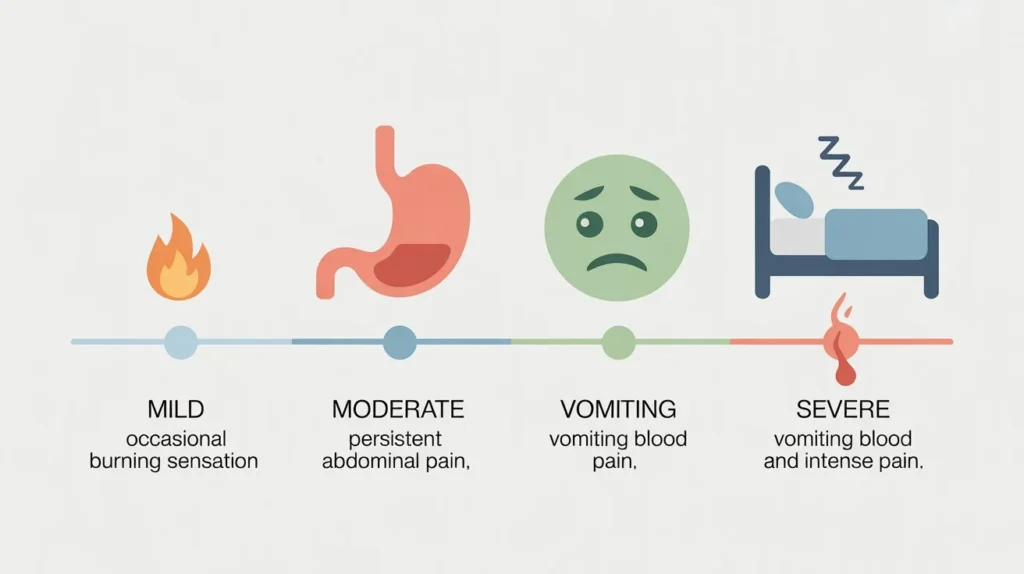
Mild Symptoms:
- Occasional burning or gnawing in the upper abdomen
- Bloating after meals
- Mild nausea
Moderate Symptoms:
- Persistent stomach discomfort, worse when stomach is empty
- Pain that comes and goes, sometimes waking you at night
- Occasional vomiting or acid reflux
Severe Symptoms:
- Sharp, intense pain in the upper abdomen
- Vomiting blood or dark material
- Unexplained weight loss
- Severe bloating or swelling
Tip: If you notice severe symptoms, see a doctor immediately.
🔍 Causes and Risk Factors
Understanding why ulcers develop helps in prevention and treatment. Common causes include:
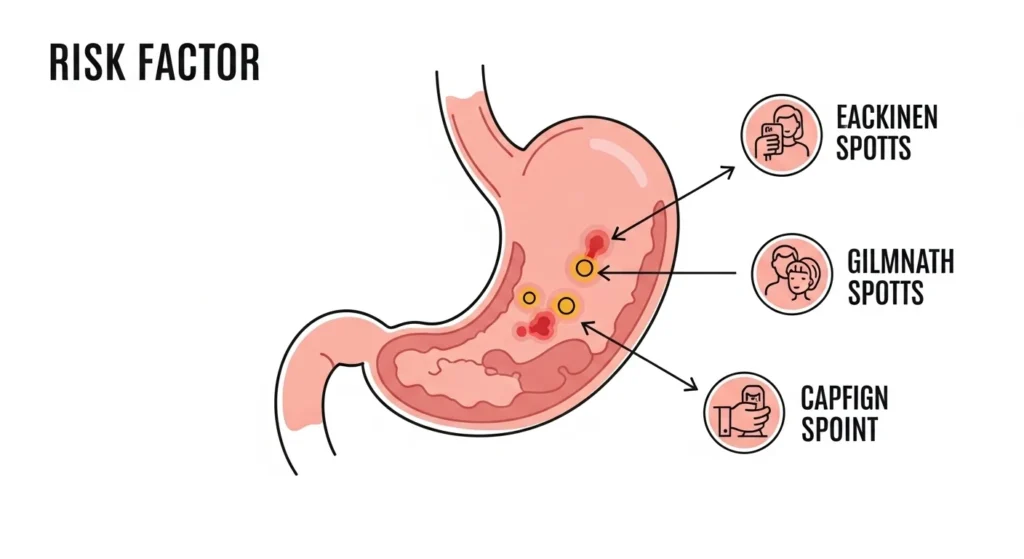
- H. pylori infection – a common stomach bacteria that damages the lining
- Regular use of NSAIDs (ibuprofen, aspirin)
- Excess alcohol consumption
- Smoking
- Chronic stress or spicy food (can worsen symptoms, though not the main cause)
Who’s at risk: People over 50, those with a family history of ulcers, or those with certain medical conditions.
📱 Where Is Ulcer Pain Commonly Felt?
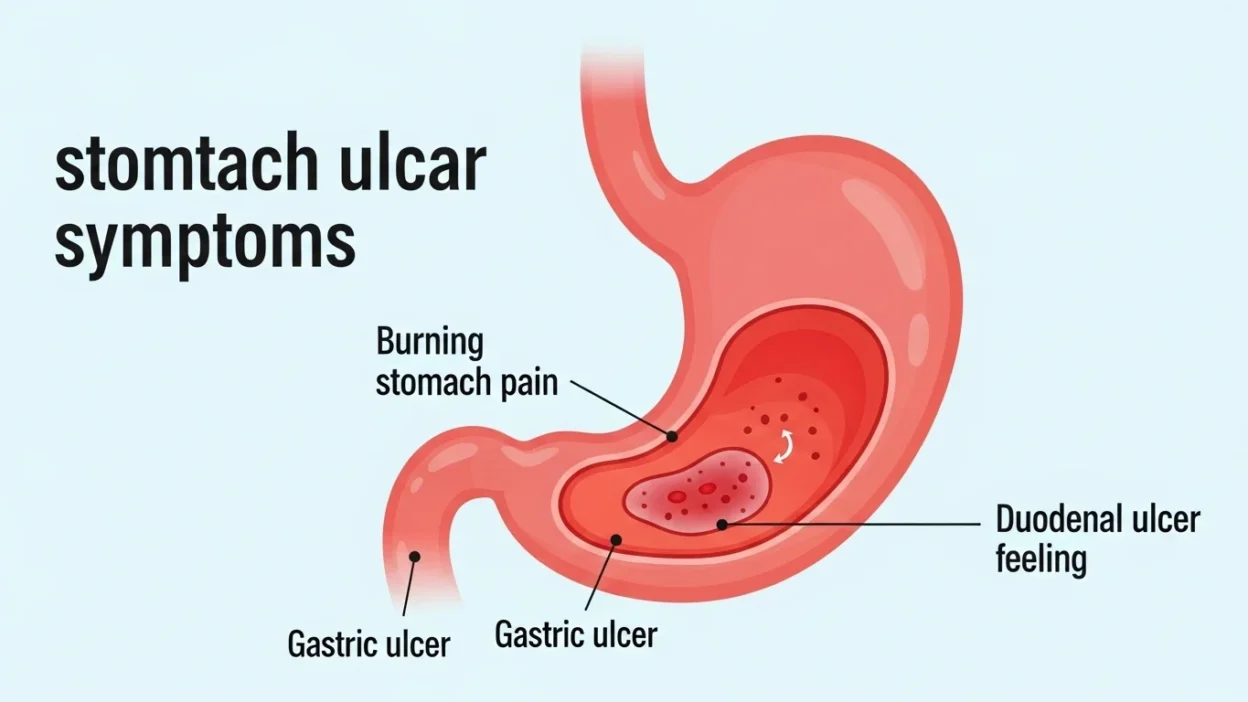
- Stomach (Gastric ulcer): Upper middle abdomen, just under ribs 🔥
- Small intestine (Duodenal ulcer): Upper abdomen, pain may improve after eating 🍽️
- Esophagus (Esophageal ulcer): Behind the breastbone, sometimes feels like heartburn 💓
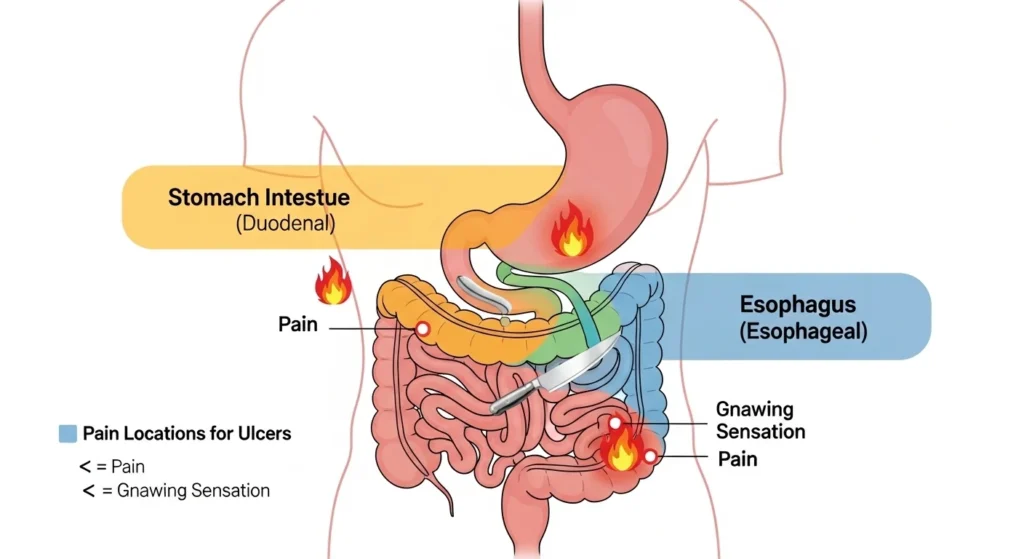
Note: Ulcer pain is medical and serious, not casual. Discuss symptoms clearly with your doctor or on reliable health platforms.
💬 Real Life Examples of Ulcer Descriptions
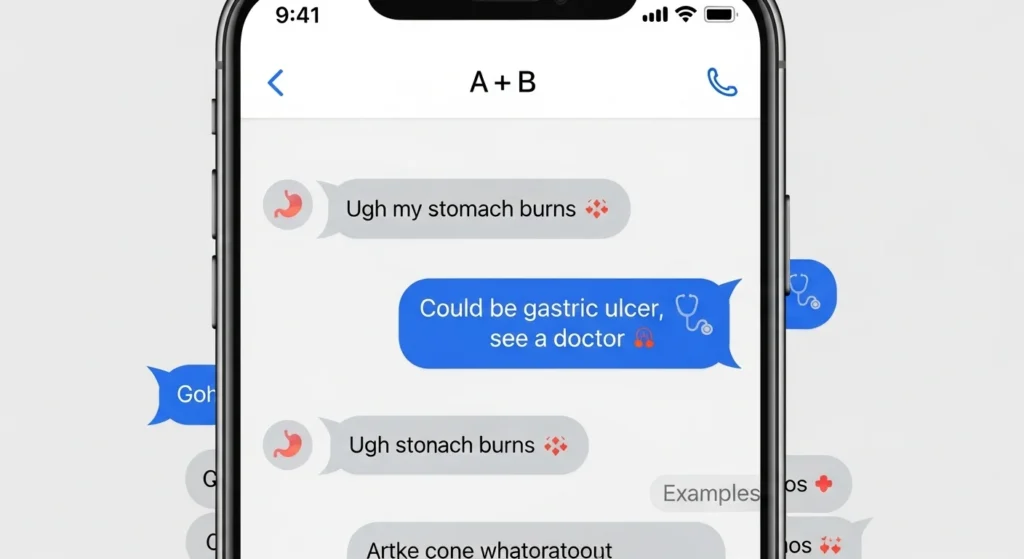
- A: “My stomach burns after meals 😣”
B: “Could be a gastric ulcer pain, best to check with a doctor.” - A: “Pain disappears while eating but returns later 🤔”
B: “Sounds like a duodenal ulcer feeling.” - A: “Chest feels like fire, especially at night 🔥”
B: “Might be an esophageal ulcer symptom, see a physician.” - A: “I feel bloated and nauseous all the time”
B: “Could be ulcer discomfort, try to avoid NSAIDs and see a doctor.”
🕓 When to Use Caution: Ulcer vs Indigestion
✅ Seek Medical Attention If:
- Persistent upper abdominal burning or gnawing
- Pain wakes you at night
- Nausea, vomiting, or bloating is frequent
- Vomiting blood or dark stools appear
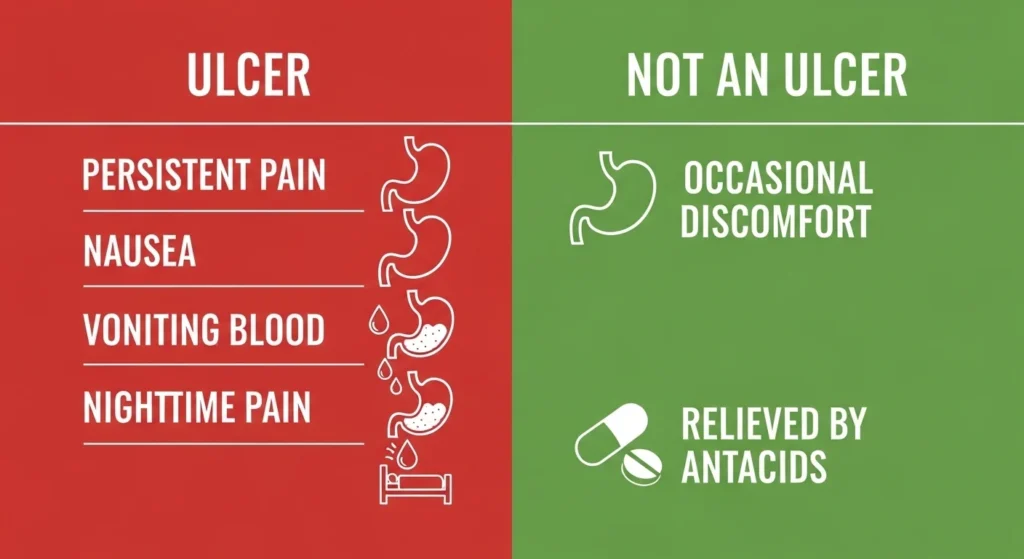
❌ Likely Not an Ulcer:
- Mild, occasional stomach discomfort
- Pain goes away after antacids or food
- Stress or occasional spicy meals are the main triggers
Comparison Table:
| Context | Example Phrase | Why It Works |
| Friend Chat | “My stomach hurts, could it be an ulcer?” | Casual but clear |
| Doctor Visit | “I have persistent upper stomach pain with bloating” | Accurate, descriptive |
| Health Forum | “Experiencing burning stomach pain, nausea, and acid reflux” | Informative & formal |
🔄 Similar Symptoms or Related Conditions
| Condition | Feeling | When to Notice |
| Acid reflux | Burning in chest or throat | After meals or lying down |
| Gastritis | General stomach pain or bloating | Chronic irritation |
| Heartburn | Sharp burning behind breastbone | After spicy/fatty meals |
| Indigestion | Mild discomfort or fullness | After overeating |
❓ FAQs About Ulcer Symptoms
Q1: How does an ulcer feel at first?
A1: Mild burning or gnawing in the upper stomach, sometimes mistaken for indigestion.
Q2: Can ulcers cause nausea?
A2: Yes. Frequent nausea, bloating, or vomiting may be signs of a stomach ulcer.
Q3: Are all ulcers painful?
A3: No. Some “silent ulcers” show few symptoms until complications occur.
Q4: Does eating relieve ulcer pain?
A4: Duodenal ulcers may improve temporarily after meals; gastric ulcers may worsen after eating.
Q5: When should I see a doctor?
A5: Persistent pain, vomiting blood, dark stools, or unexplained weight loss requires immediate medical attention.

Kaliyan Martan is a passionate dreamer and creative thinker who believes in turning ideas into meaningful action. With vision and dedication, he strives to make a lasting impact through innovation and authenticity.