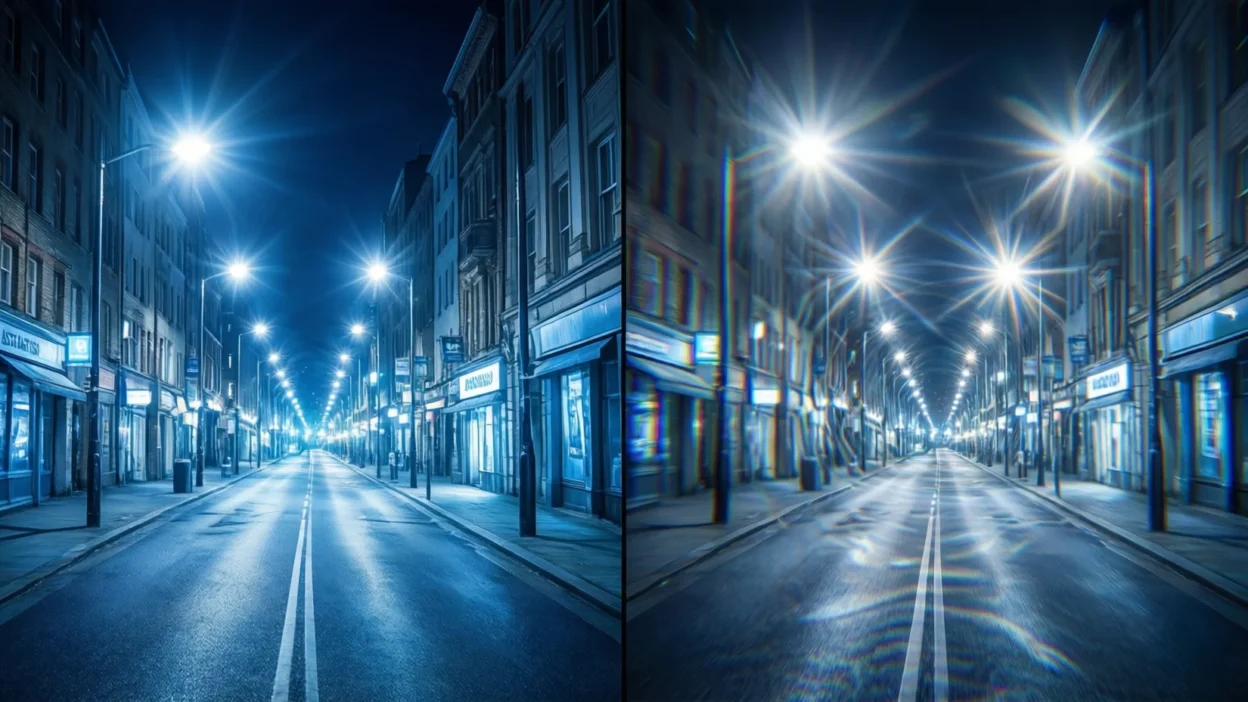
You’re driving at night and notice streetlights look like they’re exploding into streaks. Or maybe words on a page never seem fully sharp, no matter how much you squint.
If you’ve ever wondered “Is this normal?”, you’re not alone.
Many people experience these visual distortions without realizing there’s a name for it: astigmatism.
So, what does astigmatism look like in real life? It doesn’t mean total blur or darkness. Instead, it subtly changes how shapes, lines, and lights appear—sometimes enough to cause headaches or eye strain, especially during reading or night driving.
Quick Answer:
Astigmatism is a common eye condition where vision looks blurred, stretched, or distorted because the eye doesn’t focus light evenly.
🧠 What Does Astigmatism Mean?
Astigmatism is an astigmatism eye condition caused by an irregular shape of the cornea or lens. In a normal eye, the cornea is evenly curved like a basketball. In astigmatism, it’s shaped more like a football.
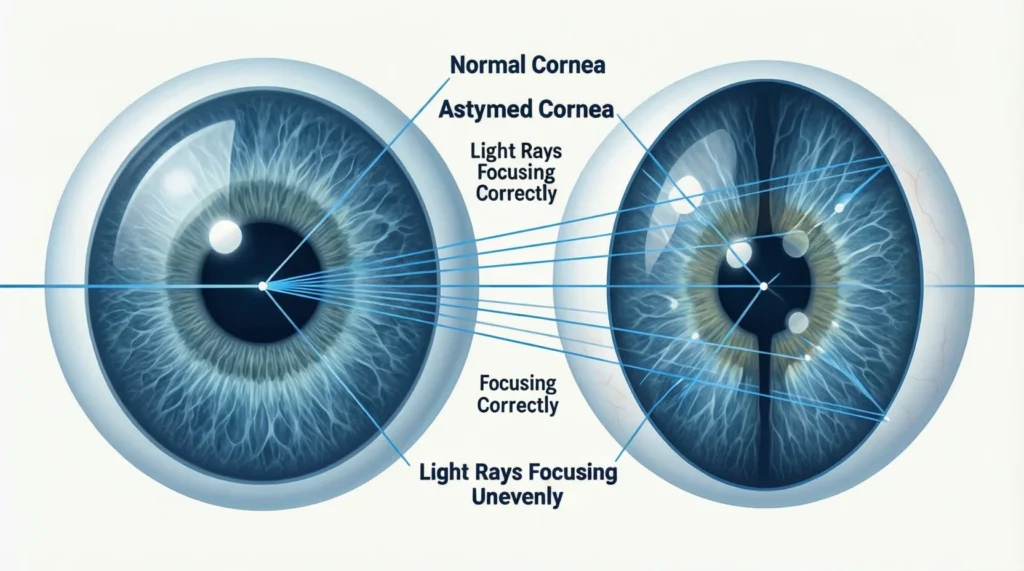
Because of this uneven curve, light entering the eye doesn’t focus on a single point on the retina. Instead, it spreads out, leading to distorted vision astigmatism at both near and far distances.
Simple explanation:
Your eye bends light unevenly → images don’t focus correctly → vision looks blurry or warped.
In short:
What does astigmatism look like = uneven focus = blurred or distorted vision.
👁️ What Astigmatism Actually Looks Like to the Human Eye
This is what most people really want to know.
If you have astigmatism, you may notice:
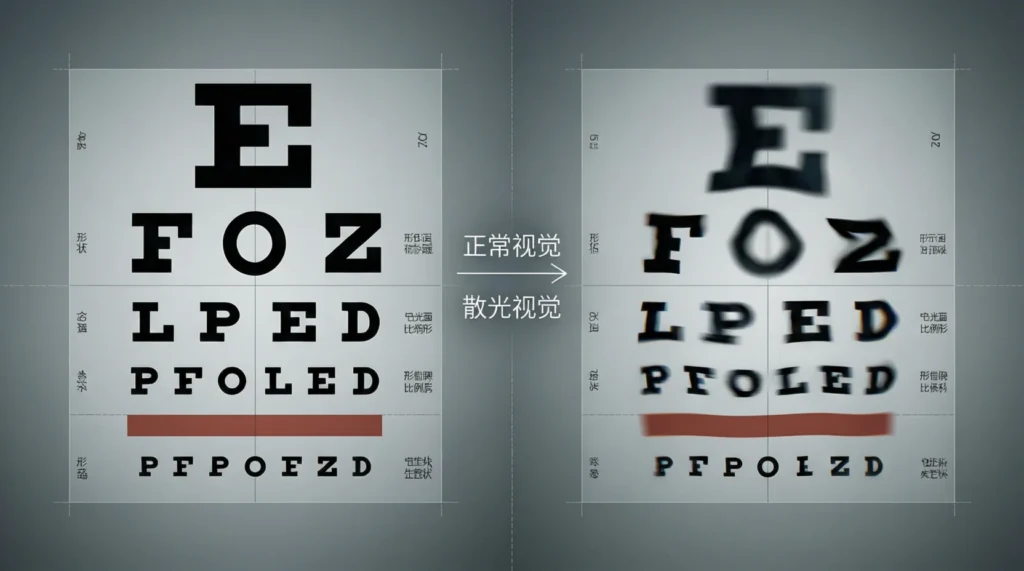
- Straight lines appear tilted, doubled, or shadowed
- Circular objects (like clocks or headlights) look oval
- Text looks smeared, especially small fonts
- Lights have streaks, rays, or halos, especially at night
- Objects never look fully sharp, even when close
Normal Vision vs Astigmatism Vision
| Feature | Normal Vision | Astigmatism Vision |
| Text | Sharp & clean | Blurry or shadowed |
| Lines | Straight | Wavy or doubled |
| Lights | Clear points | Halos or streaks |
| Shapes | Even & round | Slightly stretched |
This comparison clearly shows astigmatism vs normal vision, which is why many people struggle to describe it at first.
🌙 How Astigmatism Affects Vision During the Day vs Night
Daytime Vision
During the day, mild astigmatism symptoms may be barely noticeable. You might:
- Squint often
- Feel eye strain after reading
- Get headaches after screen use
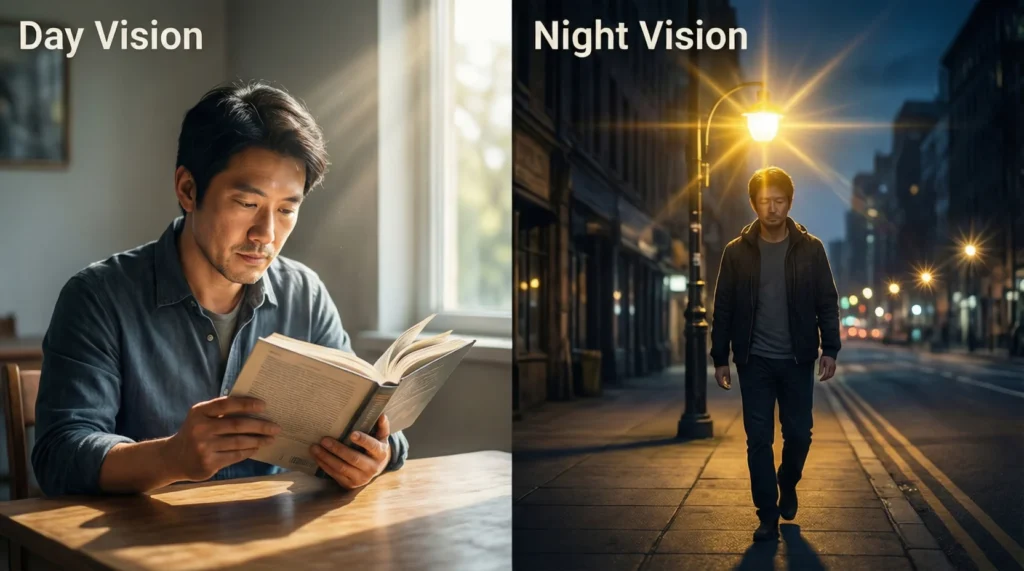
Night Vision
At night, symptoms usually get worse. Astigmatism night vision problems include:
- Starburst patterns around lights
- Glare from headlights
- Difficulty judging distance while driving
This is why many people first realize they have astigmatism when driving at night.
📱 Common Signs and Symptoms of Astigmatism
The most common signs of astigmatism include:
- Blurred vision at all distances
- Eye fatigue or burning sensation
- Frequent headaches
- Trouble focusing on screens
- Halos around lights (astigmatism)
- Squinting to see clearly
These astigmatism symptoms can vary from person to person, depending on severity.
🩺 How Doctors Identify Astigmatism
Astigmatism is usually diagnosed by an optometrist or ophthalmologist during a routine eye exam.

Tests may include:
- Visual acuity test
- Keratometry (measures corneal curve)
- Refraction test
According to eye specialists, astigmatism is one of the most common eyesight problems worldwide, and many people have it without knowing.
🔄 Astigmatism Compared to Other Vision Problems
| Condition | How Vision Looks | Key Difference |
| Astigmatism | Distorted at all distances | Uneven focus |
| Nearsightedness | Far objects blurry | Distance-only blur |
| Farsightedness | Close objects blurry | Near-only blur |
| Presbyopia | Difficulty focusing close | Age-related |
Understanding these differences helps explain how people with astigmatism see compared to other conditions.
❓ FAQs About Astigmatism
Q. What does astigmatism look like in real life?
It looks like blurred or stretched vision, shadowed text, and lights with streaks or halos—especially noticeable at night.
Q. Can astigmatism cause double vision?
Yes. In some cases, astigmatism can cause ghosting or shadow images, especially when reading.
Q. Is astigmatism worse at night?
Yes. Low light causes pupils to expand, which often makes astigmatism night vision issues more noticeable.
Q. Can mild astigmatism be ignored?
Even mild astigmatism symptoms can cause headaches and eye strain if left uncorrected.
Q. How is astigmatism corrected?
Astigmatism vision can be corrected with:
- Glasses
- Toric contact lenses
- Laser eye surgery (LASIK)
✅ Conclusion
So, what does astigmatism look like? It looks like a world that’s almost clear—but never quite sharp.
Lines may bend, lights may streak, and text may blur no matter how hard you focus. These are classic astigmatism symptoms, and they’re far more common than most people realize.
The good news is that astigmatism is easy to diagnose and highly treatable.
If your vision feels distorted or night driving is uncomfortable, a simple eye exam can make a dramatic difference. Clear vision isn’t out of reach—it just needs the right correction.

Kaliyan Martan is a passionate dreamer and creative thinker who believes in turning ideas into meaningful action. With vision and dedication, he strives to make a lasting impact through innovation and authenticity.