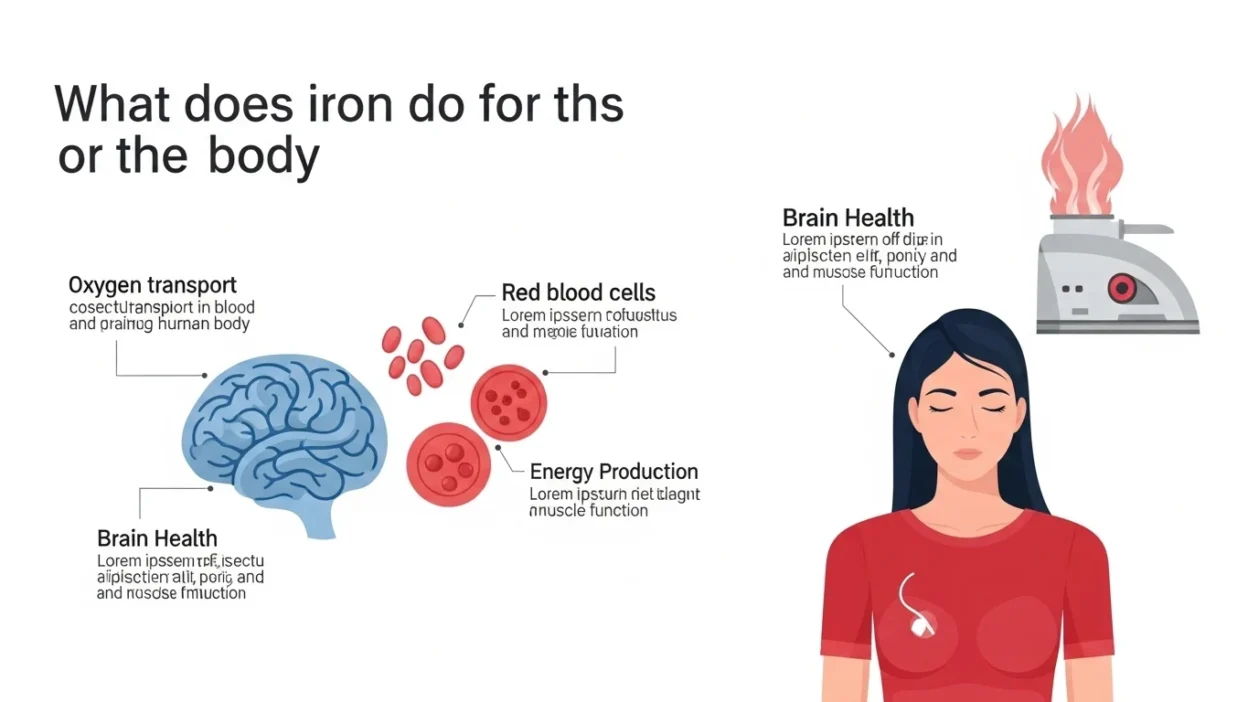
Have you ever felt unusually tired, dizzy, or weak and wondered what might be causing it? Many people experience these symptoms and later discover that their iron levels are low.
Iron is often talked about in nutrition discussions, doctor visits, or health articles, but many people still ask the same question: what does iron actually do inside the body?
Iron may sound like something related to metal tools, but it is actually one of the most important nutrients your body needs to stay healthy and energized.
Understanding what does iron do for the body can help you prevent fatigue, improve your diet, and maintain better overall health.
Quick Answer:
Iron is an essential mineral that helps your body produce red blood cells, transport oxygen, support energy production, and maintain healthy brain and immune function.
According to organizations like the National Institutes of Health and the World Health Organization, iron deficiency is one of the most common nutritional deficiencies worldwide.
🧠 What Does Iron Do for the Body?
Iron plays several vital roles in keeping the body functioning properly. The most important function of iron in the body is helping create hemoglobin, a protein found in red blood cells.
Hemoglobin carries oxygen from your lungs to every part of your body. Without enough iron, your body cannot produce sufficient hemoglobin, which means less oxygen reaches your organs and muscles.
This oxygen delivery system is essential for energy, brain function, and overall health.
Iron helps the body:
- Produce healthy red blood cells
- Transport oxygen through the bloodstream
- Support energy metabolism
- Improve brain function and concentration
- Strengthen the immune system
Iron also supports the production of myoglobin, another protein that stores oxygen in muscles and helps them function during physical activity.
In short:
Iron supports oxygen transport, blood production, and energy generation.
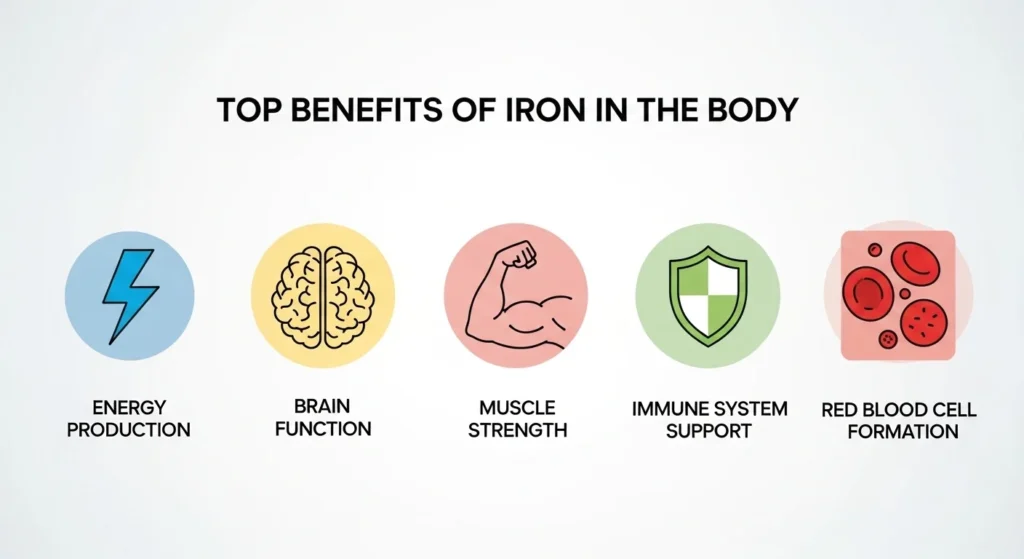
⭐ Top Benefits of Iron in the Body
The benefits of iron in the body extend far beyond blood health. This essential mineral supports multiple systems that keep your body running smoothly.
1. Supports Red Blood Cell Production
Iron is essential for producing hemoglobin, which allows red blood cells to deliver oxygen to tissues and organs.
2. Boosts Energy Levels
One of the most noticeable iron benefits for health is improved energy. When your body receives enough oxygen, your cells can produce energy more efficiently.
3. Improves Brain Function
The brain requires a steady supply of oxygen to function properly. Iron helps support memory, concentration, and mental clarity.
4. Enhances Muscle Performance
Muscles rely on oxygen for endurance and strength. Iron helps deliver oxygen to muscles during physical activity.
5. Supports the Immune System
Iron helps immune cells function properly, allowing the body to fight infections more effectively.
Because of these benefits, doctors emphasize the importance of iron in nutrition for maintaining good health.
⚠️ Signs of Low Iron in the Body
When the body does not get enough iron, it can lead to iron deficiency and eventually a condition called Iron Deficiency Anemia.
Recognizing the signs of low iron in the body early can help prevent more serious health problems.
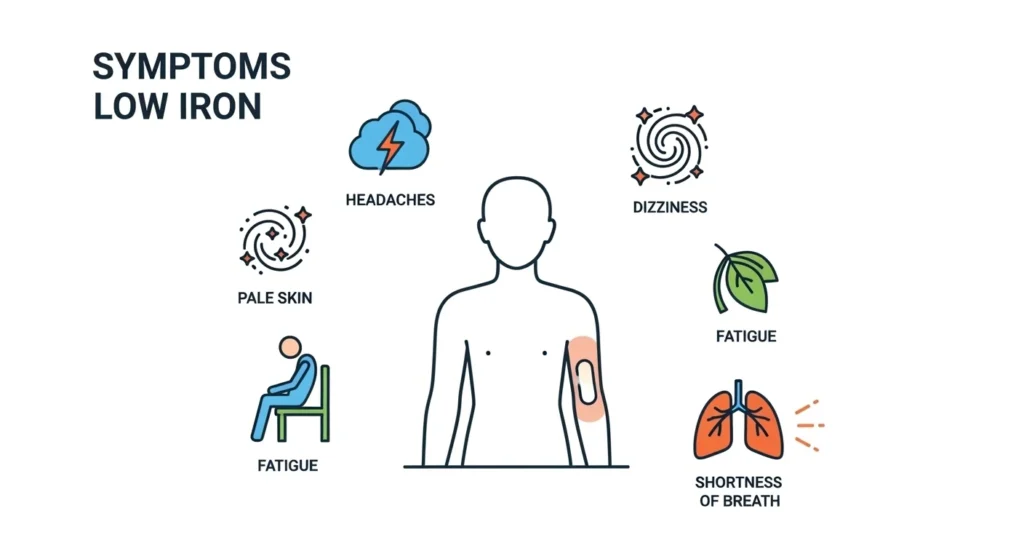
Common iron deficiency symptoms include:
- Constant fatigue or weakness
- Pale or yellowish skin
- Shortness of breath
- Dizziness or headaches
- Cold hands and feet
- Chest pain or rapid heartbeat
- Difficulty concentrating
These symptoms occur because the body cannot deliver enough oxygen to tissues.
According to the Centers for Disease Control and Prevention, iron deficiency anemia affects millions of people worldwide, especially women and children.
🥗 Best Foods Rich in Iron
One of the easiest ways to maintain healthy iron levels is by eating foods rich in iron.
There are two main types of dietary iron.
Heme Iron (Animal Sources)
Heme iron is easier for the body to absorb.
Examples include:
- Red meat
- Chicken
- Fish
- Turkey
- Liver
Non Heme Iron (Plant Sources)
Non-heme iron comes from plant foods and is still an important part of a balanced diet.
Examples include:
- Spinach
- Lentils
- Beans
- Tofu
- Pumpkin seeds
- Fortified cereals
- Quinoa
Eating a variety of these foods rich in iron helps maintain proper iron levels.
🍊 Tips to Improve Iron Absorption
Even if you eat iron-rich foods, your body must be able to absorb the iron effectively.
Here are some simple tips to increase absorption:
Pair iron with vitamin C
Foods like oranges, tomatoes, and lemons help your body absorb iron better.
Avoid drinking tea or coffee with meals
These drinks contain compounds that reduce iron absorption.
Combine plant and animal sources
Eating heme and non-heme iron together improves overall absorption.
These simple dietary habits can help maximize the health benefits of iron.
👩 Who Needs More Iron?
Some groups of people require higher iron intake than others.
People with higher iron needs include:

- Pregnant women
- Teenage girls during growth years
- Women with heavy menstrual cycles
- Athletes and active individuals
- People with blood loss or certain medical conditions
Understanding why the body needs iron helps ensure that people in these groups maintain proper iron levels.
📊 Daily Iron Requirements
Meeting your daily iron requirements is essential for maintaining healthy blood and energy levels.
General recommended intake:
| Group | Daily Iron Requirement |
| Adult Men | 8 mg |
| Adult Women | 18 mg |
| Pregnant Women | 27 mg |
| Teenagers | 11–15 mg |
These guidelines are recommended by the National Institutes of Health.
⚠️ Can You Have Too Much Iron?
While iron is essential, excessive iron intake can also be harmful.
Too much iron may cause:
- Stomach pain
- Nausea
- Constipation
- Organ damage in severe cases
For this reason, iron supplements should only be taken if recommended by a healthcare professional.
❓ FAQs About Iron and the Body
1. What does iron do for the body?
Iron helps produce hemoglobin, which carries oxygen through the bloodstream and supports energy production, brain function, and immune health.
2. Why is iron important for the body?
Iron is important because it allows the body to transport oxygen, produce red blood cells, and maintain normal energy levels.
3. What are the most common iron deficiency symptoms?
Common symptoms include fatigue, weakness, dizziness, pale skin, and shortness of breath.
4. What foods are rich in iron?
Foods high in iron include red meat, spinach, lentils, beans, tofu, and fortified cereals.
5. How much iron should you consume daily?
Most adults need between 8–18 mg of iron daily depending on age and gender.
✅ Conclusion: Why Iron Is Essential for Your Health
Understanding what does iron do for the body highlights how vital this mineral is for maintaining overall health. Iron supports oxygen transport, red blood cell production, brain function, and energy levels.
Without enough iron, the body struggles to deliver oxygen to tissues, which can lead to fatigue and other health problems.
The many benefits of iron in the body include stronger immunity, improved energy, and better cognitive performance.
Eating foods rich in iron and meeting your daily iron requirements can help prevent iron deficiency and support long term health.
If you frequently feel tired, weak, or dizzy, it may be worth discussing your iron levels with a healthcare professional.
Maintaining proper iron intake is a simple but powerful step toward better health and well being. 💪🩸

Kaliyan Martan is a passionate dreamer and creative thinker who believes in turning ideas into meaningful action. With vision and dedication, he strives to make a lasting impact through innovation and authenticity.