
If you’ve ever struggled with sleep issues, muscle cramps, or stress, you may have seen magnesium glycinate in a supplement aisle or online.
At first glance, the name sounds complicated, and you might wonder: what does magnesium glycinate do, and is it really better than other forms of magnesium?
Magnesium glycinate is one of the most popular magnesium supplements because it’s gentle on the stomach, highly absorbable, and versatile.
In this article, we’ll break down its benefits, uses, dosage, safety, and how it compares to other magnesium forms, so you can decide whether it’s right for you.
Quick Answer:
Magnesium glycinate is a form of magnesium bound with glycine that helps support sleep, muscle relaxation, nerve function, stress reduction, and overall wellness. It’s known for being easier to absorb than many other magnesium supplements.
🧠 What Does Magnesium Glycinate Do?
Magnesium glycinate combines magnesium, an essential mineral, with glycine, an amino acid. This pairing improves absorption and reduces the likelihood of digestive discomfort, which is common with other forms like magnesium oxide.
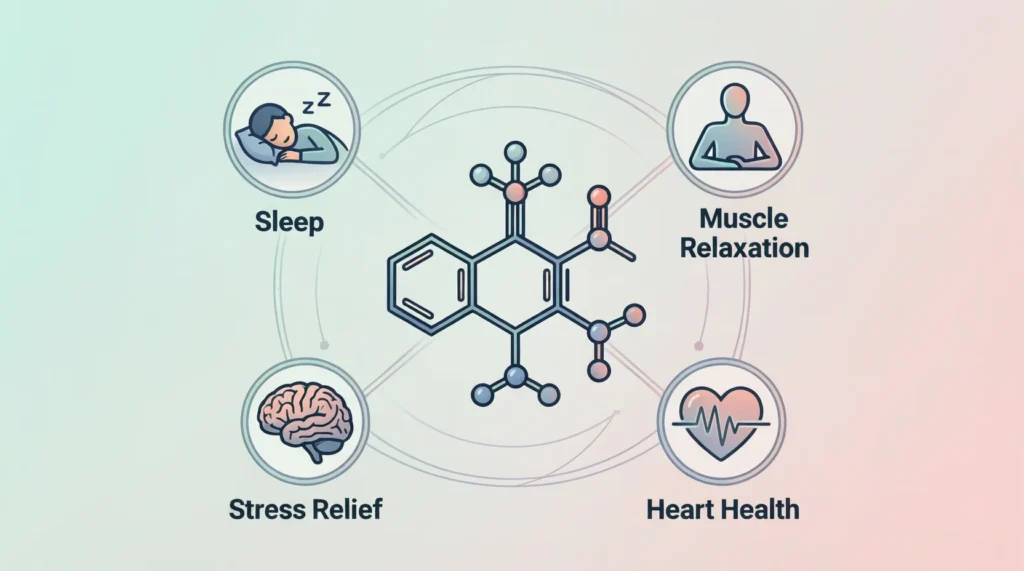
Magnesium itself plays a crucial role in:
- ✅ Supporting muscle relaxation and reducing cramps
- ✅ Calming the nervous system and promoting sleep
- ✅ Maintaining heart rhythm and blood pressure
- ✅ Supporting bone health
- ✅ Aiding energy production and reducing fatigue
Example:
“I started taking magnesium glycinate for my nighttime leg cramps, and within a week, they were much less frequent.”
In short:
Magnesium glycinate = magnesium + glycine = better absorption, relaxed muscles, improved sleep, and calmer nerves.
📊 Magnesium Glycinate Benefits
Here are the main magnesium glycinate benefits, supported by research:
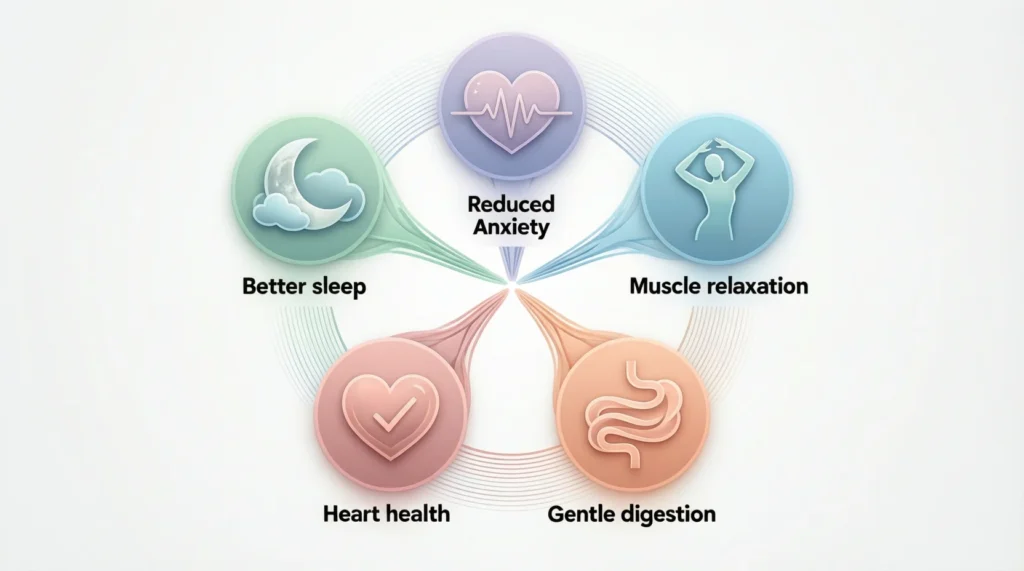
- Better Sleep Quality 💤
Magnesium glycinate can help regulate neurotransmitters that calm the brain, making it easier to fall and stay asleep. - Muscle Relaxation and Cramp Relief 💪
It reduces muscle tension and can prevent nocturnal leg cramps. - Reduced Stress and Anxiety 😌
Magnesium supports the nervous system and helps balance stress hormones. - Supports Heart Health ❤️
Magnesium helps maintain healthy blood pressure and heart rhythm. - Gentle on Digestion
Unlike magnesium citrate or oxide, glycinate rarely causes diarrhea or stomach upset, making it suitable for daily use.
🏥 Who Should Take Magnesium Glycinate?
Magnesium glycinate is ideal for:

- People with difficulty sleeping or insomnia
- Individuals experiencing stress or anxiety
- Those with muscle cramps or spasms
- People who need daily magnesium supplementation but cannot tolerate other forms
Important: If you have kidney disease or take medications affecting magnesium, consult your doctor first.
💊 Magnesium Glycinate vs Other Forms
| Magnesium Type | Purpose / Benefit | Key Difference |
| Magnesium Glycinate | Sleep, anxiety, muscle cramps | Gentle, highly absorbable |
| Magnesium Citrate | Constipation relief | Can cause loose stools |
| Magnesium Oxide | High magnesium content | Poorly absorbed, may upset stomach |
| Magnesium Malate | Energy & fatigue | Supports cellular energy production |
| Magnesium L-Threonate | Cognitive support | Crosses blood-brain barrier, may improve memory |
Tip: Magnesium glycinate is preferred for long-term supplementation due to its gentleness and high absorption.
⏰ How and When to Take Magnesium Glycinate
- Typical Dosage: 200–400 mg per day (follow label or doctor’s advice)
- Best Time to Take: Evening, as it may promote relaxation and improve sleep
- Form: Capsules, tablets, or powder

Quick Note: Magnesium glycinate can be taken with or without food. Consistency matters for maximum benefit.
⚠️ Safety and Side Effects
Magnesium glycinate is generally safe for most adults, but consider the following:
✅ Safe Use
- Follow recommended dosage
- Take daily for gradual benefits
- Suitable for sensitive stomachs
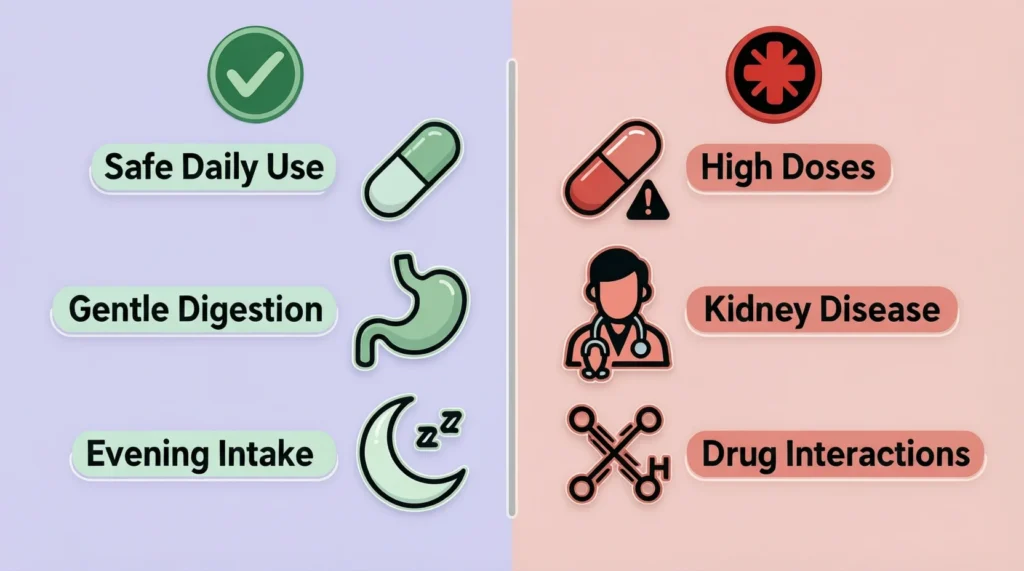
❌ When Not to Use
- Severe kidney disease (without medical supervision)
- Extremely high doses (>500 mg/day)
- As a replacement for prescribed medications
Possible Side Effects: Mild nausea, drowsiness, or loose stools if taken in high doses.
🧪 How Magnesium Glycinate Works in the Body
Magnesium glycinate helps your body in two ways:
- Magnesium: Regulates muscle and nerve function, energy production, and bone health.
- Glycine: A calming amino acid that supports relaxation, improves sleep quality, and enhances magnesium absorption.
Together, this combination is effective for stress, sleep, and muscle recovery, without the laxative effect of other magnesium forms.
📝 Real-Life Use Cases
- For Sleep: Take 200–400 mg 30–60 minutes before bed. Users often report falling asleep faster and waking up less frequently.
- For Stress/Anxiety: Daily supplementation helps regulate cortisol and nervous system activity.
- For Muscle Cramps: Especially helpful for nighttime leg cramps and post-workout recovery.
- For Daily Wellness: Maintains magnesium levels, supports heart and bone health.
❓ FAQs About Magnesium Glycinate
Q1: What does magnesium glycinate do for sleep?
It relaxes muscles and calms the nervous system, making it easier to fall asleep.
Q2: Is magnesium glycinate better than magnesium citrate?
Yes, for daily use and sleep support, glycinate is gentler and less likely to cause diarrhea.
Q3: Can I take magnesium glycinate every day?
Yes, most adults can safely take 200–400 mg daily, but check with a doctor if you have kidney issues.
Q4: Are there side effects?
Usually mild: drowsiness or loose stools if taken in very high doses.
Q5: How long until it works?
Some people notice benefits within a few days; full effects may take 1–2 weeks.
Q6: Who should avoid it?
Those with severe kidney disease or people on medications that affect magnesium absorption.
✅ Final Thoughts
If you’ve been searching what magnesium glycinate does, the answer is simple: it supports sleep, muscle relaxation, stress relief, and overall wellness. Its high absorption and gentle nature make it a popular choice for daily supplementation.
With the right dosage and timing, magnesium glycinate can be a safe, effective way to enhance sleep, reduce stress, and maintain muscle and heart health.
Always consult your healthcare provider before starting a new supplement, especially if you have medical conditions or take prescription medications.

Mitcheel Satrac is a passionate visionary dedicated to creativity, innovation, and meaningful success. His work reflects authenticity, purpose, and a drive to make a real impact.