
Have you ever opened a closet, basement, or forgotten drawer and been hit by a strange, musty odor? At first, you might think it’s just old stuff, but that unmistakable mold smell is often the first sign of a hidden problem.
Detecting mold early can save your home from damage and protect your health.
Quick Answer:
Mold smells musty, damp, and earthy. Some types, like black mold, are stronger and more pungent.
Noticing this odor early helps you identify problem areas and prevent serious mold growth.
What Does Mold Smell Like? 🧠
Mold produces a distinct scent caused by microbial volatile organic compounds (MVOCs). The smell can vary depending on the type of mold and the materials it’s growing on:
- Musty: Like damp towels or old books
- Damp / wet: Similar to wet soil or stagnant water
- Earthy / rotten wood: Usually indicates structural mold
- Strong pungent odor: Often associated with black mold
Example:
“I walked into the basement and smelled a damp, earthy odor — that unmistakable mold smell told me to check for leaks immediately.”
In short: Mold smell = musty, damp, or earthy odor = early warning for hidden mold growth.
Where Is Mold Smell Commonly Found? 📱
Mold thrives in warm, damp, and poorly ventilated spaces. You’re likely to notice a moldy smell in your house in these areas:

- 🏠 Basements & Crawl Spaces: Dark, humid areas with poor airflow
- 🚿 Bathrooms: Around showers, tubs, sinks, and grout
- 🧺 Laundry Rooms: Damp towels, wet clothes, or washing machine leaks
- 🪟 Behind Walls & Under Carpets: Hidden moisture spots
- 🍞 Pantries & Refrigerators: Forgotten food items can also produce a musty scent
Tip: Mold smell is a signal to inspect the area for moisture or visible mold growth.
How to Identify Mold by Smell and Sight 🔍
Not all mold can be seen immediately, but combining smell and visual cues helps you detect it early:
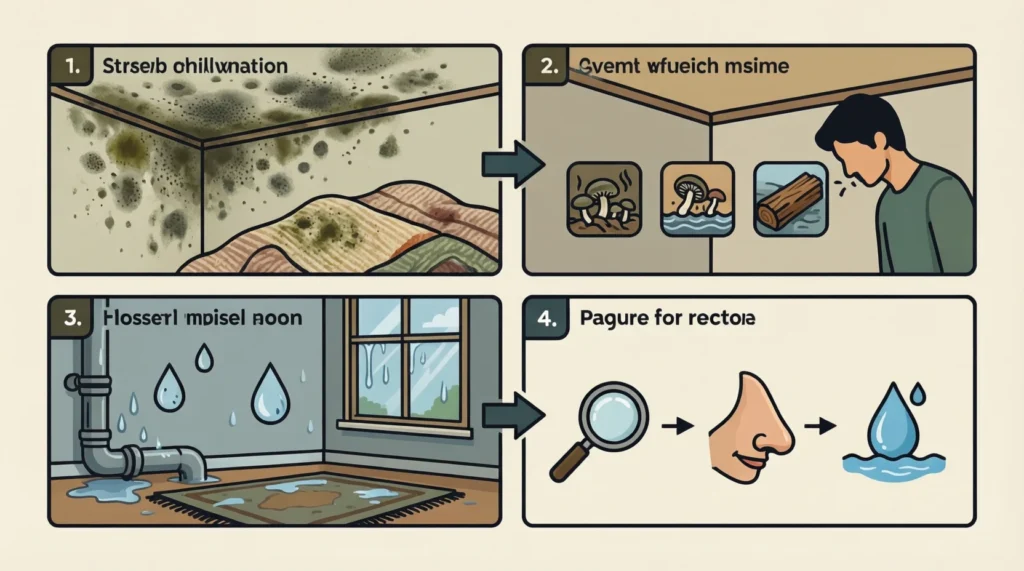
- Musty smell + discoloration: Yellow, green, or black spots on walls, ceilings, or fabrics
- Persistent damp odor: Areas that stay humid or wet for days
- Peeling paint or wallpaper: Moisture behind walls may cause both odor and visible damage
- Rotting wood smell: Indicates structural mold, often hidden in floors, beams, or doors
Quick Mold Detection Table:
| Smell / Odor | Likely Mold Type | Where to Check |
| Musty / damp | Common indoor mold | Basements, closets, laundry rooms |
| Rotten wood / earthy | Structural mold | Floors, beams, wooden furniture |
| Strong pungent smell | Black mold (toxic) | Bathrooms, walls, hidden areas |
| Mild mildew odor | Mildew | Windowsills, damp fabrics |
Health Risks of Mold Smell ⚠️
Being around mold, even if you can only smell it, can affect your health:

- Allergic reactions: sneezing, runny nose, itchy eyes
- Respiratory problems: coughing, wheezing, asthma triggers
- Skin irritation: rashes or itchiness from contact
- Long-term exposure: can worsen chronic lung conditions
Tip: If you detect black mold smell or persistent musty odor, ventilate the area and consult a professional for cleanup.
How to Get Rid of Mold Smell 🧽
Removing the odor effectively requires addressing the source:

- Identify and eliminate moisture – fix leaks, improve ventilation, and use dehumidifiers.
- Clean affected surfaces – scrub with mold-safe cleaners or a vinegar solution.
- Replace porous materials – carpets, ceiling tiles, or insulation that have mold growth.
- Prevent future growth – keep humidity below 50%, regularly clean and air out damp areas.
Quick Tip: Simply masking the smell with air fresheners won’t solve the problem — you must remove the mold source.
Similar Smells and Confusing Odors 🔄
Sometimes mold can be mistaken for other musty smells. Here’s a guide:
| Odor | Description | When to Consider Mold |
| Mildew | Slightly musty, less pungent | Check bathrooms and damp fabrics |
| Rotten Wood | Earthy, decayed wood scent | Basements, attics |
| Damp Carpet | Wet, stale odor | Under rugs, old carpets |
| Wet Dog | Musky, animal-like | Only with accompanying moisture |
| Soil / Earth | Fresh, natural earthy smell | Usually harmless, not mold |
FAQs About Mold Smell ❓
Q1: Can all mold be smelled?
A: No. Some molds produce little odor, while black mold often produces a strong, pungent smell.
Q2: How can I distinguish mold smell from general musty odors?
A: Mold odor is persistent, localized, and often stronger near moisture sources. Temporary musty smells fade quickly.
Q3: Is mold smell harmful?
A: Yes. Prolonged exposure can trigger allergies, asthma, and respiratory irritation. Sensitive individuals should avoid moldy areas.
Q4: How do I get rid of mold smell?
A: Remove the moisture source, clean affected areas, ventilate, and replace heavily affected materials.
Q5: Can mold smell return after cleaning?
A: Yes, if the underlying moisture problem isn’t fixed. Prevention is the best strategy.
Q6: Should I hire a professional for black mold?
A: Absolutely. Black mold smell can indicate toxic mold that requires professional removal for safety.
Conclusion ✅
Detecting mold smell early is crucial for your health and home. A musty basement smell, damp odor, or moldy smell in bathroom signals moisture problems that need immediate attention.
By combining smell with visual inspection, taking safety precautions, and cleaning or removing affected materials, you can stop mold growth before it becomes serious.
Remember: Mold smell is not just unpleasant — it’s a warning. Act fast, ventilate, clean, and prevent further growth.

Mitcheel Satrac is a passionate visionary dedicated to creativity, innovation, and meaningful success. His work reflects authenticity, purpose, and a drive to make a real impact.