
You’ve probably seen headlines like, “What’s his net worth?” or searched what does net worth mean after hearing it in a finance video or celebrity news post. It sounds technical, but the concept is actually simple and very important.
Whether you’re managing your personal finances, comparing wealth, or just curious about how money works, understanding net worth helps you measure real financial health.
Quick Answer:
Net worth means the total value of everything you own (assets) minus everything you owe (liabilities). It shows your true financial position at a specific point in time.
Let’s break it down clearly and practically.
🧠 What Does Net Worth Mean in Simple Words?
The net worth definition is straightforward:

Net worth is the difference between your total assets and total liabilities.
If you’re wondering what is net worth in simple words, think of it like this:
- Assets = What you own
- Liabilities = What you owe
- Net Worth = Assets − Liabilities
Simple Net Worth Example
If you have:
- $50,000 in savings
- $150,000 home value
- $20,000 in investments
Your total assets = $220,000
If you owe:
- $100,000 mortgage
- $10,000 car loan
Your liabilities = $110,000
Net Worth = $220,000 − $110,000 = $110,000
In short:
Net Worth = Assets − Liabilities = Your real financial value.
📊 Net Worth Formula Explained
The official net worth formula is:
Net Worth = Total Assets − Total Liabilities

What Counts as Assets?
Assets may include:
- Cash
- Savings accounts
- Investments
- Property
- Vehicles
- Retirement accounts
- Business ownership
What Counts as Liabilities?
Liabilities include:
- Credit card debt
- Student loans
- Mortgage
- Car loans
- Personal loans
Understanding this formula helps you calculate your financial standing accurately.
📱 Where Is Net Worth Commonly Used?
The term appears in both financial and social contexts.

💼 Financial Context
- Personal finance planning
- Loan applications
- Investment tracking
- Retirement planning
- Business valuation
🌍 Social & Online Context
- Instagram posts about success
- TikTok finance videos
- Celebrity wealth discussions
- Reddit money forums
- Casual texting about money goals
Tone Guide:
- Professional finance discussions ✅
- Casual money conversations ✅
- Formal email usage (when relevant) ✅
- Random personal questioning ❌
💬 Examples of Net Worth in Conversation
Here’s how it naturally appears in everyday conversations:

1️. Example
A: “What’s the difference between salary and net worth?”
B: “Net worth shows total wealth, not just income.”
2️. Example
A: “I paid off my loan today!”
B: “Nice! That improves your net worth instantly 👏”
3️. Example
A: “Why do celebrities talk about net worth?”
B: “Because it reflects their total assets minus debts.”
4️. Example
A: “Can net worth be negative?”
B: “Yes, if debts are higher than assets.”
5️. Example
A: “I started investing this year.”
B: “Great move — it’ll increase your net worth over time.”
These examples show practical and realistic usage.
🆚 Net Worth vs Income: What’s the Difference?
Many people confuse income with net worth.
| Term | Meaning | Key Difference |
| Income | Money you earn regularly | Monthly or yearly earnings |
| Net Worth | Assets minus liabilities | Total accumulated wealth |
Example:
Someone may earn $100,000 per year (high income) but still have a low net worth if they carry heavy debt.
That’s why understanding the net worth vs income difference is essential.
📉 Can Net Worth Be Negative?
Yes and it’s more common than people think.
If your liabilities are greater than your assets, your net worth becomes negative.
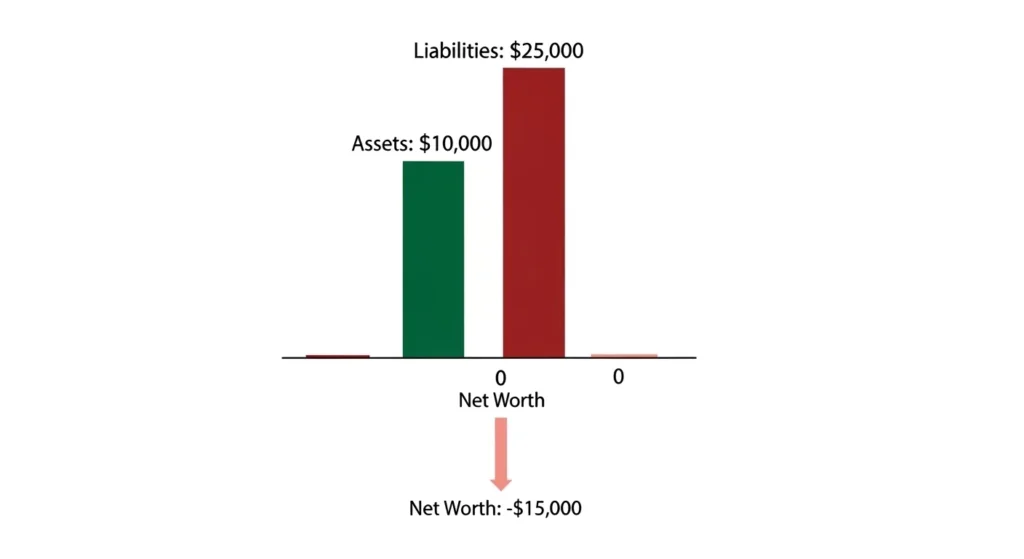
Example:
- Assets: $10,000
- Liabilities: $25,000
- Net Worth: −$15,000
This is common for:
- Students with loans
- New homeowners
- Young professionals starting careers
The good news? Net worth can improve over time.
📈 Why Net Worth Is Important
Understanding financial net worth meaning helps you:

- Measure financial health
- Track wealth growth
- Plan retirement
- Apply for loans
- Set long-term financial goals
Banks and lenders often evaluate net worth before approving large loans.
For businesses, net worth indicates company value.
🧮 How to Calculate Net Worth Step by Step
If you want to calculate your own net worth:

Step 1: Add All Assets
List everything valuable you own.
Step 2: Add All Liabilities
List all outstanding debts.
Step 3: Subtract
Assets − Liabilities = Net Worth
You can also use a personal net worth calculator app to track changes monthly.
🔄 Similar Financial Terms
| Term | Meaning | When to Use |
| Wealth | Overall financial resources | General discussion |
| Assets | What you own | Accounting context |
| Liabilities | What you owe | Financial reports |
| Equity | Ownership value after debt | Property/business |
| Financial Standing | Overall financial condition | Semi-formal |
These terms often appear alongside net worth in financial conversations.
❓ FAQs About Net Worth
1️. What does net worth mean exactly?
It means the total value of your assets minus your liabilities.
2️. Is net worth the same as income?
No. Income is what you earn; net worth is what you own after debt.
3️. How often should I calculate net worth?
Many people review it monthly or yearly.
4️. Why do websites publish celebrity net worth?
Because it estimates total financial value, not just salary.
5️. Can net worth change quickly?
Yes. Investments, property values, debt payments, and market changes can impact it.
Final Thoughts
Now you fully understand what does net worth mean, how to calculate it, and why it matters.
Net worth is one of the clearest indicators of financial health. It goes beyond income and focuses on total wealth.
Whether you’re managing personal finances, researching investments, or simply learning about money, knowing your net worth helps you make smarter financial decisions.
The key takeaway:
Increase assets, reduce liabilities, and your net worth grows.
That’s the foundation of long-term financial success. 💰📈

Mitcheel Satrac is a passionate visionary dedicated to creativity, innovation, and meaningful success. His work reflects authenticity, purpose, and a drive to make a real impact.