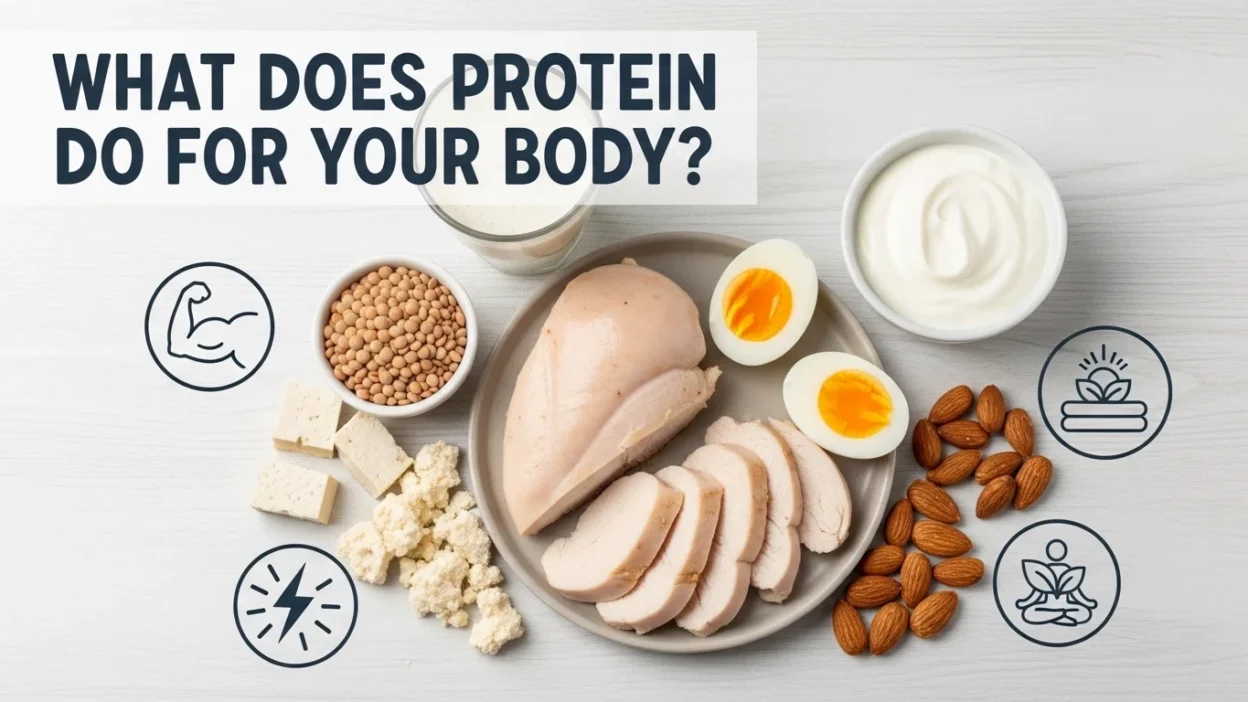
Ever scroll through your fitness feed and see everyone talking about protein, but you had no idea why it’s such a big deal? I remember my friend posting, “Don’t forget your protein shake!” and I thought, “Wait… what does protein even do for your body?” 🤔
Quick Answer: Protein is a macronutrient essential for building and repairing tissues.
It’s a friendly, health focused way to fuel your body, maintain muscles, and support overall wellness.
Understanding the benefits of protein and protein intake can help you choose the right protein foods for energy, muscle growth, and overall health.
Protein helps your body:
- Build and repair muscles 💪
- Maintain skin, hair, and nails ✨
- Boost energy levels ⚡
- Support immunity 🛡️
- Aid weight management 🥗
🧠 What Does Protein Do for Your Body?
Protein is one of the three main macronutrients — alongside carbohydrates and fats. Every cell in your body contains protein, and it plays a crucial role in:
- Muscle building and repair – protein is essential after workouts
- Hormone and enzyme production – keeps your body running smoothly
- Energy maintenance – helps prevent fatigue
- Skin, hair, and nail health – proteins like collagen strengthen tissues
Example:
Eating eggs, chicken, tofu, or beans after a workout helps your muscles recover faster.
In short: Protein = Essential nutrient = Builds, repairs, and fuels your body. 💪
📋 Benefits of Protein for Muscles, Energy, and Health
Here’s why protein is vital:
- Builds and repairs muscles – necessary for strength and recovery
- Supports weight management – keeps you full longer
- Boosts energy – helps your body perform daily activities
- Strengthens immunity – aids in producing antibodies
- Promotes healthy hair, skin, and nails – collagen and keratin are proteins
- Supports metabolism – thermic effect of protein increases calorie burn
- Helps in bone health – protein intake improves bone density
🥚 Protein Rich Foods and Sources
| Food | Protein per Serving | Type |
| Chicken breast | 31g per 100g | Animal protein |
| Eggs | 6g per egg | Animal protein |
| Greek yogurt | 10g per 100g | Dairy |
| Tofu | 8g per 100g | Plant protein |
| Lentils | 9g per 100g | Plant protein |
| Almonds | 21g per 100g | Plant protein |
| Whey protein | 20–25g per scoop | Supplement |
🥗 Daily Protein Intake Recommendations
| Goal | Protein per kg of body weight | Notes |
| Sedentary adult | 0.8g | Minimum requirement |
| Active adult / fitness | 1.2–1.6g | Muscle maintenance and energy |
| Muscle gain / athletes | 1.6–2.2g | Supports muscle growth |
| Weight loss | 1.2–2.0g | Helps maintain muscle while dieting |
📱 Where Is Protein Talk Commonly Seen?
Protein is discussed widely in:
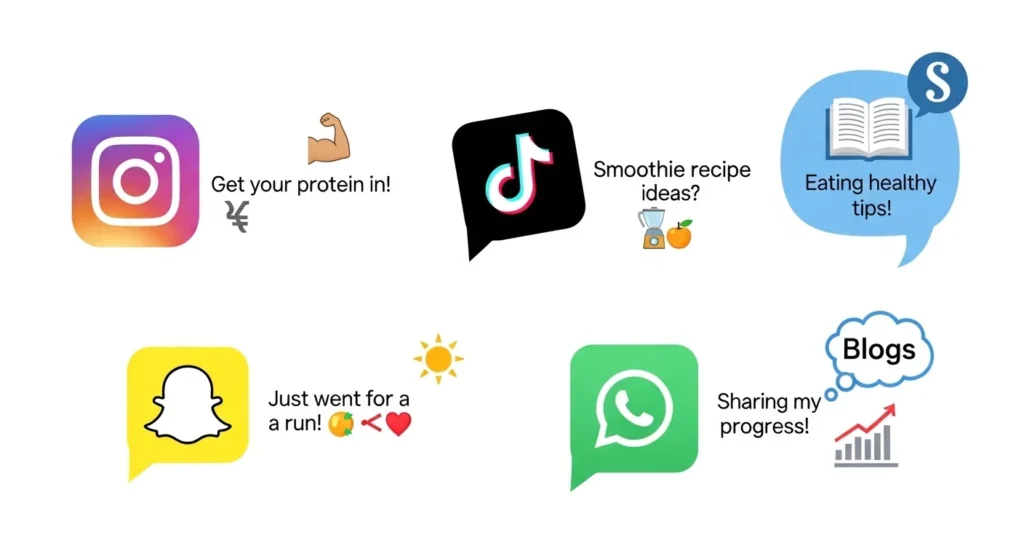
- Instagram & TikTok 🕺 – Influencers share protein-rich recipes
- Snapchat 💬 – Quick tips or snaps of meals
- Texting & WhatsApp 📲 – Friends remind each other about protein intake
- Blogs & health forums 📝 – Discussions about protein nutrition
💡 Tone: Friendly, casual, and social media friendly. Not formal unless in a research or medical context.
💬 Examples of Protein in Conversation
A: “I feel tired today 😩”
B: “Make sure you get some protein for energy! 🥚💪”
A: “Gym time!”
B: “Don’t forget your protein shake after 🥤”
A: “Can you help me meal prep?”
B: “Sure! Let’s add some protein foods to every meal 🍗🥦”
A: “I want to gain muscle”
B: “Protein for muscles is key 💪💯”
A: “Feeling weak after work 😔”
B: “Snack on nuts or yogurt, protein benefits will help 😋”
🕓 When to Use Protein Talk
✅ When to Use:
- Friendly fitness chats
- Meal prep and diet discussions
- Social media posts about high-protein diets
- Casual reminders for protein intake
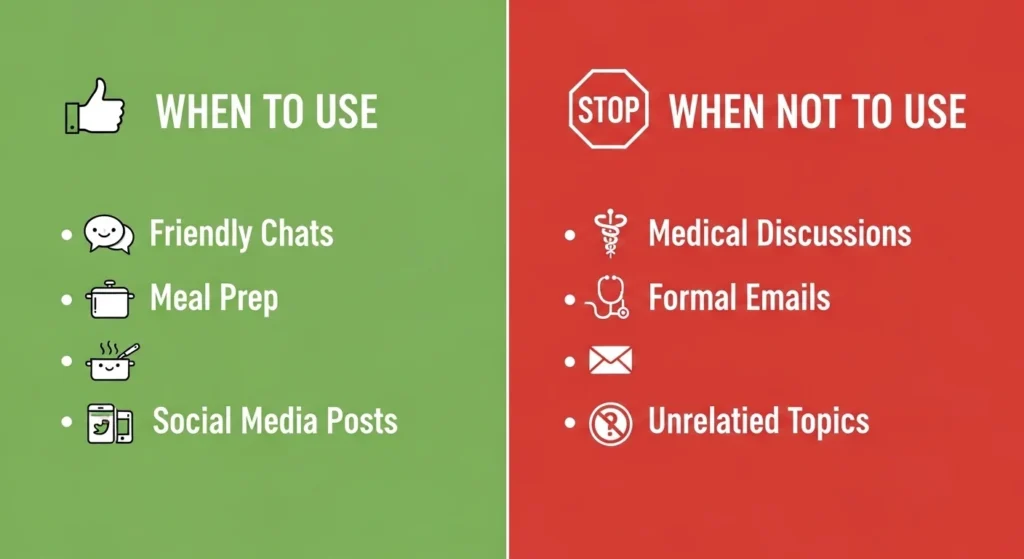
❌ When Not to Use:
- Serious medical discussions
- Professional emails or formal settings
- Sensitive topics unrelated to health
| Context | Example Phrase | Why It Works |
| Friend Chat | “Don’t forget your protein shake 😄” | Casual & friendly |
| Work Chat | “Include enough protein in your meals today.” | Polite & informative |
| “Ensure your nutrition plan includes proper protein intake.” | Formal & clear |
🔄 Similar Health Words or Alternatives
| Word/Slang | Meaning | When to Use |
| Macros | Nutrients including protein, carbs, fat | Fitness & nutrition chats |
| Whey | Protein supplement from milk | Gym or workout discussions |
| Plant Protein | Protein from beans, nuts, tofu | Vegan-friendly contexts |
| Protein Shake | Liquid meal replacement with protein | Post-workout or quick snack |
| BCAA | Branched-chain amino acids supplement | Fitness & bodybuilding |
❓ FAQs About Protein
Q1: How much protein do I need daily?
A: Adults need about 0.8–1g per kg of body weight, while athletes may need 1.6–2.2g for muscle growth.
Q2: Can I get enough protein without meat?
A: Yes! Eggs, dairy, beans, lentils, tofu, and nuts are excellent protein sources.
Q3: Does protein help with weight loss?
A: Yes, it keeps you full longer and helps maintain muscle, especially on a high-protein diet.
Q4: Is protein powder necessary?
A: Not always. Whole foods usually provide enough protein unless you’re highly active.
Q5: Can too much protein be harmful?
A: Excessive protein may stress kidneys over time. Balance is key for protein nutrition.
Q6: Can protein improve hair and skin health?
A: Yes, proteins like collagen and keratin support healthy hair, skin, and nails.
Q7: What are the best protein sources for vegetarians?
A: Lentils, beans, tofu, Greek yogurt, almonds, and quinoa are excellent plant-based protein sources.
🏁 Conclusion
Protein is more than a gym buzzword; it’s a vital nutrient that keeps your muscles, skin, energy, and immunity in check.
Understanding what protein does for your body and tracking protein intake helps you make smarter nutrition choices. 🍗🥚🥦
Remember: Protein = building blocks for a strong, healthy you! 💪

Kaliyan Martan is a passionate dreamer and creative thinker who believes in turning ideas into meaningful action. With vision and dedication, he strives to make a lasting impact through innovation and authenticity.