Many students and English learners get confused about wore or worn. Both come from the verb “wear”, but they are used in different ways.
Using the wrong word can make sentences sound strange. This guide explains wore vs worn, with easy examples, beginner exercises, and tips for real life English.
Quick Answer: Wore vs Worn
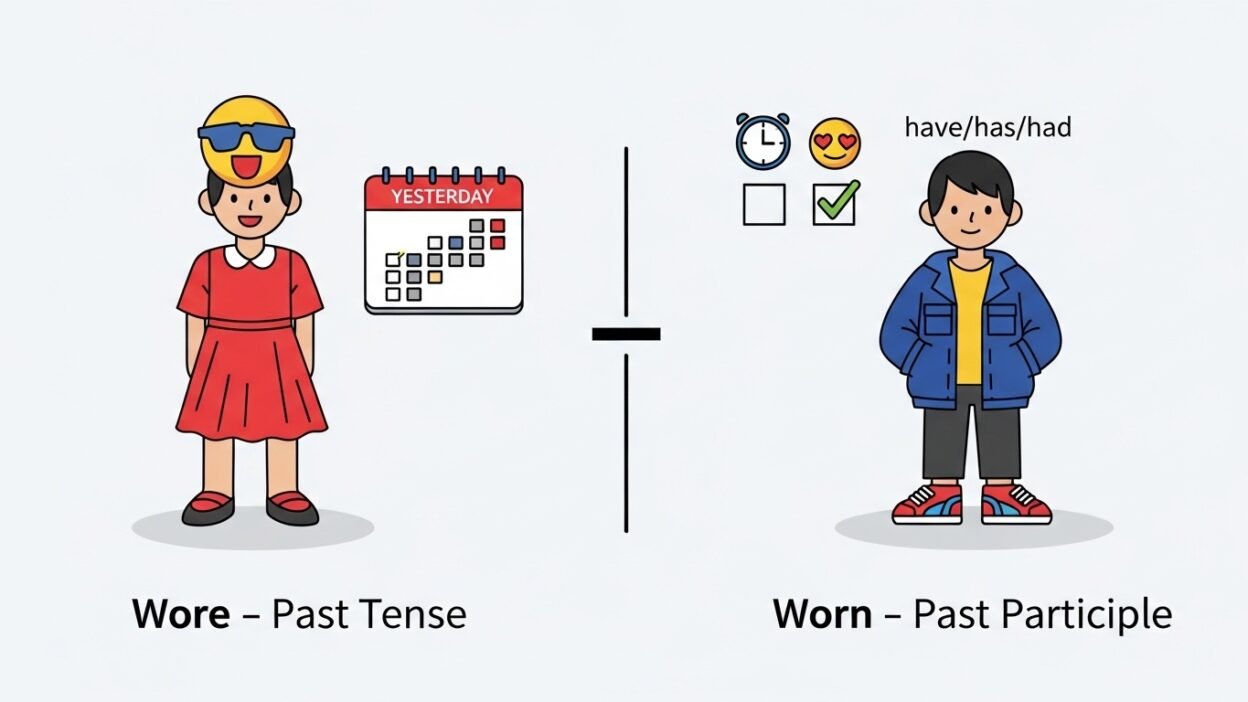
- Wore → past tense of wear, used for actions finished in the past.
Example: I wore my new shoes yesterday. - Worn → past participle of wear, used with have, has, or had to show experience or continuous effect.
Example: I have worn this jacket many times.
What Does Wore and Worn Mean?
The verb “wear” means to have clothes, shoes, or accessories on your body. Its forms:
- Base form: wear → I wear a hat every day.
- Past tense: wore → I wore a hat yesterday.
- Past participle: worn → I have worn this hat many times.
The confusion happens because both wore and worn explained deal with past actions. The trick is to know when to use simple past (wore) and when to use perfect tense (worn).
Difference Between Wore and Worn
- Wore = Simple Past
- Use for a finished action in the past, often with a specific time.
- Examples:
- I wore my red dress to the party last night.
- She wore glasses in class yesterday.
- We wore school uniforms last year.
- Worn = Past Participle
- Use with have, has, had (perfect tenses) to show experience or repeated actions.
- Examples:
- I have worn this jacket many times.
- He has worn the same shoes to every event.
- By the time we arrived, she had worn her new shoes all day.
Wore vs Worn: Comparison Table
| Feature | Wore | Worn |
| Form | Past tense | Past participle |
| Use | Simple past actions | With perfect tenses (have/has/had) |
| Example 1 | I wore a hat yesterday. | I have worn this hat many times. |
| Example 2 | She wore glasses in class. | She has worn glasses since morning. |
| Time reference | Specific past time | Experience or repeated action |
| Focus Tip | Look for words like yesterday or last week | Look for helper verbs like have, has, had |
When to Use Each Word
Using Wore
- For actions completed in the past:
- I wore my favorite coat last winter.
- He wore a suit at the wedding.
- They wore casual clothes on Friday.
Using Worn
- With have/has/had:
- I have worn these shoes many times.
- She has worn the same jacket all week.
- We had worn our costumes before the performance started.
- To show experience or repeated action:
- I have worn this uniform since last year.
Common Mistakes to Avoid
- Incorrect: I have wore my shoes.
Correct: I have worn my shoes. - Incorrect: She has worn a dress yesterday.
Correct: She wore a dress yesterday. - Incorrect: I worn my new jacket yesterday.
Correct: I wore my new jacket yesterday.
Tip for learners: Look for time words (yesterday, last week) → use wore. Look for have/has/had → use worn.
Real Life Examples
In Emails
- ❌ “I have wore my ID badge yesterday.”
- ✅ “I wore my ID badge yesterday.”
- ✅ “I have worn my ID badge every day this week.”
On Social Media
- ❌ “I has worn my new sneakers today 😅”
- ✅ “I have worn my new sneakers today 😄”
- ✅ “I wore my sneakers to the park yesterday.”
In Daily Life
- I wore a hat because it was sunny.
- I have worn this jacket for years, and it’s still good.
- She had worn the boots before they became dirty.
Fun Beginner Scenarios
- School: I wore my uniform to school yesterday.
- Sports: He has worn the same jersey all season.
- Parties: We wore fancy costumes at the Halloween party.
Beginner Friendly Exercises
Exercise 1: Fill in the blanks with wore or worn.
- Yesterday, I ___ my new shoes.
- She has ___ that dress many times.
- We ___ jackets because it was cold.
- He had ___ the same hat all week before losing it.
Exercise 2: Rewrite these sentences correctly.
- ❌ “I have wore my boots yesterday.”
- ❌ “She worn glasses in class.”
Frequently Asked Questions (FAQs)
- Can I say “I worn my shoes yesterday”?
- No. Use “I wore my shoes yesterday.”
- Is “worn” only for clothes?
- Mostly, but it can also describe used objects, like tires: “These tires are worn.”
- Difference between “wore” and “have worn”?
- “Wore” = simple past, finished action.
- “Have worn” = experience or repeated action affecting now.
- Can I use “worn” without have/has/had?
- Rarely. Example: “The dress is worn out.”
- Is “wore” ever correct with “have”?
- No. Always use worn after have/has/had.
- How to remember the difference easily?
- Think: wore = one event in the past, worn = repeated or experienced action.
- Can I use “wore” in a story or diary?
- Yes. Example: “Yesterday, she wore her new coat and felt happy.”
- Can “worn” describe feelings or condition?
- Yes. Example: “After the long hike, he felt worn out.”
Conclusion
Understanding wore or worn is easy if you focus on time and helper verbs:
- Wore → past tense, used for a specific past event.
- Worn → past participle, used with have/has/had for experience or repeated actions.
Practice using wore vs worn examples in daily conversations, emails, and social media posts. With short exercises and real life examples, learners and beginners can stop confusing these words and use them correctly with confidence.

Kaliyan Martan is a passionate dreamer and creative thinker who believes in turning ideas into meaningful action. With vision and dedication, he strives to make a lasting impact through innovation and authenticity.