Many people feel confused about passed away vs past away. The two phrases look almost the same, and when spoken, they sound very similar. Because of this, students and English learners often write the wrong one.
You might have seen sentences like:
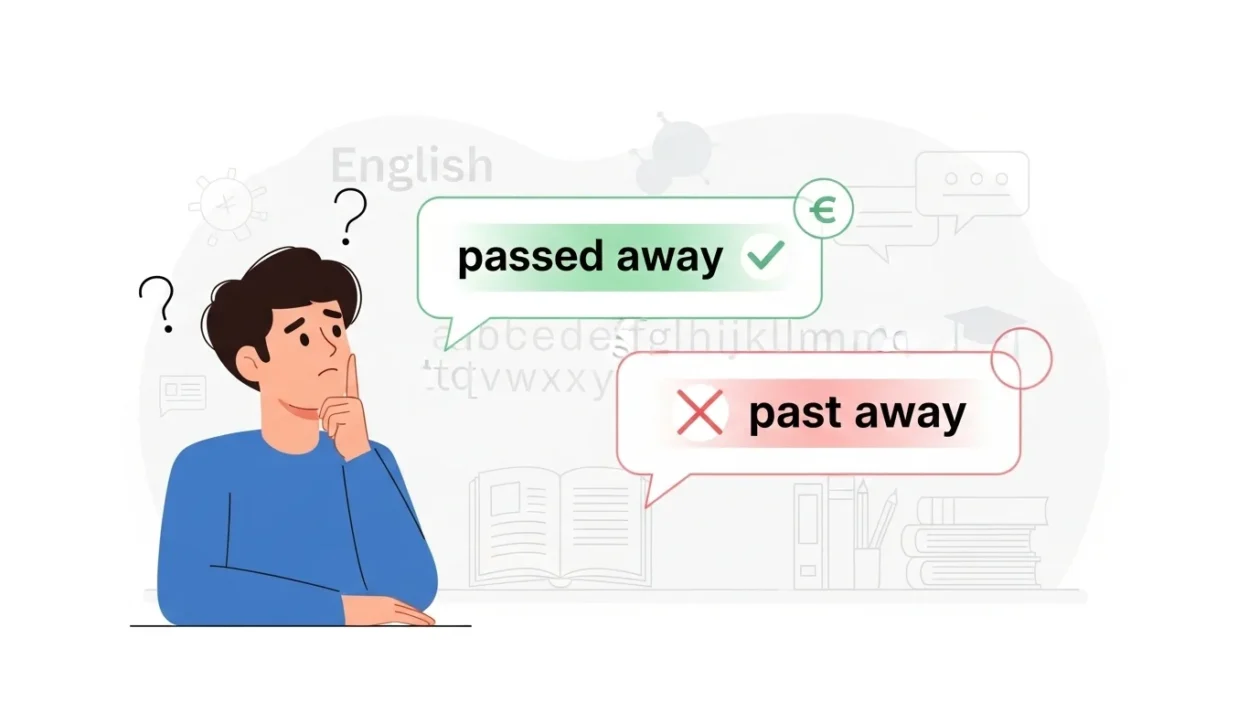
❌ He past away yesterday.
✅ He passed away yesterday.
Only one of these is correct. This guide will explain the difference between passed away and past away in very simple English.
By the end, you will clearly understand the passed away meaning, why past away meaning is incorrect, and how to use the correct phrase in real life situations.
Quick Answer
If you want the short answer, here it is:
- Passed away → Correct phrase
- A polite way to say someone has died.
- Past away → Incorrect phrase
- This is not correct English.
So if you ever ask yourself “is past away correct?”, remember that the correct phrase is always passed away.
Passed Away Meaning
The passed away meaning is simple. It means that someone has died, but it is said in a gentle and respectful way.
People often prefer saying “passed away” because it sounds kinder and less direct than the word “died.”
Examples
- My grandfather passed away last year.
- Her neighbor passed away peacefully at home.
- The famous actor passed away at the age of 85.
- Our family dog passed away last month.
These examples show how passed away in English grammar is used when talking about death politely.
Past Away Meaning
Some people search for past away meaning, but the truth is that this phrase has no meaning in correct English.
Why?
Because past is not a verb. The phrase needs a verb to show the action, and that verb must be passed, not past.
Example:
❌ He past away last night.
✅ He passed away last night.
This mistake is very common among English learners.
Passed vs Past: The Basic Grammar Rule
To fully understand the passed vs past difference, it helps to know the grammar rule.
Passed
“Passed” is the past form of the verb pass.
It describes an action that already happened.
Examples:
- She passed the exam.
- The car passed our house.
- Time passed quickly.
Past
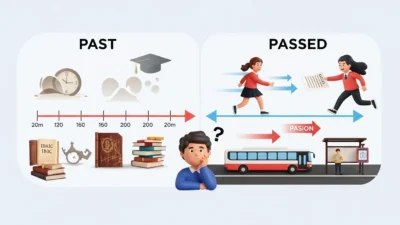
“Past” usually refers to time before now or movement beyond something.
Examples:
- In the past, I lived in another city.
- He walked past the library.
- The store is just past the bank.
Understanding these past vs passed grammar rules makes the difference much clearer.
Passed Away vs Past Away (Comparison)
| Phrase | Meaning | Grammar | Correct? |
| Passed away | Polite way to say someone died | Verb phrase | ✅ Correct |
| Past away | No real meaning | Incorrect grammar | ❌ Incorrect |
This table clearly shows the difference between passed away and past away.
When to Use “Passed Away”
Use passed away when you want to talk about someone’s death in a respectful way.
It is common in:
- Family conversations
- Sympathy messages
- News reports
- Formal announcements
More Passed Away Example Sentences
- My aunt passed away after a long illness.
- His grandfather passed away peacefully.
- The writer passed away many years ago.
- Her beloved cat passed away last week.
- The old tree in our garden finally passed away after the storm.
These passed away example sentences show how the phrase is used in different situations.
When to Use “Past”
Even though past away is incorrect, the word past is still important in English.
1. Talking About Time
- In the past, people wrote letters more often.
- The past year was very busy.
2. Showing Movement
- He walked past the school.
- She ran past the bus stop.
3. Showing Position
- The restaurant is just past the bridge.
These examples help explain the passed vs past examples clearly.
Why People Make This Mistake
The confusion between passed away vs past away happens for a few simple reasons.
1. Similar Sound
Both words sound almost the same when spoken.
2. Spelling Confusion
Learners often write the word that looks familiar without thinking about grammar.
3. Lack of Grammar Knowledge
Some learners do not realize that passed is a verb while past is not.
Because of this, the mistake becomes one of the most common English mistakes: passed vs past.
Real Life Examples
Seeing real situations helps learners understand how to use passed away in a sentence.
Email Example
Incorrect:
I heard your father past away. I am sorry.
Correct:
I heard your father passed away. I am very sorry for your loss.
Social Media Example
Incorrect:
My dog past away today.
Correct:
My dog passed away today. I will always remember him.
Daily Conversation
Incorrect:
His uncle past away last week.
Correct:
His uncle passed away last week.
Easy Memory Trick
Here is a simple trick to remember the passed vs past difference.
PASSED = Action (verb)
PAST = Time or place
Another trick:
Think about other past verbs like:
- walked
- played
- talked
They all end with ED.
The word passed also ends with ED, which shows an action.
So when someone dies, remember to use passed away.
Practice for Beginners
Try this short exercise.
Fill in the blank:
- My neighbor ______ away last year.
- He walked ______ the supermarket.
- In the ______, I was very shy.
- The teacher ______ the papers to the students.
Answers
- passed
- past
- past
- passed
This practice helps beginners understand passed away explanation for beginners and the past vs passed grammar rules.
Frequently Asked Questions
Is it passed away or past away?
The correct phrase is passed away. “Past away” is incorrect.
Why do people say passed away instead of died?
People use it because it sounds softer and more respectful.
What is the difference between passed away and past away?
The difference between passed away and past away is simple. “Passed away” is correct, while “past away” is not proper English.
Is past away correct?
No. If you ask is past away correct, the answer is always no.
Is passed away formal or informal?
It can be used in both formal and informal situations.
Can passed away be used for animals?
Yes. Many people use it for pets.
Example:
Our cat passed away last week.
What is the passed vs past difference?
“Passed” is a verb showing an action, while “past” usually refers to time or position.
Can I just say passed?
Sometimes, but “passed away” sounds clearer and more respectful.
Conclusion
The confusion between passed away vs past away is very common, especially for English learners. However, the rule is simple once you understand it.
- Passed away is the correct phrase and means someone has died in a polite way.
- Past away is incorrect and should not be used.
Remember this easy rule:
Passed = action (verb)
Past = time or place
When talking about death, always choose passed away. Once you remember this small rule, you will never confuse passed away vs past away again.

Mitcheel Satrac is a passionate visionary dedicated to creativity, innovation, and meaningful success. His work reflects authenticity, purpose, and a drive to make a real impact.