Many students and learners get confused between “sew” and “sow”. They sound almost the same, but their meanings are completely different.
Knowing the difference between sew and sow will help you write correctly, speak clearly, and avoid mistakes in emails, homework, and daily conversation.
This guide explains the meaning of sew and sow, gives easy examples, exercises, and tips so you can remember them forever.
Quick Answer: Sew vs Sow
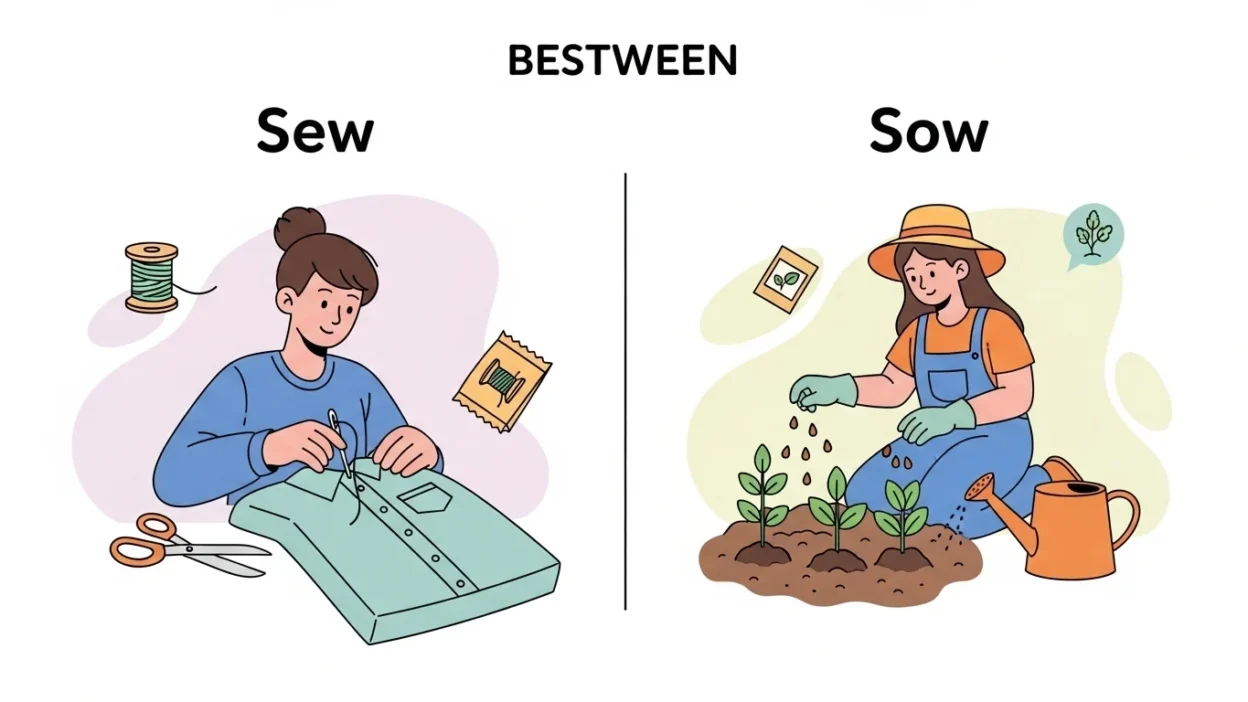
- Sew – to join pieces of cloth using a needle and thread.
- Sow – to plant seeds in soil or to cause ideas/feelings to grow.
Memory Trick:
- Sew → e → thread
- Sow → o → soil
Why People Confuse Sew and Sow
These words are homophones, which means they sound the same. learners and beginners often mix them up in writing or speaking.
- Sew is about clothes and fabrics.
- Sow is about plants, seeds, and sometimes ideas.
Remembering the context is the key to using them correctly.
Meaning and Background
| Word | Meaning | Example Sentence |
| Sew | Join fabric using needle & thread | “I need to sew a button on my shirt.” |
| Sow | Plant seeds in soil or spread ideas | “Farmers sow wheat in the spring.” / “She sowed kindness by helping neighbors.” |
Extra Tip:
- Think “sew” → needle, fabric, thread.
- Think “sow” → soil, seeds, garden, ideas.
When to Use Sew
Use sew when:
- Fixing or making clothes.
- Making quilts, bags, or crafts.
- Using a sewing machine or stitching by hand.
Examples:
- “I will sew a patch on my backpack.”
- “She sews her own pillow covers every weekend.”
- “We learned to sew a button in our English class.”
Interactive Mini-Exercise:
Which sentence is correct?
a) I sow a button on my shirt.
b) I sew a button on my shirt. ✅
When to Use Sow
Use sow when:
- Planting seeds in soil for gardening or farming.
- Starting crops or flowers.
- Spreading ideas, feelings, or habits metaphorically.
Examples:
- “We sow tomatoes in small pots first.”
- “He sowed sunflowers in the backyard.”
- “She sowed happiness by helping others.”
Memory Story:
Imagine a garden. Every seed you plant (sow) will grow into a beautiful flower. This helps you remember sow = planting.
Common Mistakes with Sew and Sow
- Mixing meanings
- Wrong: “I sow a button on my shirt.”
- Correct: “I sew a button on my shirt.”
- Spelling confusion
- Remember: sew = e = thread, sow = o = soil
- Forgetting metaphorical sow
- You can say: “He sowed doubt” or “She sowed joy.”
Real Life Examples
In Emails
- Sew: “I can sew the torn hem before the event.”
- Sow: “We plan to sow the seeds this weekend.”
On Social Media
- “She sewed her cosplay outfit perfectly! 👗”
- “I sowed sunflowers in my garden today 🌻”
Daily Life
- Sew: repairing clothes, making crafts.
- Sow: planting seeds, farming, spreading ideas.
Interactive Practice:
Write 2 sentences using sew and 2 sentences using sow in your notebook.
Beginner Friendly Learning Tips
- Visualize the action:
- Needle + thread → sew
- Seeds + soil → sow
- Use small, simple phrases:
- “I sew my clothes.”
- “I sow seeds in spring.”
- Use memory tricks:
- Sew → e → thread
- Sow → o → soil
- Practice daily:
- Write 3 sentences with sew and 3 with sow.
- Read them out loud.
- Listen and context check:
- Pronunciation is similar, but context will show the meaning.
Fun Infographic Ideas
- Sew: Needle, thread, shirt icon
- Sow: Seed, soil, garden icon
- Mini chart: “Sew = fabric | Sow = soil/seeds”
- Memory tip diagram: “e → thread | o → soil”
Visuals make the difference for beginners and help Google understand your content better.
Frequently Asked Questions (FAQs)
- Are “sew” and “sow” pronounced the same?
- Yes, but context tells the meaning.
- Can “sow” mean more than planting seeds?
- Yes, it can mean spreading ideas, feelings, or habits.
- Can I use “sew” for crafts other than clothes?
- Yes, you can sew paper or other materials for DIY projects.
- Which is easier to confuse: sew or sow?
- Beginners often confuse them. Focus on the meaning.
- Is there a spelling trick?
- Sew → e → thread
- Sow → o → soil
- Can I say “sow a mistake”?
- Yes, sow can mean to start something, like “sow a problem.”
- Do native speakers confuse these words?
- Rarely, because the context makes the meaning clear.
- Are there other homophones like sew/sow?
- Yes: “see” and “sea,” “flower” and “flour.”
Conclusion
Understanding sew vs sow is simple if you remember:
- Sew = fabric, needle, thread
- Sow = seeds, soil, planting, or spreading ideas
Practice using these words in sentences, emails, and daily conversations. Visuals, memory tricks, and mini exercises make remembering them easy.
Tip for beginners: Keep sewing your skills and sowing your knowledge every day!

Kaliyan Martan is a passionate dreamer and creative thinker who believes in turning ideas into meaningful action. With vision and dedication, he strives to make a lasting impact through innovation and authenticity.