Many English learners feel confused when they see the words disorganized vs unorganized. They look almost the same, so people naturally think they mean the same thing.
But in real English, there is a small but important difference in tone, usage, and naturalness. One word is used more often in daily English, while the other is used in more limited situations.
This guide will remove all confusion using very simple English, clear rules, and real life examples.
Quick Answer (Clear and Final Rule)
Here is the simplest way to understand it:
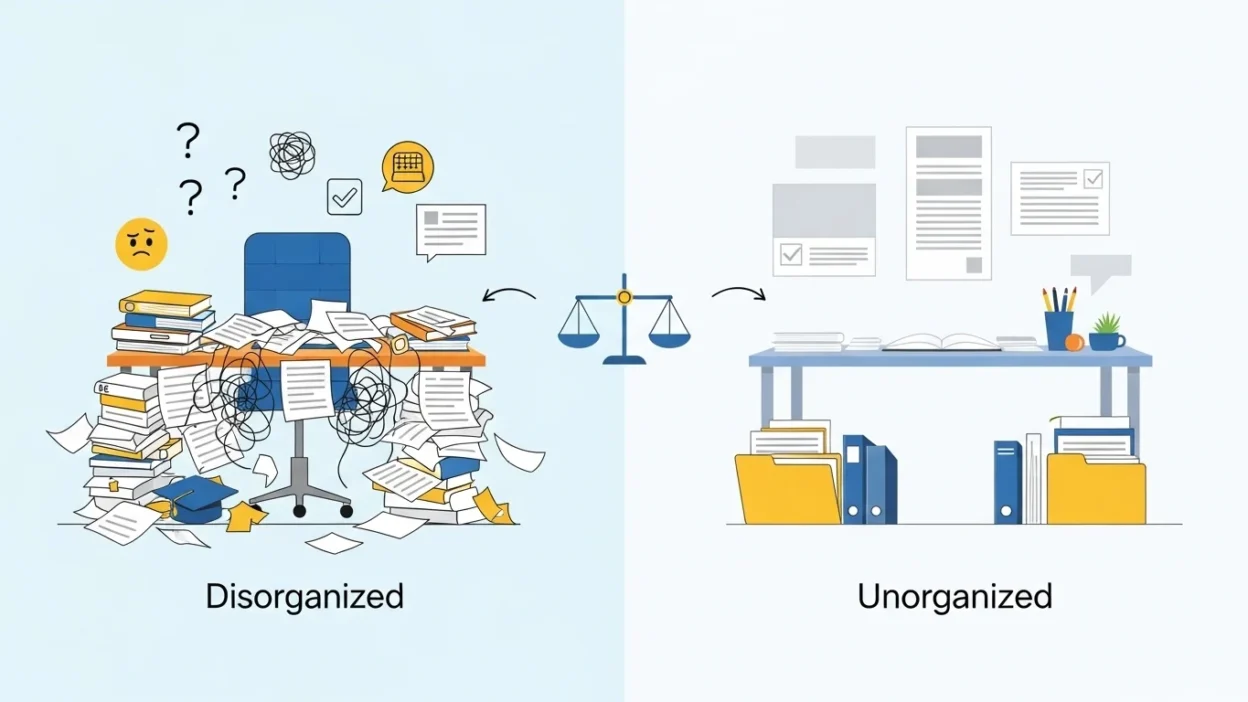
- Disorganized = messy, confusing, not in order (very common in English)
- Unorganized = not arranged or not structured yet (less common, more limited use)
⭐ Most important rule (for 2026 English usage):
👉 In most situations, “disorganized” is the natural and preferred word in speaking and writing.
👉 “Unorganized” is correct, but used less often.
Why People Get Confused
The confusion happens because:
- Both words come from “organize”
- Both mean “not organized”
- They look almost identical
- Some dictionaries show them as similar
But English usage depends on how native speakers actually use the words, not just dictionary meaning.
Simple Background (Easy Grammar Idea)
Let’s break it down:
- Organize = arrange things properly
Now prefixes:
- dis = broken order / messy condition
- un = not done / not arranged yet
So:
- Disorganized → already messy or chaotic
- Unorganized → not arranged or structured yet
The Real Difference (Very Simple Explanation)
1. Disorganized = messy and confusing
Use this when something is already in a bad or unclear condition.
It often describes:
- rooms
- people
- events
- thinking
- systems
Examples:
- His room is completely disorganized.
- The meeting was disorganized and confusing.
- I feel disorganized when I have too many tasks.
👉 This word feels stronger and more natural in everyday English.
2. Unorganized = not arranged yet
Use this when something is still in its early stage or not sorted.
It often describes:
- data
- files
- groups
- plans not made yet
Examples:
- The documents are still unorganized.
- The data is unorganized and needs sorting.
- The group is unorganized because there is no leader.
👉 This word feels softer and less emotional.
Disorganized vs Unorganized Comparison
| Feature | Disorganized | Unorganized |
| Meaning | Messy or confused | Not arranged yet |
| Natural usage | Very common | Less common |
| Tone | Strong / negative | Neutral / soft |
| Spoken English | Frequently used | Rare |
| Example | Disorganized room | Unorganized data |
Native Speaker Reality (Very Important Insight)
In real English:
- People say “disorganized” much more often
- “Unorganized” sounds slightly formal or uncommon
- Many speakers naturally avoid “unorganized” in daily speech
Simple truth:
👉 If you are unsure, choose disorganized
When to Use Each Word (Clear Rules)
Use “disorganized” when:
- something is messy
- things are confusing
- there is no order
✔ Examples:
- disorganized schedule
- disorganized room
- disorganized person
Use “unorganized” when:
- something is not arranged yet
- structure is missing
- data or information is unsorted
✔ Examples:
- unorganized files
- unorganized data
- unorganized system
Common Mistakes Learners Make
1. Thinking both words are always equal
They are similar, but usage is not equal in real English.
2. Using “unorganized” too often in speaking
❌ My life is unorganized.
✔ My life is disorganized.
3. Overusing “disorganized” for everything
Sometimes the issue is not mess, just lack of arrangement.
Better:
- Use “unorganized” for simple unfinished structure
4. Trying to overthink every sentence
Even native speakers don’t think deeply about this daily. Context matters more.
Real Life Examples (Easy Situations)
1. School Example
- My notes are unorganized, I will arrange them later.
2. Home Example
- My room is disorganized after packing.
3. Work Example
- The project was disorganized, so we created a plan.
4. Social Media Example
- My phone gallery is so disorganized 😂
Beginner Learning Trick (Very Easy Memory Rule)
Remember this:
👉 Disorganized = already messy
👉 Unorganized = not arranged yet
Simple shortcut:
- Messy → disorganized
- Not sorted → unorganized
FAQs
1. Is unorganized correct English?
Yes, it is correct, but it is less commonly used than “disorganized.”
2. Which is more natural in speaking English?
“Disorganized” is more natural and commonly used.
3. What is the main difference between disorganized and unorganized?
Disorganized means messy or confused, while unorganized means not arranged yet.
4. Can I always use disorganized instead of unorganized?
In most cases, yes especially in speaking English.
5. Is disorganized more formal?
No, it is both formal and informal. It is widely used in all contexts.
6. Can a person be disorganized?
Yes. Example: “He is a disorganized person.”
7. Can data be unorganized?
Yes. Example: “The data is unorganized and needs sorting.”
8. What should beginners remember first?
Always remember:
👉 disorganized = messy
👉 unorganized = not arranged yet
Conclusion
The confusion between disorganized vs unorganized is very common, but the rule is actually simple.
- Disorganized is the most natural and widely used word in English
- Unorganized is correct but used less often and in more specific situations
Final simple rule:
👉 If you are unsure, always use disorganized
With this understanding, you can now use both words correctly in speaking, writing, exams, and daily English without confusion.

Robert Kalian is a passionate visionary dedicated to creativity, leadership, and meaningful innovation. He believes in turning ideas into action and inspiring others to achieve their highest potential.