Many English learners mix up vary and very because the words look almost the same. Only one letter is different, and their pronunciation sounds similar too. Because of this, students sometimes write sentences like “vary good” or “prices very”, which are incorrect.
The truth is that vary and very have completely different meanings and grammar roles. One word talks about change, while the other word makes a description stronger.
Once you understand the simple rule behind these two words, the confusion disappears.
In this guide, you will learn the difference between vary and very, how to use them correctly, and see clear examples that make the meaning easy to remember.
Quick Answer: The Difference Between Vary and Very
Here is the fastest way to understand these two words.
Very
- Part of speech: Adverb
- Meaning: Makes an adjective or adverb stronger
- Example: The food is very good.
Vary
- Part of speech: Verb
- Meaning: To change or be different
- Example: Prices vary between stores.
Simple Rule to Remember
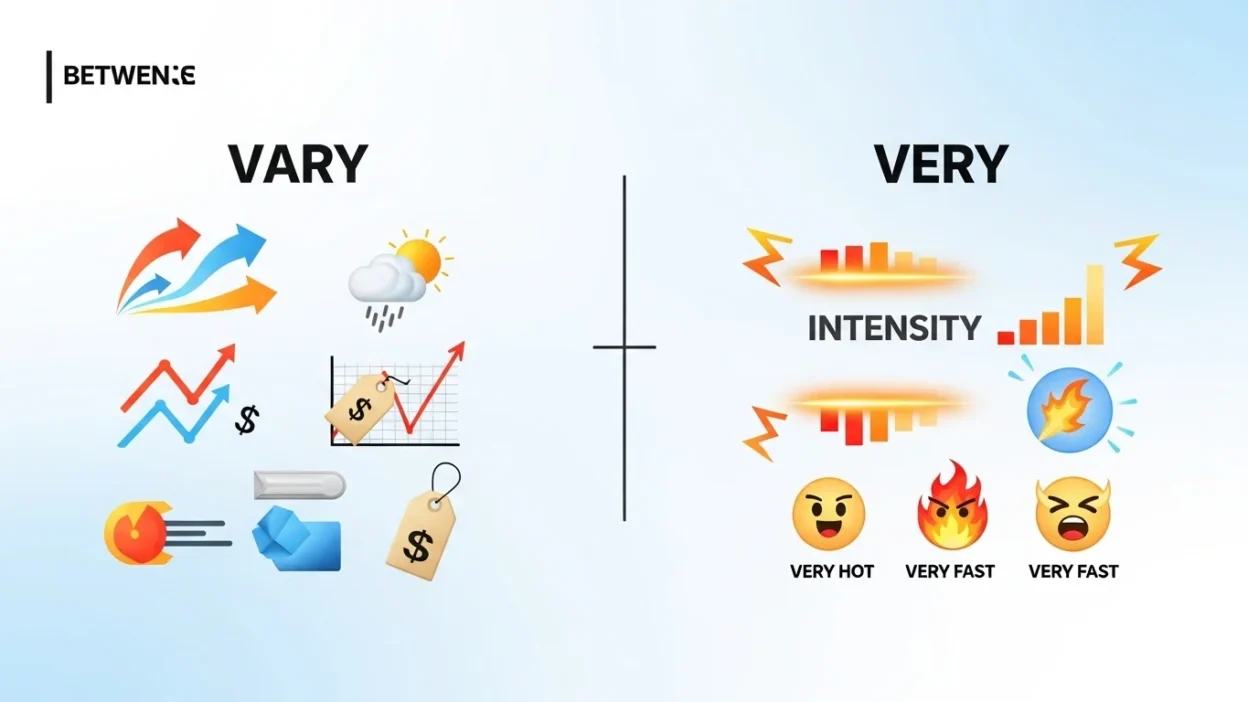
- Very = stronger description
- Vary = change or difference
If something becomes stronger, use very.
If something changes, use vary.
Why People Confuse Vary and Very
There are two main reasons learners confuse these words.
1. Similar Spelling
The words look almost identical:
- very
- vary
When reading quickly, it is easy to miss the difference.
2. Similar Pronunciation
They sound similar in conversation.
- Very → VER ee
- Vary → VAIR ee
Listening carefully can help you hear the difference.
Understanding these small differences makes it easier to use both words correctly.
What Does “Very” Mean?
Very is an adverb used to strengthen adjectives or adverbs. It makes a description more intense.
Examples:
- The movie was very interesting.
- She is very happy today.
- The exam was very difficult.
- He runs very fast.
Without very, the sentence still works but becomes less strong.
Example:
- The coffee is hot.
- The coffee is very hot.
The second sentence shows stronger heat.
Common Words Used with Very
You will often see very used with descriptive words such as:
- happy
- tired
- big
- small
- cold
- good
- bad
- fast
Examples:
- I am very tired today.
- The weather is very cold.
- She is very kind.
In each example, very makes the description stronger.
What Does “Vary” Mean?
Vary is a verb that means to change or be different.
When something varies, it does not stay the same.
Examples:
- Prices vary by location.
- Weather varies throughout the year.
- People’s opinions vary on this topic.
- The color may vary slightly.
This word is often used when comparing differences.
Example:
- Hotel prices vary depending on the season.
This means the price changes during the year.
Forms of the Verb “Vary”
Because vary is a verb, it changes form.
- vary
- varies
- varied
- varying
Examples:
- Prices vary between stores.
- The temperature varies during the day.
- The design varied slightly.
- Prices are varying across cities.
Vary vs Very Comparison Table
This table shows the difference clearly.
| Word | Part of Speech | Meaning | Example |
| Very | Adverb | Makes descriptions stronger | The soup is very hot |
| Vary | Verb | Means to change or differ | Prices vary by location |
This simple comparison helps learners quickly remember the correct usage.
When to Use “Very”
Use very when you want to increase the strength of a description.
Describing Feelings
- I am very excited about the trip.
- She feels very nervous before exams.
Describing Quality
- The restaurant is very popular.
- That was a very good idea.
Talking About Weather
- It is very windy today.
- Yesterday was very hot.
Talking About Speed or Size
- The building is very tall.
- The car moves very quickly.
In all these sentences, very strengthens the adjective or adverb.
When to Use “Vary”
Use vary when something changes or is different.
Talking About Prices
- Ticket prices vary by city.
- Hotel costs vary during tourist season.
Talking About Opinions
- People’s opinions vary widely.
Talking About Research or Data
Talking About Weather
- Climate conditions vary across regions.
These examples show how the word describes difference or change.
Common Mistakes With Vary and Very
Many learners make small grammar mistakes when using these words.
Mistake 1
Incorrect:
Prices very between stores.
Correct:
Prices vary between stores.
Explanation: Prices change, so we use vary.
Mistake 2
Incorrect:
The movie was vary good.
Correct:
The movie was very good.
Explanation: Very strengthens the adjective good.
Mistake 3
Incorrect:
Temperatures very during winter.
Correct:
Temperatures vary during winter.
Recognizing these mistakes helps improve writing accuracy.
Real Life Examples
Seeing these words in everyday situations makes the difference clearer.
Daily Conversation
- I am very busy today.
- His mood varies a lot.
- The coffee is very strong.
- Food quality varies by restaurant.
Workplace Example
- Project costs may vary depending on materials.
- The meeting was very productive.
Academic Example
- Research findings vary across studies.
- The results are very important for the project.
Social Media Examples
- This place is very beautiful.
- Opinions vary, but I liked the movie.
These examples show how the words appear in real communication.
Memory Trick to Remember the Difference
A simple trick can help you remember the difference.
Very → Intensifies
It makes something stronger.
Example:
- very cold
- very happy
Vary → Variation
It means something changes.
Example:
- Prices vary
- Opinions vary
Linking the words to intensity and variation makes them easier to remember.
Quick Practice for Beginners
Try filling in the blanks.
- The soup is ______ hot.
- Prices ______ depending on the season.
- She is ______ excited about the trip.
- Weather ______ across the country.
Answers:
- very
- vary
- very
- varies
Practice exercises help learners build confidence with grammar.
Frequently Asked Questions
1. What is the difference between vary and very?
The difference is simple.
- Very makes a description stronger.
- Vary means something changes or is different.
2. Why do people confuse these words?
They look similar and sound similar, so learners sometimes mix them up when writing quickly.
3. Is “very good” correct?
Yes. Very good is correct because very strengthens the adjective good.
4. Can vary and very appear in the same sentence?
Yes.
Example:
Prices vary, but the service is very good.
5. Is “vary good” correct?
No. The correct phrase is very good.
6. Is very a verb?
No. Very is an adverb.
7. Is vary an adjective?
No. Vary is a verb.
8. What is the easiest way to remember vary vs very?
Remember this rule:
- Very = stronger description
- Vary = change
Conclusion
Although vary and very look almost identical, their meanings are completely different.
Very is used to strengthen adjectives and adverbs, while vary describes change or difference.
By remembering the simple rule very for intensity and vary for variation learners can avoid common mistakes and use both words confidently.
With practice and real life examples, understanding the difference between vary and very becomes easy for students, beginners, and English learners.

Mitcheel Satrac is a passionate visionary dedicated to creativity, innovation, and meaningful success. His work reflects authenticity, purpose, and a drive to make a real impact.