Many English learners get confused by cord vs chord. The two words look very similar, and they sound exactly the same when spoken. Because of this, students often write the wrong word in emails, essays, or messages.
But the difference is actually simple.
Once you understand the meaning, pronunciation, and usage, it becomes easy to remember which word to use. This guide explains the difference between cord and chord in very clear and simple English with practical examples.
By the end of this article, you will understand the cord vs chord meaning, how to use each word correctly, and how to avoid common mistakes.
Quick Answer: Cord vs Chord
Here is the easiest way to understand the difference.
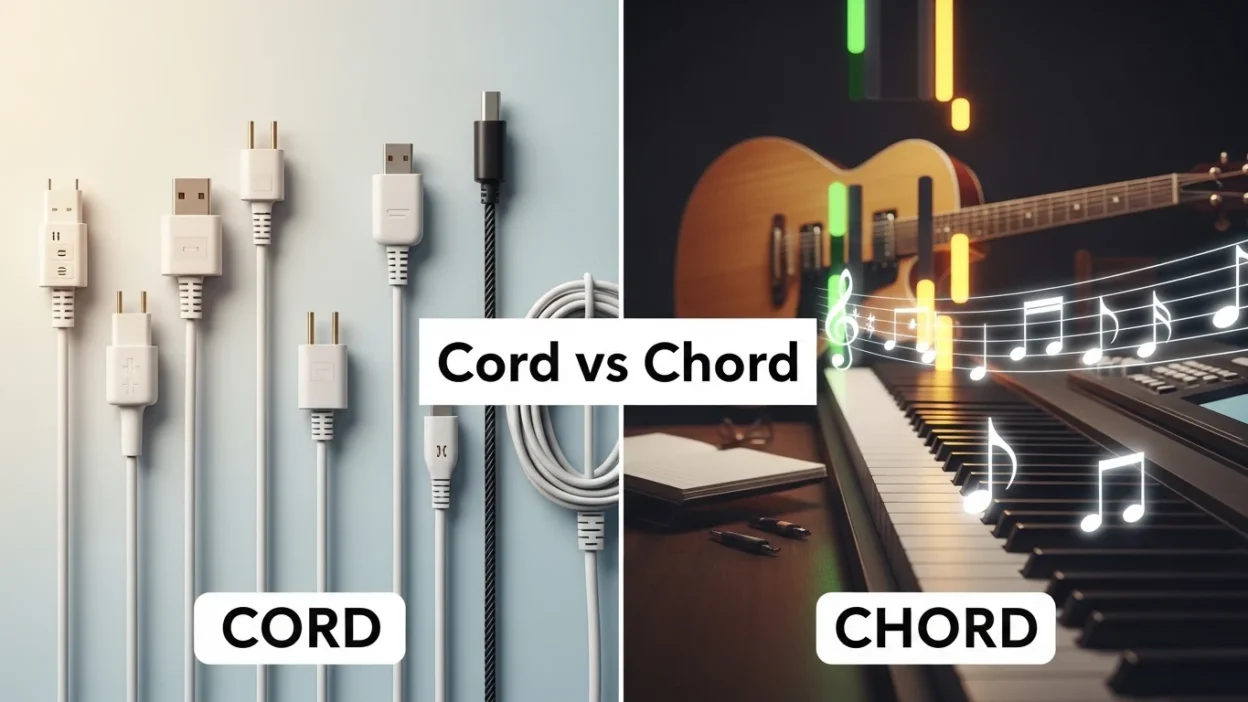
- Cord → a rope, wire, or cable used to connect or tie things
- Chord → a group of musical notes played together or an idea that creates a strong emotional reaction
Example sentences:
- The charger cord is broken.
- The guitarist played a beautiful chord.
So remember this simple rule:
Cord = physical cable or rope
Chord = music or emotional expression
Cord vs Chord Pronunciation
One reason people confuse these words is pronunciation.
Cord and chord are pronounced exactly the same.
Both sound like:
/kɔːrd/
Because they sound identical, they are known as homophones. Homophones are words that sound the same but have different meanings and spellings.
Other examples of common homophones in English include:
- right / write
- their / there
- flower / flour
Since pronunciation does not help us tell them apart, we must rely on spelling and meaning.
Cord Meaning in English
The cord meaning in English refers to something long and flexible that connects, ties, or holds objects together.
A cord is usually:
- a cable
- a rope
- a wire
- a string
It is a physical object you can touch.
Common Examples
- power cord
- charger cord
- headphone cord
- extension cord
- curtain cord
Example Sentences
- The power cord is unplugged.
- My laptop charger cord stopped working.
- She tied the package with a strong cord.
- The lamp cord is too short.
If you are talking about a cable or rope, the correct word is cord.
Chord Definition in Music
The chord definition in music is simple.
A chord is a group of musical notes played together at the same time to create harmony.
Musicians often use chords when playing instruments such as guitars and pianos.
Common Examples
- guitar chord
- piano chord
- major chord
- minor chord
- chord progression
Example Sentences
- The guitarist practiced a new chord.
- The piano chord sounded beautiful.
- She learned three guitar chords today.
If you are asking what is a chord in music, it simply means multiple notes played together.
Emotional Meaning of Chord
Besides music, chord also appears in emotional expressions.
A common phrase is strike a chord.
Strike a Chord Meaning
If something strikes a chord, it creates a strong emotional reaction or feels very relatable.
Example sentences:
- The speech about education struck a chord with many students.
- The story struck a chord with the audience.
- His message struck a chord with people around the world.
In these examples, chord describes a deep emotional connection.
Cord vs Chord:
| Word | Meaning | Common Use | Example |
| Cord | Rope, cable, or wire | Electronics, tools, tying objects | The charger cord is broken. |
| Chord | Musical notes played together | Music and emotional expressions | The musician played a loud chord. |
This table clearly shows the difference between cord and chord.
Vocal Cord vs Vocal Chord (A Common Mistake)
Another common confusion is vocal cord vs vocal chord.
The correct spelling is:
Vocal cord
The vocal cords are muscles in the throat that help us produce sound when we speak or sing.
Example sentences:
- The singer injured her vocal cords.
- Drinking warm water helps protect your vocal cords.
Many people mistakenly write vocal chords, but that spelling is incorrect because it refers to music, not anatomy.
Spinal Cord vs Spinal Chord
A similar mistake happens with the word spinal cord.
The correct phrase is:
Spinal cord
The spinal cord is a long bundle of nerves inside the spine that connects the brain to the rest of the body.
Example:
- The injury affected his spinal cord.
The spelling spinal chord is incorrect.
When to Use Cord
Use cord whenever you are talking about a rope, cable, or wire.
Common situations include:
- electronics
- household items
- tools
- tying objects
Example sentences:
- Please plug the cord into the outlet.
- My headphones have a long cord.
- The extension cord reaches across the room.
If the object is something physical that you can touch, use cord.
When to Use Chord
Use chord in two situations.
1. Music
Musicians use chords to create harmony.
Examples:
- The guitarist played a soft chord.
- She learned several new piano chords.
2. Emotional Expressions
Use chord when describing strong emotional reactions.
Example:
- His story struck a chord with the audience.
Common Cord vs Chord Mistakes
Many learners make the same mistakes when using these words.
Mistake 1
Incorrect:
The laptop chord is broken.
Correct:
The laptop cord is broken.
Mistake 2
Incorrect:
The guitarist played a loud cord.
Correct:
The guitarist played a loud chord.
Mistake 3
Incorrect:
His speech struck a cord.
Correct:
His speech struck a chord.
These mistakes happen because the words sound identical.
Real Life Examples of Cord vs Chord
Here are some simple examples used in everyday communication.
Email Example
Hello,
My phone charger stopped working today. I think the cord is damaged, so I need to buy a new one.
Social Media Post
Just learned my first guitar chord today. Practice is paying off!
Daily Conversation
Person A: Can you bring an extension cord?
Person B: Sure, I will bring one.
Emotional Example
The teacher’s speech about dreams really struck a chord with the students.
Easy Memory Trick for Beginners
A simple trick can help you remember the difference.
Look at the word chord.
The letters CH can remind you of choir or harmony, which are related to music.
So remember:
- Chord → music and emotional expressions
- Cord → rope, cable, or wire
This small trick helps many learners avoid confusion.
Quick Learning Tip for Students
If you forget which spelling is correct, ask yourself this question:
Can I touch it?
If the answer is yes, the word is cord.
Examples:
- charger cord
- headphone cord
- curtain cord
If the word relates to music or emotions, it is chord.
Examples:
- guitar chord
- piano chord
- strike a chord
Frequently Asked Questions
1. What is the difference between cord and chord?
The difference between cord and chord is simple. Cord refers to a rope or cable, while chord refers to musical notes played together or an emotional expression.
2. Are cord and chord pronounced the same?
Yes. Both words have the same pronunciation, which is why they are considered homophones.
3. What is a chord in music?
A chord is a group of musical notes played together to create harmony.
4. What does strike a chord mean?
The phrase strike a chord means something creates a strong emotional response.
5. Is extension chord correct?
No. The correct phrase is extension cord.
6. Is vocal cord or vocal chord correct?
The correct spelling is vocal cord.
7. Is spinal chord correct?
No. The correct phrase is spinal cord.
8. Why do learners confuse cord vs chord?
People confuse these words because they sound exactly the same and look very similar in spelling.
Conclusion
Understanding cord vs chord becomes easy once you remember their basic meanings.
A cord is a rope, wire, or cable used to connect or tie objects. You will often see cords in electronics, household items, and tools.
A chord, on the other hand, belongs to music and describes a group of notes played together. It is also used in emotional expressions like strike a chord.
Even though the words sound identical, their meanings are very different.
Whenever you talk about cables or ropes, use cord.
Whenever you talk about music or emotions, use chord.
Once you remember this simple rule, you will never confuse cord vs chord again.

Mitcheel Satrac is a passionate visionary dedicated to creativity, innovation, and meaningful success. His work reflects authenticity, purpose, and a drive to make a real impact.