The confusion between segway vs segue is very common for students and learners. The reason is simple. These words look almost the same and sound very similar when spoken.
But their meanings are completely different. One is a machine you can ride. The other is a word used in speech and writing.
In this guide, everything is explained in very simple English so you can understand it quickly and never mix them again.
Quick Answer (Fast Understanding)
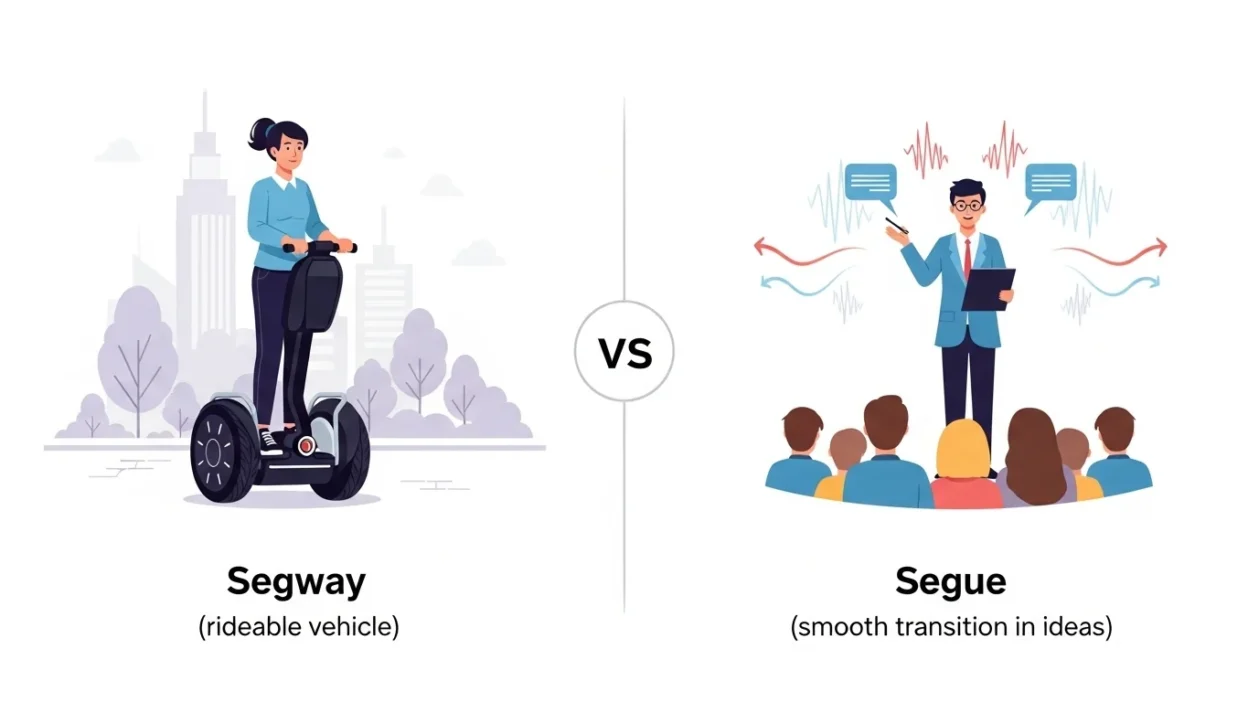
- Segway = a two wheeled electric vehicle you can ride
- Segue = a smooth transition from one idea to another
- They are not related in meaning
- One is physical, the other is linguistic
👉 Simple rule:
Segway = ride
Segue = change of idea
What does Segway mean?
A Segway is a small electric transport device. It has two wheels and a standing platform. You stand on it and move by leaning forward or backward.
Simple meaning:
A Segway is a personal riding machine used for short distance travel.
Where it is used:
- Tourist sightseeing
- Security patrols
- Airports and campuses
- Large parks or open areas
Easy examples:
- The tourist explored the city on a Segway.
- The security officer moved around on a Segway.
- Riding a Segway feels fun after practice.
👉 If you can ride it, it is a Segway.
What does Segue mean?
A segue is a smooth shift from one idea, topic, or section to another without a sudden break.
Simple meaning:
A segue is a natural transition in speaking or writing.
Where it is used:
- Classroom teaching
- Presentations
- Podcasts and videos
- Everyday conversation
Easy examples:
- The teacher segued into the next topic smoothly.
- Let’s segue to the main point of the discussion.
- The speaker made a smooth segue between ideas.
👉 If it helps you move between ideas, it is a segue.
The clearest difference between Segway and Segue
Understanding segway vs segue difference becomes easy when you compare them directly:
1. Type
- Segway = physical object (machine)
- Segue = language tool (transition word)
2. Action
- Segway = you ride it
- Segue = you use it in speech or writing
3. Field
- Segway = transportation and technology
- Segue = communication and language
4. Purpose
- Segway = movement from place to place
- Segue = movement from idea to idea
Simple comparison
| Feature | Segway | Segue |
| Meaning | Electric riding device | Smooth transition between ideas |
| Use | Travel | Speaking/writing flow |
| Example | Riding in a park | Changing topics in a speech |
| Category | Transport | Language |
| Action | Physical movement | Mental/idea movement |
Why people confuse Segway and Segue
The confusion happens for three simple reasons:
1. Similar spelling
Both words look almost identical.
2. Similar sound
When spoken quickly, they sound nearly the same.
3. No clear context for beginners
Many learners first see them in writing without explanation.
👉 This creates a natural mix up, even for advanced learners.
How to use each word correctly
Use “Segway” when:
- Talking about riding
- Describing transport
- Referring to tourist vehicles
Examples:
- I tried a Segway for the first time today.
- The park offers Segway tours.
Use “Segue” when:
- Changing topics in speech
- Writing essays or articles
- Giving presentations
Examples:
- Let’s segue into the next topic.
- The conversation segued naturally into travel stories.
Common mistakes learners make
❌ Mistake 1: Using “segway” for transitions
Wrong: The speaker made a segway.
Correct: The speaker made a segue.
❌ Mistake 2: Thinking both words are related
They are completely unrelated in meaning.
❌ Mistake 3: Spelling confusion
Many learners assume “segway” is the correct spelling for both meanings.
Easy memory trick (very helpful)
Use this simple memory method:
✔ Segway → “way”
- Think: a way to travel
- So it is a vehicle
✔ Segue → “go into”
- Think: go into another idea
- So it is a transition
👉 Super simple rule:
- Segway = wheels
- Segue = ideas
Real life examples (natural usage)
In a classroom:
The teacher finished grammar and then smoothly segued into writing practice.
In travel:
We explored the park using Segways instead of walking.
In conversation:
That reminds me of something interesting—let me segue into another story.
In social media:
- “First time riding a Segway today!”
- “Nice segue into the main point of your video!”
Quick learning section for beginners
If you are still confused, remember this:
- Segway = something you physically ride
- Segue = something you use when changing ideas
One is for movement of body
The other is for movement of thoughts
Frequently Asked Questions (FAQs)
1. What is the main difference between segway and segue?
Segway is a riding machine, while segue is a smooth transition between ideas.
2. Is Segway a word or a brand?
It is a brand name used for a personal electric transport device.
3. What does segue mean in simple English?
It means moving smoothly from one idea or topic to another.
4. Can I use segway instead of segue?
No, they have different meanings and cannot replace each other.
5. Why do segway and segue sound similar?
Because their pronunciation is very close, especially in fast speech.
6. Where is Segway used?
It is used in tourism, security, and short distance transport.
7. Where is segue used?
It is used in speaking, writing, teaching, and presentations.
8. What is the easiest way to remember both?
Segway = ride
Segue = idea transition
Conclusion
The confusion between segway vs segue is completely normal, especially for beginners. The words look and sound similar, but their meanings are totally different.
- A Segway is a rideable electric vehicle.
- A segue is a smooth change from one idea to another.
Once you understand this simple difference, you will never mix them again.
Just remember:
Segway moves your body.
Segue moves your thoughts.

Kaliyan Martan is a passionate dreamer and creative thinker who believes in turning ideas into meaningful action. With vision and dedication, he strives to make a lasting impact through innovation and authenticity.