Many English learners see the words yea and nay and feel confused. At first glance, they look like strange spellings of common words. Some people even think “yea” is just another way to write “yeah.”
But that is not correct.
The words yea and nay have a very specific meaning. They are mostly used in formal voting situations, especially in meetings, councils, and government decisions. Because of this, students often search for the meaning of yea and nay or try to understand the difference between yea and nay.
If you are unsure when to use these words or what they really mean, this guide will help. Everything is explained in simple and clear English so beginners and learners can understand easily.
By the end of this article, you will know the yea vs nay meaning, when these words are used, and how they are different from everyday words like yes and yeah.
Quick Answer (Simple Summary)
Here is the short explanation of yea vs nay:
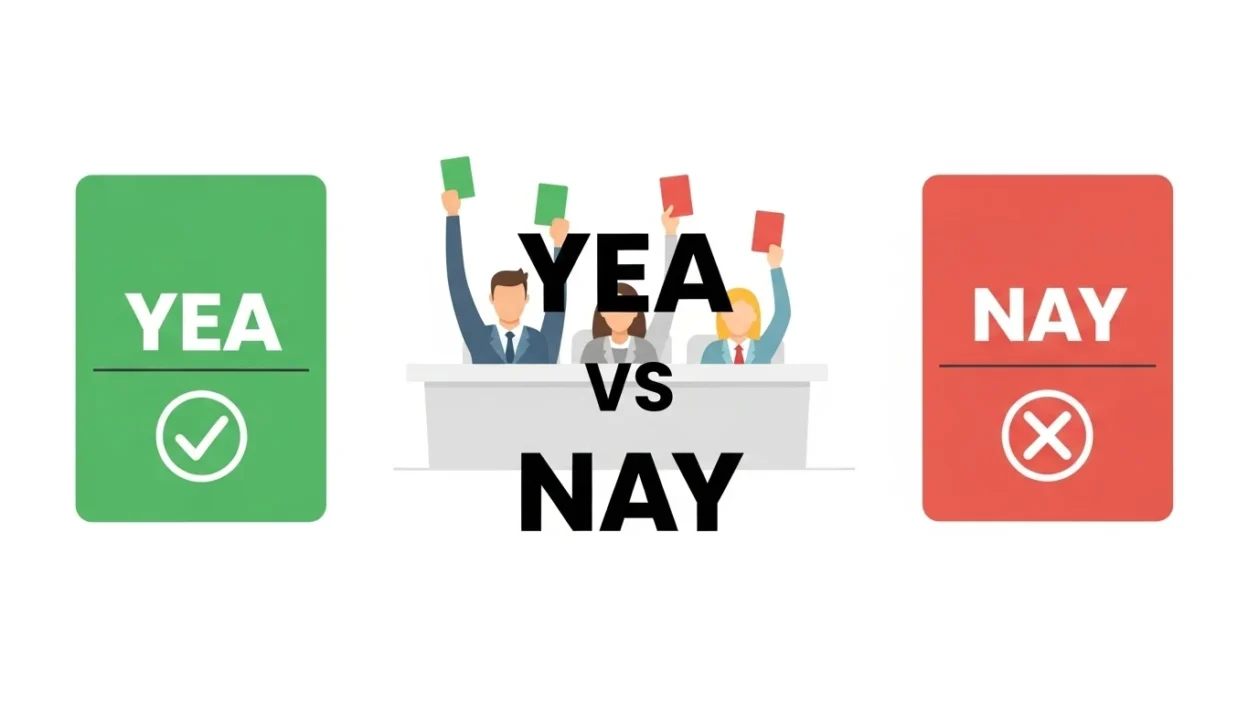
- Yea = Yes (agreement or support)
- Nay = No (disagreement or rejection)
- These words are mainly used in formal voting
- They appear in meetings, councils, and government decisions
- They are not commonly used in daily conversation
Understanding the yea vs nay voting meaning makes it easier to understand news reports and formal discussions.
A Short Background of Yea and Nay
Long ago, English speakers used many different words for agreement and disagreement. Two of these words were yea and nay.
Over time, language became simpler. People began using yes and no in everyday speech instead. However, the words yea and nay did not disappear completely.
They continued to be used in formal voting systems because they are short, clear, and easy to record in official documents.
Today, when people search for yea meaning in English or nay meaning in English, they usually find these words in places such as:
- government meetings
- parliamentary voting
- official decision records
- historical documents
So even though they sound old, they still have an important role.
What Does “Yea” Mean?
The yea meaning in English is simple. It means yes or agreement.
When someone says yea, they are supporting an idea or voting in favor of a proposal.
Example:
“All those in favor say yea.”
This sentence means people who support the proposal should respond.
In voting reports, you may also see the plural form:
- yeas
Example:
“The proposal passed with 15 yeas.”
So if someone asks what does yea mean, the easy answer is:
Yea means yes in formal voting.
What Does “Nay” Mean?
The nay meaning in English is also easy to understand.
“Nay” means no or disagreement.
It is used when someone votes against an idea or proposal.
Example:
“All those against say nay.”
This means people who oppose the proposal should respond.
Like “yea,” this word also has a plural form:
- nays
Example:
“The motion failed with more nays than yeas.”
So if someone asks what does nay mean, the simple answer is:
Nay means no in formal voting.
Difference Between Yea and Nay
The difference between yea and nay is very straightforward.
They are opposite responses used during voting.
- Yea shows approval
- Nay shows rejection
These words help make voting results clear and organized.
Understanding this contrast makes yea vs nay in simple English very easy.
Yea vs Nay Comparison
| Word | Meaning | Modern Equivalent | Common Usage |
| Yea | Agreement | Yes | Formal voting |
| Nay | Disagreement | No | Formal voting |
This table clearly explains the yea vs nay meaning.
Yea vs Yes vs Yeah
Another common source of confusion is the yea vs yeah difference.
These words look similar, but they are used in different situations.
Yea
- Formal voting word
- Used in official decisions
- Means yes
Example:
“The council voted yea.”
Yes
- Standard everyday word
- Used in normal conversation
Example:
“Yes, I understand the lesson.”
Yeah
- Informal spoken English
- Often used with friends
Example:
“Yeah, that movie was great.”
So remembering the yea vs yes difference is important. “Yea” belongs to formal settings, while “yes” and “yeah” are used in daily life.
How Yea and Nay Are Used in Voting
Understanding yea and nay in voting helps explain why these words still exist today.
During formal meetings, a leader may ask members to vote on a proposal.
The process usually works like this:
- A proposal is introduced.
- Members discuss the idea.
- A vote is taken.
The leader might say:
“All those in favor say yea.”
Then:
“All those opposed say nay.”
The number of yeas and nays is counted to determine the result.
Example result:
“The bill passed with 60 yeas and 40 nays.”
This system makes voting clear and easy to record.
When to Use Yea
Understanding when to use yea and nay is important for learners.
Use yea in these situations:
Formal Voting
Example:
“The committee voted yea on the proposal.”
Government Decisions
Example:
“The law passed with more yeas than nays.”
Official Meeting Records
Example:
“Result: 12 yeas, 5 nays.”
These examples show the yea vs nay voting meaning clearly.
When to Use Nay
“Nay” is used when someone disagrees with a proposal.
Common situations include:
Voting Against an Idea
Example:
“The members voted nay.”
Official Decisions
Example:
“The motion failed because many members voted nay.”
Written Voting Reports
Example:
“The final count showed 20 nays and 15 yeas.”
These are clear yea and nay examples used in real situations.
Real Life Examples
Here are more realistic yea and nay examples.
Meeting Example
Chairperson:
“All those in favor say yea.”
Members:
“Yea.”
Chairperson:
“All those opposed say nay.”
Members:
“Nay.”
News Example
“The proposal passed after receiving 48 yeas and 32 nays.”
School Council Example
“The student council voted yea to approve the new event.”
These examples help learners understand yea vs nay explained for beginners.
Common Mistakes Learners Make
Many beginners make mistakes when learning how to use yea and nay.
Confusing Yea with Yeah
Incorrect:
“Yea, I agree with you.”
Correct:
“Yeah, I agree with you.”
Using Nay in Everyday Speech
Incorrect:
“Nay, I don’t want tea.”
Correct:
“No, I don’t want tea.”
Thinking Yea Is a Typo
Some people think “yea” is just a misspelling of “yeah,” but it is actually a formal voting word.
Learning these differences prevents confusion.
Easy Learning Tricks for Beginners
Students learning yea vs nay for students and ESL learners can remember these words with simple tricks.
Tip 1:
Yea starts with Y, just like Yes.
Tip 2:
Nay sounds like “negative.”
Tip 3:
Think of voting:
- Yea = support
- Nay = oppose
These tricks make yea vs nay in simple English easy to remember.
FAQs
What does yea mean?
The yea meaning in English is “yes,” usually used in formal voting.
What does nay mean?
The nay meaning in English is “no,” used to show disagreement during voting.
What is the difference between yea and nay?
The difference between yea and nay is simple: yea means yes, and nay means no.
Is yea the same as yeah?
No. Understanding the yea vs yeah difference is important. “Yeah” is informal speech, while “yea” is formal voting language.
Why do governments use yea and nay?
They use these words because they make voting results clear and easy to record.
What does “yeas and nays” mean?
It means the total number of votes for and against a proposal.
Are yea and nay still used today?
Yes, but mainly in formal meetings and government voting.
Can I use yea in normal conversation?
No. In daily conversation, people usually say yes or yeah instead.
Conclusion
Understanding yea vs nay is much easier than it first appears.
- Yea means yes
- Nay means no
These words are mainly used in formal voting situations, especially in meetings and government decisions.
In everyday English, people use yes, no, or yeah instead. However, knowing the difference between yea and nay helps learners understand formal discussions, news reports, and official decisions.
Once you remember the simple rule yea supports and nay rejects these words become easy to understand and recognize.

Kaliyan Martan is a passionate dreamer and creative thinker who believes in turning ideas into meaningful action. With vision and dedication, he strives to make a lasting impact through innovation and authenticity.