Have you ever written a sentence like “I have more then 5 books” and felt unsure? You are not alone. This is one of the most common mistakes in English. The words look similar. They sound almost the same. But they do very different jobs.
The good news is simple: once you understand one small rule, the confusion goes away. This guide will help you feel confident and clear every time you write or speak.
Quick Answer
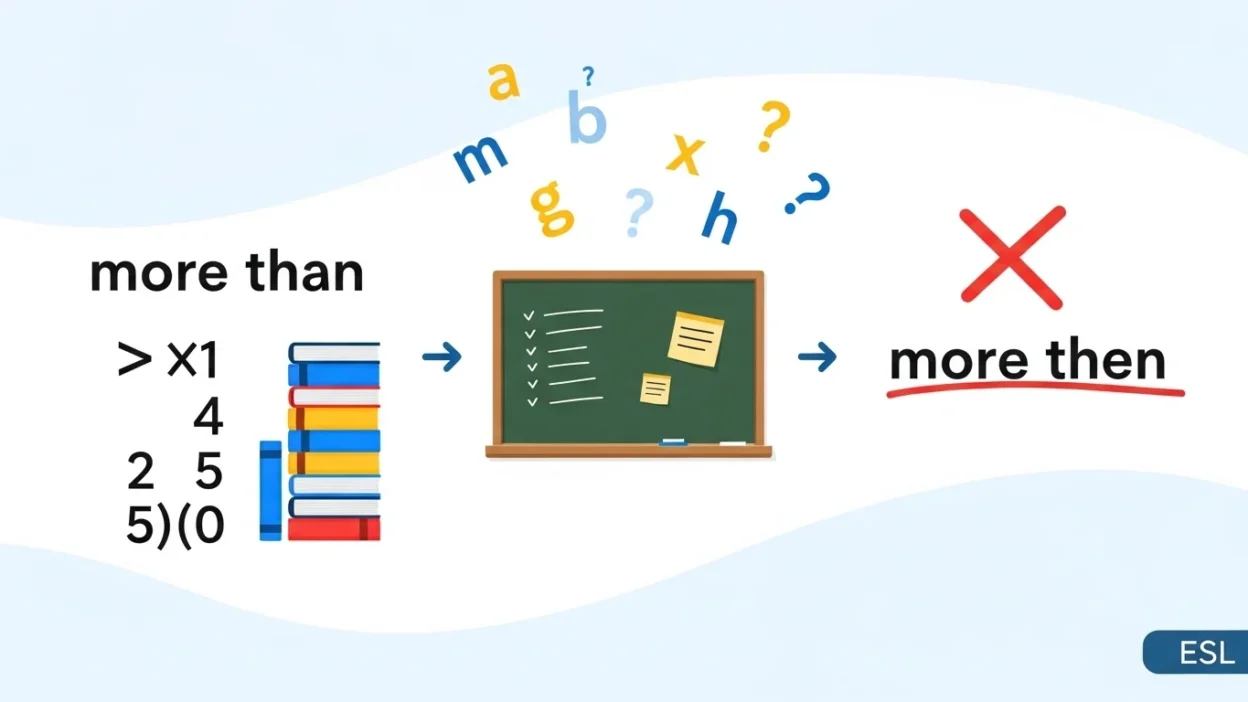
- “More than” is correct for comparison
- “More then” is incorrect in standard English
- “Than” = compare
- “Then” = time or next step
- If you are comparing, always choose “more than”
Why People Get Confused
This mistake happens for a few reasons:
- “Than” and “then” sound very similar
- People type fast and don’t notice the spelling
- Both words are very common in English
- Many learners are not sure about comparison rules
Even native speakers make this mistake sometimes, especially in quick messages.
The Simple Rule That Solves Everything
Let’s make it very clear:
- Use than when you compare
- Use then when you talk about time
That’s it. One rule.
Examples
- I have more than 10 books ✔
- I have more then 10 books ✘
- Finish your homework, then play ✔
- Finish your homework, than play ✘
What Does “More Than” Mean?
“More than” is used when something is greater, bigger, or higher.
1. Numbers and Amounts
- She has more than 50 followers
- We sold more than 200 items
2. Time
- I waited for more than an hour
- He studied for more than three days
3. Ideas and Feelings
- This is more than just a hobby
- I am more than ready
4. Real Life Example
- I spent more than I planned during the weekend sale
What Does “Then” Mean?
“Then” is about time, order, or what happens next.
1. Step-by-Step Actions
- First wake up, then brush your teeth
- Complete the form, then submit it
2. Talking About the Past
- Life was different back then
- I didn’t understand this rule then
3. Cause and Result
- If you practice daily, then you will improve
Why “More Then” Is Wrong
Let’s look at the logic:
- “More” needs a comparison
- “Then” does not compare
So they do not match.
That is why “more then” is always incorrect in standard English.
Correct:
- I need more than one answer
Incorrect:
- I need more then one answer
Quick Comparison
| Word/Phrase | Use | Meaning | Example |
| More than | Comparison | Greater amount | More than 10 people came |
| Then | Time/sequence | Next step | Eat, then rest |
| More then | ❌ Incorrect | Not standard usage | ❌ More then 10 people came |
A Helpful Memory Trick
Here is a simple trick that really works:
- Than → compare (both have “A”)
- Then → time (both have “E”)
Another trick:
Try replacing the word with “compared to.”
- I have more than 5 books
- I have more compared to 5 books ✔
It still makes sense, so “than” is correct.
Common Mistakes (and How to Fix Them)
1. Typing Too Fast
❌ This costs more then expected
✔ This costs more than expected
2. Not Thinking About Meaning
❌ I waited more then an hour
✔ I waited more than an hour
3. Mixing Time and Comparison
❌ Study more then sleep
✔ Study more, then sleep
4. Copying Incorrect Usage
Sometimes learners copy mistakes from others online. Always double check.
Real Life Examples
In Daily Conversation
- I need more than just advice
- Let’s eat first, then go out
In Text Messages
- I spent more than I planned today
- Finish your work, then call me
In Emails
- We received more than 300 responses
- Please review the file, then reply
In School or Work
- This task will take more than two hours
- Complete Part A, then move to Part B
Pronunciation Tip (Very Useful)
Many learners ask why this mistake happens so often.
In fast speech:
- “Than” often sounds like “thən”
- “Then” also sounds very similar
Because of this, people confuse them when writing.
Tip: Focus on meaning, not sound.
Mini Practice Section
Choose the Correct Word
- I have more ___ 20 books
- Finish your homework, ___ go outside
- She earns more ___ her brother
- Back ___, we had no internet
Answers:
- than
- then
- than
- then
Fix the Mistakes
- I need more then help → ______
- Study hard then relax → ______
Answers:
- I need more than help
- Study hard, then relax
Beginner Learning Tips
- Always pause and ask: “Am I comparing?”
- If yes → use than
- If talking about order → use then
Practice with your own sentences daily. Even 2–3 sentences help a lot.
FAQs
1. Is “more then” ever correct?
No. In standard English, it is always incorrect.
2. Why is this mistake so common?
Because “than” and “then” sound very similar, especially in fast speech.
3. What is the easiest way to remember the difference?
Think:
- Than = compare
- Then = time
4. Can I use “more then” in informal writing?
No. It is still considered a mistake, even in casual messages.
5. What happens if I use the wrong word?
People may understand you, but your writing will look incorrect.
6. Is “more than” only used for numbers?
No. It can also describe feelings, ideas, and importance.
Example:
- She is more than a teacher
7. Do native speakers make this mistake?
Yes, especially when typing quickly on phones or social media.
8. How can I improve quickly?
Practice short sentences every day and check your writing before sending.
Conclusion
The difference between “more then” and “more than” is simple once you know the rule.
- Use “more than” for comparison
- Never use “more then”
- Use “then” only for time or sequence
Keep this in mind:
Compare = than | Time = then
With a little practice, this mistake will disappear, and your English will feel more natural, clear, and confident every day.