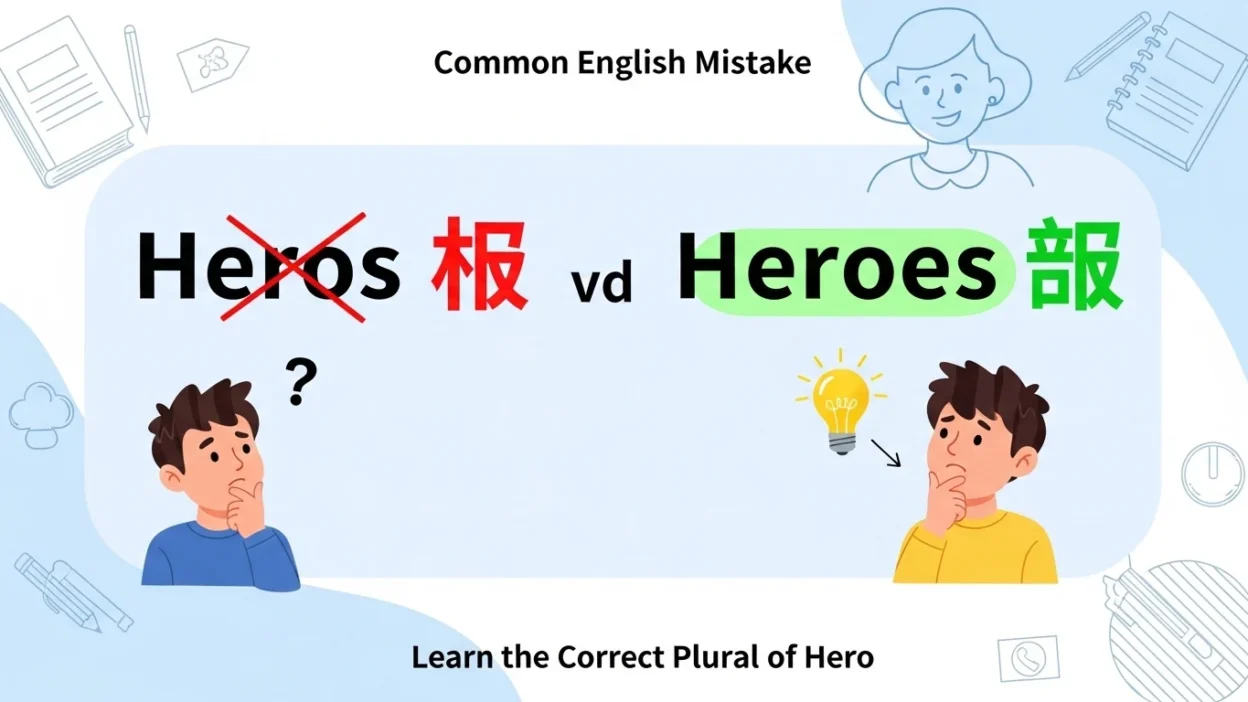
Many students and English learners feel confused when they see “heros” and “heroes.” The two words look very similar, so it’s easy to think both are correct. But in standard English, only one form is right.
This confusion usually happens because English plural rules are not always simple. Some words just add “s,” while others change slightly. The word “hero” is one of those tricky cases.
In this guide, you will clearly understand the difference, learn a simple rule, see real life examples, and test yourself so you never make this mistake again.
Quick Answer (Simple and Clear)
- Heroes = correct plural form of “hero”
- Heros = incorrect in standard English
- Always use heroes when talking about more than one person
- Easy rule: hero → heroes (add “es”)
Why This Confusion Happens
At first, many learners follow a basic rule:
- Add “s” to make words plural
- book → books
- car → cars
So it feels natural to write:
- hero → heros ❌
But English has another pattern for some words, especially words ending in “o.”
Some take s:
- photo → photos
- piano → pianos
Others take es:
- hero → heroes
- potato → potatoes
- tomato → tomatoes
There is no single perfect rule for all “o” words, so learners often guess and that’s where mistakes happen.
What Does “Hero” Mean?
A hero is a person who is brave, kind, or admired. This could be:
- A firefighter saving lives
- A doctor helping patients
- A character in a movie
- Someone who supports you in life
When we talk about more than one, we must change the word correctly.
- One → hero
- More than one → heroes
Heros vs Heroes: The Real Difference
Let’s make it very simple.
Heroes (Correct Form)
“Heroes” is the correct plural form. It is used in all proper English writing and speaking.
Examples:
- The firefighters are real heroes.
- Many heroes helped during the crisis.
- Children look up to their heroes.
Heros (Incorrect Form)
“Heros” is not correct in standard English.
You might see it in:
- Brand names
- Game usernames
- Shop signs
But this is not grammar it is just a style choice.
Incorrect:
- The heros saved the city ❌
Correct:
- The heroes saved the city ✔
Comparison (Quick View)
| Word | Meaning | Correct? | Example |
| hero | one person | ✔ | He is a hero |
| heroes | more than one | ✔ | They are heroes |
| heros | wrong spelling | ❌ | Avoid this |
When to Use “Heroes”
Use heroes in all normal situations.
Talking About Real Life
- Doctors and nurses are heroes.
- Teachers can be everyday heroes.
Talking About Movies or Stories
- Superheroes protect the world.
- The story shows brave heroes.
Talking About Personal Life
- My parents are my heroes.
- She became a hero in my eyes.
A Simple Pattern You Should Know
Here’s a helpful pattern for similar words:
Words that often take es:
- hero → heroes
- potato → potatoes
- tomato → tomatoes
Words that usually take s:
- photo → photos
- piano → pianos
- video → videos
Tip: There is no need to memorize everything. Just remember:
👉 “Hero always becomes heroes.”
Pronunciation Help (Say It Correctly)
This also helps you remember the spelling.
- Hero → /hee roh/
- Heroes → /hee rohz/
You can hear the extra “z” sound at the end of “heroes,” which matches the added “es.”
Common Mistakes to Avoid
1. Adding Only “s”
- heros ❌
- heroes ✔
2. Guessing Based on Other Words
Not all “o” words follow the same rule.
3. Using “heros” in Writing
This is a very common mistake in exams and essays. Always avoid it.
4. Mixing Forms
- The heros are brave ❌
- The heroes are brave ✔
Real Life Examples
Social Media
- “Healthcare workers are true heroes ❤️”
School Writing
- “National heroes are important in history.”
Chat Message
- “You helped me so much. You’re my hero!”
Daily Conversation
- “Parents are real heroes in many lives.”
Quick Check (Test Yourself)
Which sentence is correct?
- The heros saved the day
- The heroes saved the day
👉 Correct answer: 2. The heroes saved the day
Try another:
- Many heros helped people
- Many heroes helped people
👉 Correct answer: 2. Many heroes helped people
Easy Learning Tip for Beginners
Use this simple trick:
👉 If the word ends in “hero,” just add “es”
- hero → heroes
If you are ever unsure, choose “heroes.” It is always the safe and correct option.
FAQs
1. What is the plural of hero?
The plural of hero is heroes.
2. Is “heros” ever correct?
No, not in standard English. It may appear in names, but not in proper writing.
3. Why does hero become heroes?
Because some words ending in “o” add es to form the plural.
4. Are there similar words like hero?
Yes:
- potato → potatoes
- tomato → tomatoes
5. Why is it photos but heroes?
English has mixed patterns. Some words take “s,” others take “es.” You need to learn common examples.
6. Can I use “heros” in exams?
No. Always use heroes.
7. How can I remember this easily?
Just remember:
👉 hero → heroes (never heros)
8. Is this mistake common?
Yes, many learners make this mistake, especially beginners.
Final Thoughts
The difference between heros vs heroes is simple once you know the rule.
- “Heroes” is correct
- “Heros” is incorrect
- Always add “es” to “hero”
If you remember just one thing, remember this:
👉 Hero never becomes heros only heroes.
With this simple rule, you can write confidently and avoid a very common English mistake.

Kaliyan Martan is a passionate dreamer and creative thinker who believes in turning ideas into meaningful action. With vision and dedication, he strives to make a lasting impact through innovation and authenticity.